 This week we travel to the forth section of the Book of Psalms. This section contains psalms 90 through 107. There are 17 verses in psalm 90 and it is the only one contributed to Moses. This does lend some significance and it is the opening Psalm of Book IV. The book takes us immediately back to the time of Moses where there was no land, Temple or monarchy. It can be referred to as the theological heart of these discourses that are to follow…simply put, God reigns! Just as he did in the days of Moses. In layman terms, such as myself, God is the same today as he was yesterday and will be tomorrow, short form… forever. Alpha and Omega, we would do well to remember this. As we did last week we have an outline of this psalm available from the “New Interpreter’s Bible” Verses 1-2 focus primarily on God, verses 3-6 focus on humanity. They are followed by verses 7-12 which explore the matter of life and matters of time. Verse 12 actually provides us with a moment of transition. From verse 13-17 things take us to a more hopeful direction.
As we read verse one and two we see an affirmation of God’s permanence in the creation of this earth, our home. God has provided the only dwelling place we have ever known and it has been that way for all generations. Interesting to note that in our study material NIB, that here God is portrayed not as Mother Earth but as Mother of the Earth. We read of human time being all generations and of course of God as everlasting to everlasting. These next verses 3-6 continues to address the passage of time with such words and phrases as back to dust, yesterday, years, morning and evening. As with all scripture there is within the words things that can have different meanings. There is no doubt that time has a “crushing effect” on human life and we know that life is transitory but we do have the good news of verse 13 too look forward to. There is the movement from God’s time to human time. We read here the structure of the inexorable passage of time… impossible to stop or prevent. In psalm 90 is an interesting question…not directly but implied. Verses 7-11 are often interpreted or compared to Genesis 2-3. Both of these sets do make a connection between sin and death, a bit difficult to define in exact terms and not completely free of some vagueness, but would the humans have lived forever even if they had avoided sin? The text tells us that the punishment for their sin was not death but banishment. Don’t want to get off on a rabbit trail here but it is interesting to note the possibility of death was always a part of God’s plan…depending on how you interpret the word. In the strictest of biblical terms, death means to be fundamentally alienated from God. As I struggled with this concept I was able to see that without doubt sin does separate us from God and the promises that have been made through various covenants God has made with His People. It is death that makes sin an issue for those of the faith… A physical death is a death that offers no hope and no promises of a better day. Here we move to verse 12 which when understood correctly can restore our hope. If we aren’t careful we might fall into the trap of believing that this transience thing is the sum of our life. That would lead us to the thought that it was God’s intention for us to be about the business of “counting our days”. I don’t believe that God sought to lead us to believe how oppressive life is but rather that life is a gift of time God has given us. His words and that which we have been taught by the Saints of days gone by are intended to lift us up, give us hope and give us a “heart of wisdom” that death is no longer a problem. This plan of Transience also becomes no longer a problem. God has a plan for us as we go from Life to Death… He has removed the despair and in its place is life eternal with Him.
The big picture in verse 13 is the fact that God is being asked to forgive human sinfulness. God is being asked to do what we humans consistently do not do…to turn and repent! The short way out of all this theology, our God’s fundamental character involves steadfast love which is shown in His forgiving us of our sins, God’s compassion on the people in the form of the forgiveness of sins. We finish this with verses 14-17. After reading through these verses and the various commentaries I thought it best to just sorta share some thoughts with you. Palm 90 looks at Moses as an intercessor… The Moses “connection” if you will. In the previous Psalm 89 the “ steadfast love” occurs seven times. That brings me back to the Wesleyan practice of placing scripture in the full context. To better understand Psalm 90, reading Psalm 89 would be of help. Back to Psalm 90…it finally affirms God’s faithfulness in the face of human unfaithfulness, God’s being redemptive. Before time was always thought of as toil and trouble but here is an example of this Moses connection…while wandering in the wilderness the people became angry about the lack of water and food. Their behavior angered God but he did turn to satisfy them, there was water from the rock, and manna from the heavens. We can see the clear implication that God will turn, satisfy and make glad his own works and establish humanity’s work. We learn here: “O God, our help in ages past, our hope for years to come.”
Conclusion.. Psalm 90 functions as the songs of praise and a call to decision. We are being called to entrust ourselves and our allotted time to God. There is the assurance that a life grounded in God’s work, God’s time and our labors will lead us to understand this:
John 3:16-17
16 For God so loved the world that he gave his one and only Son, that whoever believes in him shall not perish but have eternal life.
17 For God did not send his Son into the world to condemn the world, but to save the world through him.
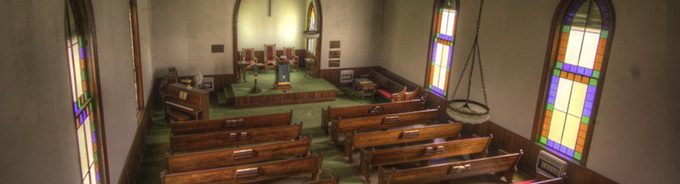
Join us again next week in the Pew. Life is Good.
jk

 From The Pew