Looking Back
07 Wednesday Oct 2026
Posted in Uncategorized

07 Wednesday Oct 2026
Posted in Uncategorized
03 Saturday Oct 2026
Posted in Uncategorized
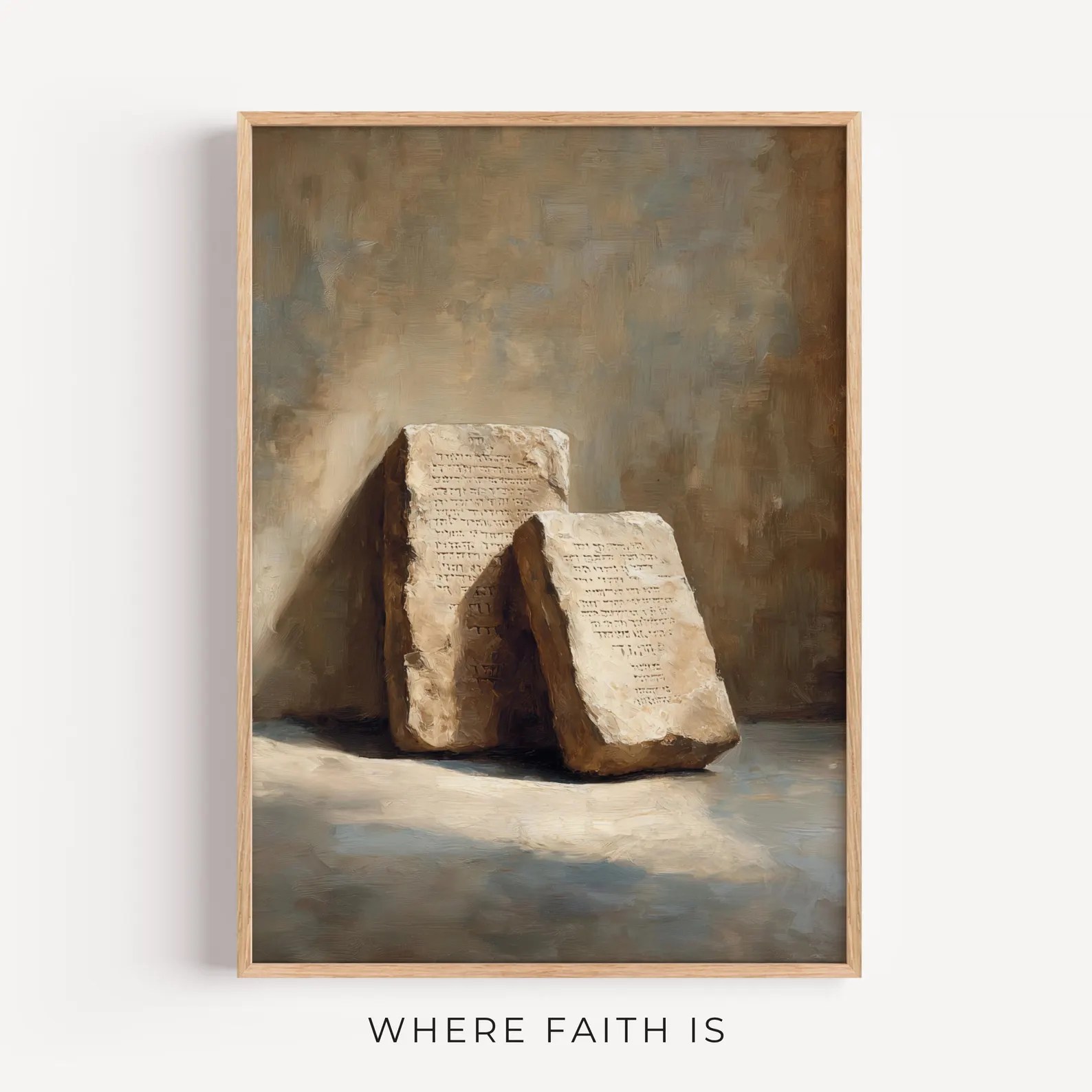 For many of us when we talk about the book of Exodus what comes to mind of course are the burning bush, God, Moses, and God’s instructions to Moses concerning the people held as slaves in Egypt. Join us here in the Pew today as we take a little bit different perspective about the book of Exodus. At the time of the 10 Commandments, the Israelites existed as a freed tribal society, transitioning into a holy and covenantal theocracy. The first thing that takes place of note is that these slaves become a covenant people. They’re free now from their bondage in Egypt. They had become a large travel collective of former slaves, newly organized around a shared lineage from Abraham and a direct religious identity. They have no king or centralized government of any kind, their supreme ruler and law giver was viewed as God himself, it’s a theocracy on the move. Now if we follow this, according to biblical tradition, the giving of the Ten Commandments at Mount Sinai served as a formal constitution. We must remember that this was just a mass of people with a common interest, that being they had just been freed from slavery and the 10 Commandments given at Mount Sinai served as a formal constitution. It bound the different tribes together into a unified religious nation with mutual moral and legal obligations. They were basically a nomadic group of stateless souls. They did not possess a permanent territory, capital, or sovereign land. They were a nomadic community traveling through the wilderness before entering Canaan. God gave them purpose and goal.
You know it’s hard for us to imagine that the God we serve, the God who created us and all could have been possibly a nation builder. So I’m going to go out on the limb here in this blog and say that that’s one of the thoughts that crossed my mind while doing research for this week. There are two things in our society today that almost always create instant division. Politics and religion, and I think we all agree they don’t go well together. I was quite surprised when the pastor at the church I now attend, announced his new sermon series…Faith, and Politics. I think I can make this statement and be fairly confident of its accuracy. If you were to ask me, what’s the top two subjects that Pastor’s really don’t like to talk about…I would have to say politics and tithing, I will repeat again, I was rather surprised. A group I am involved with right now is pursuing a study in the book of Exodus and I wanted to share something from that book with you that brought this subject that I am writing about today to mind. Was God really involved in nation building? I’m going to focus on chapter 21 from the book of exodus which is sometimes known as the book of the Covenant. I wrote earlier about these people who Moses had freed from slavery in Egypt as being basically a group of nomadic, stateless souls. They didn’t have any permanent territory, no capital or sovereign land. They were just simply a nomadic community traveling through the wilderness before entering Canaan. That’s why I’ve come to the conclusion that this mass of undisciplined, unruly and wandering people, who now at this point have become God’s chosen people and become the subject of nation building. Let that sink in just a little bit and consider that the content of this chapter details rules about property, restitution, theft, social justice, and care for the vulnerable and religious offerings. These are God’s people, people who God has chosen and will build into a nation that will last to the very end of time. Chapter 21 deals with the outlines of the foundational civil and social set of laws given to Moses on Mount Sinai applying the 10 Commandments to daily Israeli life. If we really look at it honestly, this was as I’ve written before a massive group of people with no purpose, and totally leaderless. God had appointed Moses to lead them out of Egypt and to take them to the promised land and it’s at this point that God begins to form a covenant that will create a nation.
Now, haveing written all of this let’s do keep in mind that this is simply a theory on my part. But the pastors sermons the past few weeks at my church, directed towards Faith in Politics, rises to the level of a questionable task. I believe that it’s important that we emphasize that when we get into Exodus 22 it is God who is speaking, communicating his laws and commands to Moses on Mount Sinai. So the speaker is the Lord God/YHWH who’s delivering the civic, moral and religious laws. The recipient is Moses, who receives these instructions on the mountain to relay now to the soon to be Nation of Israel. I keep trying to think how I might write this that would resonate with my readers and in my simple mind, I simply look at this as God taking a massive number of people and using Moses to sort out that mess. Choosing them to be his people bringing them out of danger into the danger of the wilderness and then preparing them and bringing them together as a nation that they might serve him and glorify His will here on earth. Now there are a lot of things here in these chapters of 20, 21 and 22 but one of the things I did find extremely interested and wanted to show you or bring to your attention to the fact that even in that day and time in the Bible, we have mention of Sanctuary Cities, in biblical reference, they were referred to as Cities of Refuge. I’m using this as an example to impress upon you, the influence of the Bible and the influence of God’s word upon his people over all of this time. The sanctuary cities that we have now today, protect undocumented immigrants from federal deportation, biblical cities of refuse were part of an official legal and judicial system that was designed to halt blood fuels and guarantee due process for accidental occurrences. So think about all of this carefully. Moses chosen by God to bring his people out of slavery into the promised land led them into the desert and for a period of time God begin to build a nation that had laws, had certain ways of how things were to be done and certain expectations. They were no longer without a purpose and a leader. The God we serve is one of order and purpose. The God we serve is not one of condemnation, but one of raising the expectations of his people and allowing them to flourish in a manner that brings glory to Him. This has been a rather strange post, but in a day and time when we are so divided within our nation, I don’t think we can escape the fact that God was in the Nation Building business, and He built a nation… Israel, in some of the most trying circumstances, and it endures to this very day.
Life is Good
jk
30 Wednesday Sep 2026
Posted in Uncategorized
26 Saturday Sep 2026
Posted in Uncategorized
 The famous phrase that were using as today’s title for this blog is actually credited to former US president Theodore Roosevelt but when we look to scripture, the underlying concept of this phrase fills the pages of the Old and New Testaments. So what does the Bible say about comparison… it warns us against measuring our worth, success or spiritual standing against other people? We might also look at the following scripture to magnify the thought just a little bit..
Galatians 6:4-5 NIV
4 Each one should test their own actions. Then they can take pride in themselves alone, without comparing themselves to someone else…5 for each one should carry their own load.
Scripture encourages us to focus on our own path. We’re instructed as believers to our own actions and take pride in the work we have done rather than comparing ourselves to someone else. We can look to proverbs 14:30. When we look at what others have or achieve and feel slighted, we move from healthy reflection into just plain old destructive jealousy. So we have to answer the questions. How does comparison destroy joy? Well for one thing it distracts us from our purpose looking sideways are looking to another persons calling blinds us to the unique mission that God has called us to do measuring what we’re doing against someone else’s mission, self-doubt, and can even bring us despair. One of the biggest things that it can do and often does is is cause us to misjudge God’s goodness. Comparison itself turns toxic when we are tricked into evaluating God’s goodness based on what he gave to someone else instead of recognizing the blessings in our own lives.
Instead of comparison, the Bible direct towards gratitude, contentment, and the joy that’s rooted in our faith and belief in Jesus Christ. In Philippians 4:11–12 Paul shares the fact that he has learned the secret of being content in every situation with welfare or hunger or living in plenty or want. God made us all and everything within us he handcrafted our very being, which simply means that our lives, talents and limits are wonderfully made for his purpose. Rather than envy or competing with neighbors we are reminded in Romans 12:15 to assume posture of love…we need to learn to “rejoice with those who rejoice; and mourn with those who mourn.”
Not really a whole lot more that we can write here without being repetitive. Comparison does destroy the joy of what God has given us to do and who we are. There may come a time in our life when we just really don’t realize what it is that God has given us to do, but discovering that through prayer and direction of our faith, we will experience a joy for greater than anything we’ve ever known. Have a good week….
Life is Good
jk
23 Wednesday Sep 2026
Posted in Uncategorized
19 Saturday Sep 2026
Posted in Uncategorized
 When I make decisions or formulate opinions about people and things I always try to look at the intent of the action or the person involved. Have you ever had good intentions but for some reason or other, you were unable to act on them. That’s what our time in The Pew today is about. John Mark was an early Christian figure mentioned in the New Testament and traditionally he’s identified as Mark the evangelist, the author of the gospel of Mark. Who was John Mark? Well, he was an assistant and a companion to Paul and Barnabas on their early missionary journeys, kind of a traveling helper who had left an earlier trip which later caused a sharp disagreement between Paul and Barnabas… he was also a very close associate of the Apostle Peter, who often and affectionately referred to him as “my son”. I’ll just kind of throw this in here… It’s also widely believed by church tradition that he was to have written the gospel of Mark based on Peters firsthand accounts. His mother was a prominent Christian woman named Mary, whose home was in Jerusalem and served as a gathering place and refuge for early believers. Now the question is, was he a cousin or a nephew of Barnabas, who was a major leader in the early church. He took John Mark under his wing after the dispute with Paul.
“During Paul and Barnabas’s first missionary journey, John Mark accompanied them as their assistant . However, when the group sailed from Paphos and arrived at Perga in the region of Pamphylia , Mark abruptly left the team and returned home to Jerusalem (Acts 13:13) .”
John Mark’s departure caused a major disagreement later on between Paul and Barnabas as they worked to plan their second missionary journey. Barnabas wanted to give Mark a second chance, this was strongly refused by Paul because Mark had deserted them. In the book of Acts chapter 15:36–41. The split between Paul and Barnabas is recorded. Interesting to know that despite this early setback Mark eventually matured and somehow mended his relationship with Paul. It’s interesting to know that years later while imprisoned in Rome, Paul wrote to Timothy and specifically requested Mark’s presence. And as we have noted earlier Mark is also widely recognized as the author of the Gospel of Mark.
There is always the core question. Why did Mark leave? What was the reason for his departure? There’s a list of reasons that are given. I’ll just touch on a few. It had been suggested maybe there was a home sickness of youth, which isn’t all that unusual, he was a young helper and he was far from his mother’s home in Jerusalem, he may have missed the comfort of family. This was a hard journey, and there was lots of danger, hard terrain, physical exhaustion, and intense opposition to what they were doing. Paul emerged as the main leader of the mission instead of Barnabas, which may have caused some friction. There was another factor that occasionally is mentioned and that is perhaps Mark was uncomfortable with the shifting missionaries strategies towards the Gentiles. No need for us at this time to worry about the details. I like the old Jewish gentlemen’s explanation…it is what it is.
I guess we need to find some kind of a proper ending to all this, but the lessons to be learned here aren’t always right on the surface. When we make a commitment to serve God, we should not do it lightly. We should understand the responsibility that we have accepted and do our best to carry that through. I think another thing we can learn here is that we should not be so quick to judge another person’s actions. John Mark was raised in a Christian home and had spent, I would suppose a great deal of his time in fellowship with those his mother welcomed into her home. So the main point I take away from all this is that God’s call can be and sometimes is interrupted by circumstances that we don’t truly understand, but we can never truly lay aside God’s call on our life.
Life is Good
jk
16 Wednesday Sep 2026
Posted in Uncategorized
12 Saturday Sep 2026
Posted in Uncategorized
 Sometimes the most meaningful things are little things that we never really think about. Now I’m sure that there are some folks out there that go around humming, whistling, maybe even singing some of these little commercial jingles that are large part of our life. We didn’t really ask for them. They just keep sticking everywhere to get their message across. Just the other day for absolutely no reason at all I happen to run across one of those out of nowhere things so to speak. In 1974 Burger King introduced the iconic have it your way slogan to highlight their new policy of letting customers customize their food orders. “Have It Your Way” duetted with a famous musical jingle. Now in that jingle the lyrics included, “hold the pickles, hold the lettuce. Special orders, don’t upset us.” In simple every day language it simply meant that customers could change the ingredients they may want to more pickles, or they may want less or maybe add extra ketchup whatever, they could do it their way. For 1970 it was a pretty good fit. It was a message of independent style and giving power to the buyer. Well, Burger King didn’t let that deal go by, they didn’t let it fade. They’re still with us and in 1991 and 1992 They came up with “Your Way Right Away.” Burger King knew at this time that they had a good thing going here so they turned right back around and in 1999-2014 they hit us again. “Burger King, where your the Boss!’
God created everything in this world, no matter what it was from the greatest thing down to the lowest thing in the dirt of this earth, and God knows all that goes on, and these things are difficult to understand and sometimes we don’t even try to. Of all the wonderful things that our God has created and of all the wonderful things we as his creation have been blessed with there’s one large gaping problem. People will be people, somewhere somehow we tend to wander off. It is my thought that when God gave us free will so to speak, We used it for all the wrong things. Today’s blog is not a knock against the fine folks at Burger King, but really hats off to a very perceptive bunch of people that recognized something that we try hard not to admit. Regardless of the situations we find ourselves in we, the human side of us wants to be in charge of everything. The folks at Burger King recognizing this… they created three very key slogans that has served them well over the years simply because they resonate with our weakness and our desire to “Have It Your Way”. The pages of Biblical history are littered with God’s people who I have affectionately chosen to name the “Hamburger People.” now we do not want to be disrespectful so don’t become upset with me, Just trying to figure some things out. But the Burger King folks came right back some years later almost back to back with the slogans “Your Way Right Away” and “Burger King, where your the Boss!’ Now that is a triple whammy for sure. That falls right in the path of everyone of us who are trying so hard to follow a Good Way. I can’t think of anything you could tell somebody that would persuade them perhaps to take a second look at the direction they are traveling then to tell them, you can have it your way, you can have it right away, and of course here’s a big period at the end of that. “Remember, this is where you can be the boss.”
From a biblical perspective if I were going to have a fallen list, I suppose there wouldn’t be enough paper to put all of them on the list. The first on my list would be one that we all know about that would be the fallen angel himself, Lucifer. In mainstream Christian tradition, Lucifer and Satan are considered the same people. I’ll add this here not because I’m extremely brilliant but because I read it while I was researching, there are some biblical thoughts that shows they started as completely separate concepts. Why did Satan fall from heaven? One of the big causes was pride, Satan’s desire to be God, not a servant of God. When we read and Isaiah 14: 12–15 and Ezekiel 28:12–15. We see a picture painted of Satan, who was supposedly exceedingly beautiful angel, and he was most likely considered to be the highest of all angels, one of the most beautiful of all of God’s creation. But he was not content in his position. Satan wanted to be God plainly put, he wanted to kick God off his throne and take over the rule of the universe. In keeping with one of my long held beliefs, evil cannot exist within the presence of the mercy, the grace and the love of our creator. Satan fell from heaven because he was pushed. It’s as simple as that. Let’s take a few minutes just to look at some other folks that decided to have it their way. When people try to do things their own way instead of God’s way the Bible shows they often face serious consequences. Biblical examples of doing things their own way are as follows.
-there, of course, for Adam and Eve they ate the forbidden fruit in the garden of Eden because they wanted wisdom on their own terms. This brought sin and death to the world.
-there were Abraham and Sarah, they tried to fulfill God’s promise of a child through Hagar instead of waiting for God’s timing. This created a family conflict and historical strife.
-Nadab and Abihu, Aaron sons offered unauthorized fire to God because they used their own method instead of God’s. The Lord soon dealt with them.
-King Saul offered a priestly sacrifice himself instead of waiting for the prophet Samuel because he panicked and rushed things. God stripped him of his royal dynasty.
Lastly we read of King Uzziah he became so proud that he entered the temple to burn incense on the altar, which was a job that was reserved only for the priest, God struck him with leprosy for the rest of his life. Christianity affords us many blessings and the assurance of better things to come. But, in the Christian faith there are three things that you can’t have. You cannot…
Life is Good
jk
09 Wednesday Sep 2026
Posted in Uncategorized
05 Saturday Sep 2026
Posted in Uncategorized
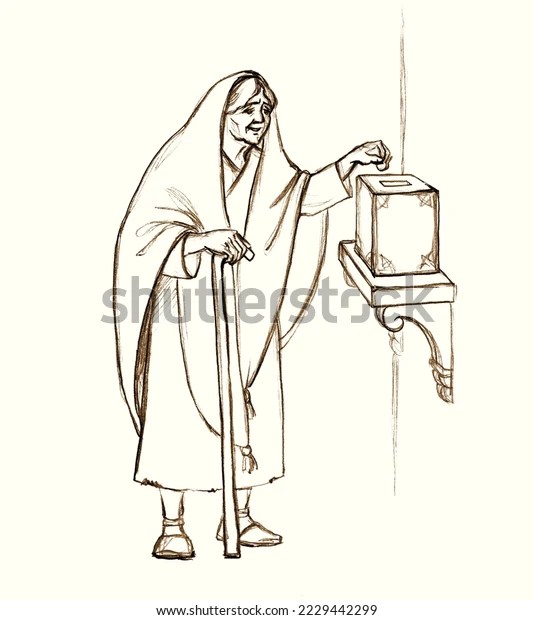 The first thing we should do would be to get a good handle on exactly what tithing is. So first things first, the meaning and purpose of the word tithe comes from an old term meaning a 10th part.Tithing is the practice of giving 10% of ones income or produce to support a religious organization or place of worship. Can’t help but add this as I was sitting here at the keyboard when we’re talking about clubs or organizations tithes becomes dues and for some reason no one is put off by that. For many religious people it’s a way to put God first and show trust in divine provision. Historically as well as today, it’s a means of support for community. These funds that help maintain houses of worship pay religious leaders, and fund charity work for the needy. Now, some of this today will probably be repetitious, it’s a voluntary giving unlike past centuries when tithes were mandatory taxes of crops or livestock, modern contributions are generally voluntary. In the world we live in today. It’s a relatively easy process, people typically pay using cash, checks or digital transfers. The amount a person does tithe is up to the individual who usually will choose whether to calculate the 10% from their gross total income, our net take home income.
Back in The Day:
Biblical tithing was the practice of giving your 1/10 of one’s produce livestock or income to support religious leaders and the community? One of the earliest biblical validated gifts was from Abraham.
As we continue to read and do research, we find that Jacobs vow which is in Genesis 28:22 where God commanded Jacob to give 10% of all he has been blessed with to the temple as an expression of gratitude. Another step in this process of tithing comes from the Mosaic Law…what we speaking of here is the Old Testament system. Under the law of Moses tithing functioned essentially as a national system to support the theocracy, religious workers, and social welfare. There wasn’t at that time a Levitical Tithe in the amount of 10% annual tax on crops and livestock given to the Levi’s and priest who did not receive a tribal land inheritance…we read of that practice in numbers 18:21 where the Israelites were commanded to give a tithe to the Levites. We’ll take a quick look at two more of these tithes.
-The Festival Tithe: An additional tenth of produce set aside yearly for family celebrations and religious festivals in Jerusalem.
-The Charity Tithe: A specific tenth collected every three years to support foreigners, widows, and orphans “Deuteronomy 14:28 specifies a third tithe every three years to be stored in towns to care for foreigners, the fatherless, and widows.”
New Testament and Christian Tradition
As I’ve shared with you so far this tithing thing has a very long and rich history, and in some instances instigated by God. In your early church, Jesus emphasizes the moral weight behind that practice, he was pointing to justice, mercy, and faithfulness. I don’t want dig a hole, it becomes way too complicated. We can find lots of rabbit holes to go down on this one, but we’re not going to. I will mention the church councils like the council of Tours in 567 A.D. that formalized tithing. And now, of course, that brings us right into the modern views towards this subject. Christian denominations differ on whether the 10% rule is mandatory today, with many teaching it as a helpful benchmark for giving rather than a strict legal requirement.
Now let’s take this in a direction of scripture. In the book of Leviticus 27:30 “a tithe of everything from a land with a green from the soil or fruit from the trees belong to the Lord it is holy to the Lord.” As we continue to read and search we find and Deuteronomy 14:22”be sure to set aside a tenth of all that your fields produce each year” In the book of Malachi 3:10 “bring all the tithes into the storehouse, so there will be enough food in my Temple. If you do,’ so says the Lord of Heavens Armies, ‘I will open the windows of heaven for you.” In Proverbs 3:9 “honor the Lord with your wealth, and with the best part of everything you produce.” I’ll share one more with you from numbers 18:26 it instructs a Levis to also present a 10th of the tithe they receive as an offering to the Lord.
I know when you share information and you folks are kind enough to read the blog each week that a list of scriptures can sometimes really bog you down. But I do want to present this one fact to you.
There are approximately 39 verses in the Old Testament that explicitly refer to tithing or the tithe (using the Hebrew word ma’aser, meaning a tenth). [1]
These references span 11 distinct chapters across 7 Old Testament books. Depending on how strictly a count separates multi-verse narrative context (such as verses talking about the “storehouse” for the tithes or general giving principles), the exact number of verses directly containing the specific words for “tithe” or “tithing” is typically counted between 34 and 40 verses. (Robert Breaker)
Now there is a great deal of difference between your focus of core pressure rules of New Testament giving. Instead of burdening you with listing and have you reading the scripture I’ll just simply tell you that you will find plenty of perspectives on giving in the New Testament anywhere in the book of Matthew Second Corinthians First Corinthians, and on and on, but the New Testament principles of generous giving focus on voluntary joyful grace, rather than strict legalistic percentages. Jesus Christ gave everything for us, so it’s only fitting and right that we should give back. And should be given voluntarily and cheerful. It’s been suggested that we should give what we have decided in our heart to give and not reluctantly under compulsion, for God loves a cheerful giver. Paul instructed believers to set money aside methodically. We should be working at building generosity into the rhythm of our lives not just when we feel moved to do so. Giving in many ways is a sense of self surrender it allows a good in our heart to flow to others who are in need. It’s hard to even imagine to set some kind of a percentage perhaps the best way to look at it is this it would be well received if we were to give proportionately based on how God has prospered us rather trying to meet an unmanageable burden.
To bring all this together to what I hope is a reasonable conclusion, it would be my advice, to give all you can, to everyone you can, as often as you can. Somewhere in all of this, I believe I read that tithing is a matter of the heart.
Life is Good
jk

