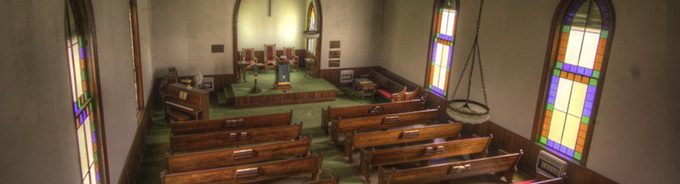
 We continue our trip to the Good Way by going back to that time centuries ago to Pentecost.. after the crucifixion, the apostles and many of the followers as possible in a upper room hiding from local authorities. We’re not going to go into a lot of detail, but on that day of Pentecost, the spirit came upon them and a whole new ministry was opened before them. After Pentecost, the apostles dispersed throughout the ancient world, traveling from Jerusalem to Asia Minor, Greece, Rome, and as far as India, Ethiopia, and Spain. They traveled mainly in pairs, preaching, in Jewish synagogues and to the Gentiles, to spread the gospel, the of The New Way. We’ll just look at a few of them for a quick idea of the area that they actually covered. Andrew travel to Scythia and Greece. John spent time in Ephesus and was exiled to the island of Patmos. Thomas went on to preach in Persia and India, and Matthew spread the gospel in Ethiopia. Bartholomew, he reached Armenia and India. James the greater preached in Spain and was murdered in Jerusalem. Many of these apostles traveled from Judea and Samaria towards the “ends of the Earth,” establishing churches along the Mediterranean coast, and in areas, like Babylon and Asia Minor.
We’re gonna open this road trip so to speak with the apostle Paul. Paul was already a rising star and likely active in Jerusalem shortly after Jesus’s crucifixion, which would’ve occurred in a AD 30 to 33 somewhere in that area. He was an active persecutor of the early church with a few years of the crucifixion witnessing the Martin of Stephen, which is in act 7:58 before his conversion which is typically dated between AD 33–36. Paul trained under Gamaliel in Jerusalem and he was already a zealous Pharisee aligned with the Shammaite school before and during the early Christian movement. (The School of Shammai was founded by Rabbi Shammai, who lived around the time of Herod’s reign and was known for his strict adherence to Jewish laws.)
Paul’s active role in persecuting Christians likely begin immediately following the crucifixion and continued his conversion on the road to Damascus. The best timelines that are available that agree with each other about the conversion probably happened roughly 2–7 years after the crucifixion. Even though there may be a little bit of repetition here, we should make note of the fact that Paul was likely around 30 years old during this time with some estimates putting his conversion at again AD 33–36. The new church young and struggling had many enemies in this time. We are picking up with Paul in the book of Acts simply because he wrote at least 13 of the books of the New Testament. The very first mention of Paul in the New Testament occurs in acts 7:58. He’s introduced as a young man named Saul. This was the Saul present at the execution of Steven. He approved of it, Stephen being the first Christian martyr and Paul held the garments of those doing the stoning. Paul is described as a zealous Pharisee and a prosecutor of the early church going as far as traveling to Damascus to arrest the Christians there. That could is found in Acts 8:3, 9:1–2. It is in the book of Acts 9 that we read of a dramatic encounter with Jesus on the Damascus Road, turning him from the persecutor to an apostle. We can also read in Acts 13:9 that the switch to the Roman named Paul occurs during his ministry to Gentiles on Cyprus. So Saul was his Hebrew name that he used exclusively until act 13:9. He was referred to by Ananias in Acts 9:17 as brother Saul. Paul actually was known at times by both names. He was a Roman citizen who was known as Saul which was Hebrew and Paul, which was Latin Roman, and he used them based on his audience.
The development of the early church was an extremely uncertain time for these new Christians. They would encounter many many difficulties along the road to the Good Way.
Thank you for joining us the week in “The Pew”….Our goal is to bring to you the gospel in a manner that teaches not preaches. God Bless…
Life is Good
jk

