
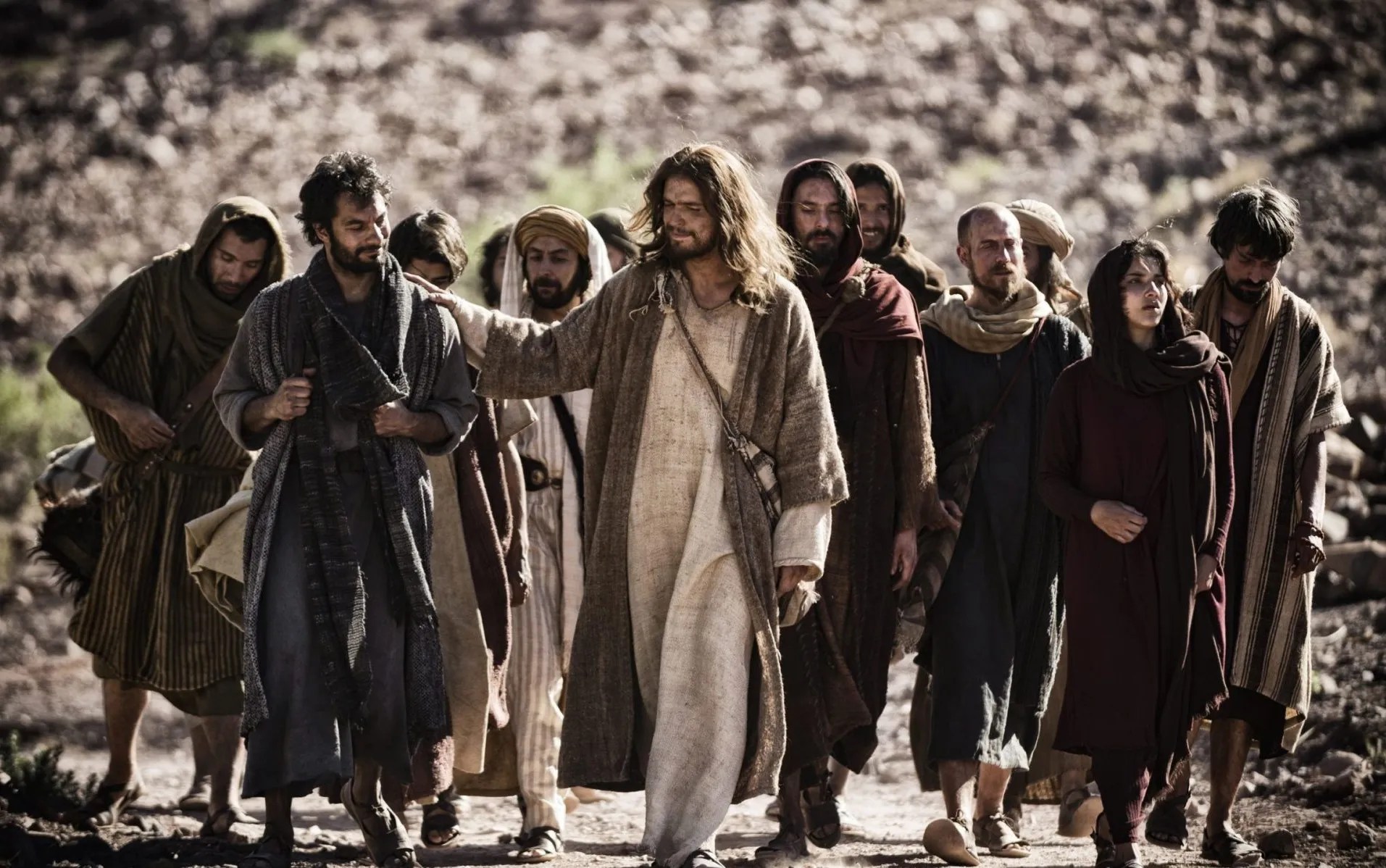
 Time is a great motivator of change but some habits never change, one being dissent which is a definite motivator of disagreement. The life of a prophet was not an easy one, the hardships and danger were ever present. We must not overlook the truth that God in his mercy sent the ultimate prophet, His son Jesus Christ, as the means of reconciliation and salvation for all God’s creation. WE are living in a world of divisive dissent of many different forces. The Church is under constant pressure to conform to standards and behavior that are not in any way the will of God. Jesus came among us to bring the light of hope and salvation to a suffering world. It is important to note that Jesus, Son of God came to be among us in the flesh…God incarnate and like us He too would suffer the tribulations of this world and be susceptible to its injustices. There was much opposition to the early church, both from within and without from people, groups and the Roman Government. They tell us, that at the time of Jesus’ ministry there was this thing known as The Pax Romana. The Pax Romana, or “Roman Peace”, was a period of peace and prosperity in the Roman Empire that lasted from 27 BC to 180 AD. This time period included the life of Jesus and the early years of Christianity. More on that some other time. So…one of our Lord’s dissenters, was the Roman Government even in this time of the “Roman Peace”. There are two others which we will look at today.
The Pharisees were a Jewish group that followed a strict interpretation of the law and believed in oral tradition. They were active in Palestine during the Second Temple period, from 515 BCE to 70 CE. The Pharisees challenged Jesus in many ways, including questioning his authority, testing his knowledge of the law, and criticizing his actions.
They were jealous of Jesus’ popularity with the people and they did not like his associations with people of questionable behaviors. In Matthew 12, the Pharisees criticized Jesus for allowing his disciples to work on the Sabbath. They were insistent about asking Jesus about the law…Jewish and Roman law, hoping to trap him into something that could be used against him. They even at one time tried to lay hands on him after he had taught the Parable of the Wicked Tenants… Luke 20:1. They had no success in questioning Jesus’ authority, knowledge or trying to find fault with his ministry. But within the structure of Jewish tradition and law there was another group whose actions could be described as a form of dissent.The Sadducees were a Jewish sect of priests and aristocrats who were active in Judea from the second century BCE until the destruction of the Second Temple in 70 CE. They were a conservative group that held power in the Jewish community. These were the political elite of Palestine during the time of Jesus. They were were active in the daily activity of the Temple in Jerusalem and had a working relationship with their local Roman counterparts and they were dominate in the Temple and the priesthood. They were rivals of the Pharisees who opposed their power. The Pharisees first concern was for a greater recognition of the oral Torah. In the end they did not secure a lasting legacy. The Sadducees as a group ceased to exist after the destruction of Jerusalem, but the Pharisees’ legacy lived on. In fact, the Pharisees were responsible for the compilation of the Mishnah, an important document with reference to the continuation of Judaism beyond the destruction of the temple. In this way the Pharisees laid the groundwork for modern-day Rabbinic Judaism. Because the Sadducees were often more concerned with politics than religion, they ignored Jesus until they began to fear He might bring unwanted Roman attention and upset the status quo. It was at that point that the Sadducees and Pharisees set aside their differences, united, and conspired to put Christ to death. (gotquestions.com)
Paul used the differences between the two groups to kinda “stay in the game” so to speak. Let’s wrap this up. Jesus had to contend with many things in his ministry but one thing I ran across that I offer for your consideration. The twelve disciples were with him right up until he was arrested, then even they fled or hid in the shadows, one even denying he knew him. Jealousy, fear of losing power and prestige among the people or the Roman Rule or law being challenged, all put Jesus in great danger. Almost forgot… a disciple means follower, eventually the 12 would be known as Apostles. Jesus had many followers, people followed him everywhere…I would dare to call it a “traveling evangelical event”.
Life is Good
Jk
 From The Pew