• About

From The Pew

~ A Layman's Look At The Gospel

From The Pew

Author Archives: John Kurt Carpenter

Drop The Blanket

22 Saturday Dec 2018

Posted by John Kurt Carpenter in Uncategorized

≈ Leave a comment

**I am Re-Posting this blog. This is one of my favorites and it is brilliant. Have a wonderful Christmas Day and may God bless you and yours in the New Year to come. “From The Pew” will return January 20, 2019.

Drop The Blanket

01

Sunday

Jan 2017

Posted by John Kurt Carpenter in Uncategorized

≈ Leave a comment

[Edit]

I am constantly searching the internet for little gems of knowledge and wisdom that will enrich and encourage us ordinary folks whose frantic pace in this life causes us to rush by without even taking the time to “smell the coffee” so to speak. Well over fifty years ago we were introduced to the world of Charlie Brown. Charles Schultz created a community of loveable misfits each with their own recognizable frailties’ of mind, body and spirit, in which many of us saw a part of ourselves in the characters and took this lovable bunch into our hearts. Unlike some of the modern animated cartoons of this day the brilliance of Charles Shultz shows us our faults in a gentle and endearing way. Charlie Brown also helps us see the real value of community, the need we have for others and the power of a simple love that transcends the norms of this day. Having said all this let me introduce you to a brilliant post of December 14, 2014, by Jason Soroski. I have edited his original post for space requirements and encourage you to go to the posted url to read it as posted. (jasonsoroski.wordpress.com)

Here are some excerpts from that post.

I was in the first grade back when they still performed Christmas pageants in schools (less than 50 years, but still a very long time ago), and our class performed a version of the Charlie Brown Christmas. Since I was kind of a bookworm and already had a blue blanket, I was chosen to play the part of Linus. As Linus, I memorized Luke 2:8-14, and that Scripture has been hidden in my heart ever since. But while working so diligently to learn those lines, there is one important thing I didn’t notice then, and didn’t notice until now. Right in the middle of speaking, Linus drops the blanket.

Throughout the story of Peanuts, Lucy, Snoopy, Sally and others all work to no avail to separate Linus from his blanket. And even though his security blanket remains a major source of ridicule for the otherwise mature and thoughtful Linus, he simply refuses to give it up. Until this moment. When he simply drops it. In that climactic scene when Linus shares “what Christmas is all about,” he drops his security blanket, and I am now convinced that this is intentional. Most telling is the specific moment he drops it: when he utters the words, “fear not”

 Looking at it now, it is pretty clear what Charles Schultz was saying, and it’s so simple it’s brilliant.

The birth of Jesus separates us from our fears.

The birth of Jesus frees us from the habits we are unable (or unwilling) to break ourselves.

The birth of Jesus allows us to simply drop the false security we have been grasping so tightly, and learn to trust and cling to Him instead.

I hope you have enjoyed this post and take Jason Soroski’s advice and “drop the blanket” in the comming new year. Again I encourage you to go to the url posted above and read some more of this gentlemen’s writings and activities.

See you back in the  pew January 20, 2019

jk


Share this:

  • Tweet
  • Email a link to a friend (Opens in new window) Email
  • Share on Path (Opens in new window) Path
Like Loading...

SHEPHERDS AND ANGELS

15 Saturday Dec 2018

Posted by John Kurt Carpenter in Uncategorized

≈ Leave a comment

The stories of the season. They have become the casualties of familiarity, reduced to mere words, adapted to plays, concerts and seasonable objects of display. I have often used the phrase beyond the words to express my desire to know more and be challenged by the word. One such story of course is the birth of our savior, Jesus Christ. To me to preface the birth with the word story, leaves much to be desired as to the importance of God coming among us. So join me as I go beyond the words.First we see the lives of Joseph and Mary disrupted by civil responsibilities decreed by the Roman Government. I am sure it was not the wish of either to be traveling at this time. They had no choice as it had been ordered by Rome. The census was an institution of Servius Tullius, sixth king of Rome.  

“He ordered all the citizens of Rome to register their estates according to their value in money, taking an oath, in a form he prescribed, to deliver a faithful account according to the best of their knowledge, specifying the names of their parents, their own age, the names of their wives and children, adding also what quarter of the city, or what town in the country, they lived in.” Ant. Rom. l. iv. c. 15. p. 212. Edit. Huds. (Adam Clark Commentary)

The design of the census or enrollment was to record an account from the people who were ordered to give their names, quality, employments, wives, children, servants, and estates holdings. The value set upon the estates by the censors, and the proportion in which they adjudged them to contribute to the defense and support of the state, either in men or money, or both. We might even be tempted to ask why would Mary risk such a trip at this time in her pregnancy?   There was no reason for Mary to have gone to Bethlehem, as Joseph’s presence could have answered the questions without Mary. Scripture answers that question for us. In going the prophecy of Micah would be  fulfilled, and that Jesus should be born in the city of David; Micah 5:2.

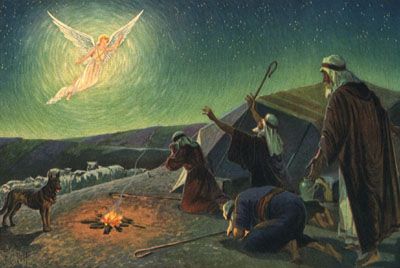
With this information we are made aware of the reality of the day, so to speak. Joseph and Mary were ordinary people called by the grace of God to be part of an extraordinary event. We should be aware that God could call on any of us to be part of a kingdom event at any time in our lives. There has always been many different pictures presented of the birth place of Jesus but while many historical descriptions vary somewhat the one I find most accurate in this case is as follows. The term  laid him in a manger in that day would have meant not only the, manger which can also refer to a feeding trough but the entire stable. Why there? To start with the crowds traveling to Bethlehem would have been huge, everyone going to comply with the census. Was Joseph so poor he could not afford a room? Maybe not, some writings indicate he was a success at his chosen profession, given the crowds it is  not hard to understand why there would be no room available. Again, God coming among us in such ordinary circumstances. There are many details here yet to be discovered but I will move on to the next defining moment of this story. In verse 8 we read of shepherds abiding in the field close to their sheep. Historical writings from this period would indicate that they most likely had tents or booths under which they dwelt. We are further drawn into the narrative with the well-known phrase keeping watch by night. A normal watch would be about three hours at a time per man. The reason being to protect the sheep from beasts of prey and even more revealing from groups of roaming bandits which at that time Judea was infested. Why is this important? It points to how ordinary life was difficult at this time while making it plain this was a normal circumstance at this time. We live, most of us, a very ordinary life day-to-day. When the day comes for our Lord to return it most likely will be during a time of our living out another ordinary day. Will we fear at that moment the divine justice to come as most likely those shepherds did when the Angels announced his coming or where they even able to comprehend what was happening?

 Here again God takes an ordinary thing and makes it extraordinary. shepherds watching their sheep is nothing to write home about, quite common in this place and time. I have heard the story many times, read Luke’s account but there is something special here. God’s announcement came to the shepherds first, Shepherds were despised by the orthodox good people of the day and I would venture a bit unfairly. They were an unruly lot to be sure, being unable to keep the details of the ceremonial law; they could not observe all the meticulous hand-washings and rules and regulations because their job made constant demands on them; and so the orthodox looked down on them. It was God’s will that the message go forth first to the simple men in the field that night. Another obscure detail to a well-known story, while these were ordinary shepherds they were most likely protecting the flocks that belonged to the Temple authorities. These flocks were kept in close and well guarded to ensure that a supply of perfect offerings was always available to the Temple authorities as each morning and evening an unblemished lamb was offered as a sacrifice to God. William Barclay writes “It is a lovely thought that the shepherds who looked after the Temple lambs were the first to see the Lamb of God who takes away the sin of the world.”

These are just a few random thoughts about this story and I might add one more. It was the custom of the Jews that when a boy was born local musicians would gather at the house and greet him with simple music. Jesus’ birth in a stable in Bethlehem made this impossible . Instead the angels sang the songs for Jesus that the earthly singers could not sing. This is an account of God incarnate coming to this earth to live among his people, claiming no special privileges and experiencing the life of ordinary people. We might ask ourselves have we who are born again, squandered our new birth right to the sins of this world?

Life is Good

jk 

Reference Material         

DBS, William Barclay

Adam Clark Commentary    


Share this:

  • Tweet
  • Email a link to a friend (Opens in new window) Email
  • Share on Path (Opens in new window) Path
Like Loading...

Christmas and That Little Red Kettle

08 Saturday Dec 2018

Posted by John Kurt Carpenter in Uncategorized

≈ Leave a comment

I am no longer surprised by how the best of things can become areas of contention among the good folks. That little red kettle has over the years become entwined with Christmas to the point that when we hear that little bell ringing, we look for that little red kettle. Ever wonder where that came from? Well, it got its start in 1891 in  San Francisco.

Salvation Army Captain Joseph McFee was aware of the many poor individuals in San Francisco that were going hungry every day and their numbers were growing every day. During the holiday season, he resolved to provide a free Christmas dinner for the destitute and poverty-stricken. He only had one major hurdle to overcome — funding the project. His thoughts took him back to his sailor days in Liverpool, England. There was this place where the boats came in and  placed there was a large iron pot into which people passing by would toss coins in to help the poor.  The very next day Captain McFee placed a pot at the Oakland Ferry Landing and beside the pot he placed a sign that read Keep The Pot Boiling. He soon had the needed funds to make it possible to feed at least 1000 people who holiday season. There is a lot more to this story but it will  do to just point out that the Little Red Kettle is all over our world today.

A recent discussion made me aware of how the biblical view of charity is so much different from the way some people view “charity”. As usual as per my habit, let’s look at some definitions of the word charity.

 : generosity and helpfulness especially toward the needy or suffering

also : aid given to those in need

 : an institution engaged in relief of the poor

 : public provision for the relief of the needy

 : benevolent goodwill toward or love of humanity

I am going to break this down a little more. The first one listed defines the parameters and the motivator for such actions. The next two indicate an organizational approach to help those in need. That last one is the biblical equivalent of a very well-known verse….. Matthew 25

35 for I was hungry and you gave me food, I was thirsty and you gave me something to drink, I was a stranger and you welcomed me, 36 I was naked and you gave me clothing, I was sick and you took care of me, I was in prison and you visited me.

Why has charity become a contentious issue? I would venture the need to control, the insertion of qualifiers and the cynical attitude of we who have and a lack of compassion which has been replaced by an unqualified judgmental attitude on our part. These things, the first two are debatable but the lack of compassion and a judgmental attitude is in direct opposition to the teachings of Christ and our Christian values. 

Consider these verses 2 Corinthians 9: 6-8, 10.

The point is this: the one who sows sparingly will also reap sparingly, and the one who sows bountifully will also reap bountifully. 7 Each of you must give as you have made up your mind, not reluctantly or under compulsion, for God loves a cheerful giver. 8 And God is able to provide you with every blessing in abundance, so that by always having enough of everything, you may share abundantly in every good work. ……….

10 He who supplies seed to the sower and bread for food will supply and multiply your seed for sowing and increase the harvest of your righteousness.

First off Paul says that no one is ever a loser through generosity. While these New Testament verses never suggest material rewards, such as the wealth of things, they do point to the wealth of a glad heart and spirit, there is even more to be considered. You will be rich in love and friends. When we allow our hearts to love others our love will be returned. We will be rich in help.There will come a day when all of us at one time or another will need help, of some kind. If we have been willing to help others there is a good chance there will be others willing to help us. Remember Matthew 25: 35-36, Jesus taught us that what we do to others we do for God. Make no mistake there will be a day that every time we opened our heart to others it will stand well in our favor. Now there are three benefits of generous giving.

-It does something for others.

-It does something for ourselves. 

-It does something for God. 

 The Christian side of this is very plain and simple. There are no additional laws or procedures to be considered. John 13: 34-35

34 I give you a new commandment, that you love one another. Just as I have loved you, you also should love one another. 35 By this everyone will know that you are my disciples, if you have love for one another.”

Perhaps this is a bit to literal for the secular mind but this is one of the hard parts for us as mortals to understand. True Christianity is love and caring for others without judgmental prerequisites. In the Christian world there should be no committee to decide the worth of a need……just the love needed to meet that need.

Life is Good

jk  

Reference Material    Daily Bible Study –  William Barclay

                                              Salvation Army – Red Kettle 

Share this:

  • Tweet
  • Email a link to a friend (Opens in new window) Email
  • Share on Path (Opens in new window) Path
Like Loading...

 “Patient Expectation”  Mark 13: 1-13

01 Saturday Dec 2018

Posted by John Kurt Carpenter in Uncategorized

≈ Leave a comment

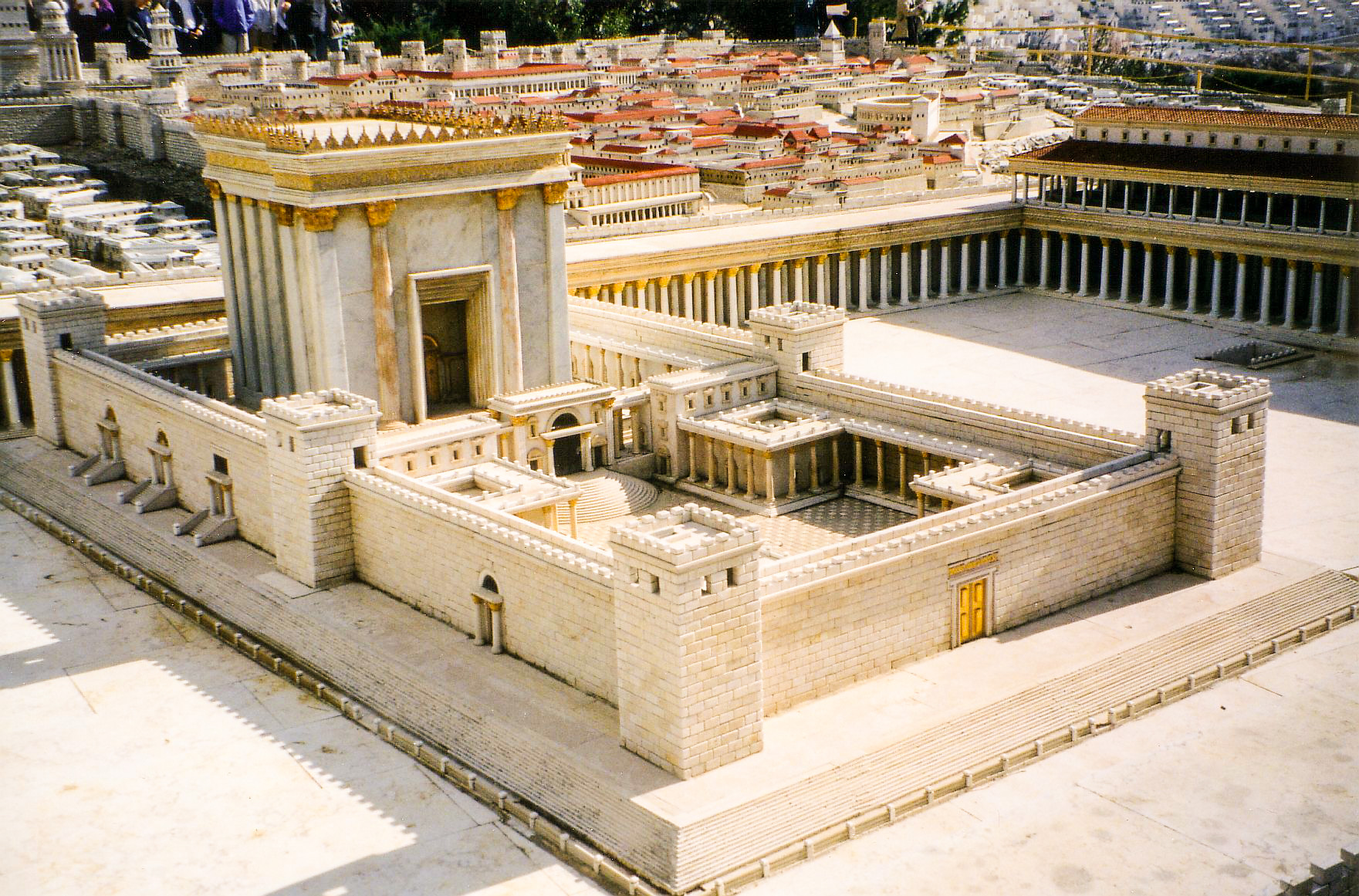
For most of us in the pew all scripture has little hidden gems that we sometimes pass over or just don’t recognize. We have become so accustom to reading and hearing the word and in that forest of words we miss the tree of added knowledge that strengthens our faith. The disciples were impressed by the grandeur of the Temple as we read in verses 1 and 2. Jesus’ reply, “not one stone will be left here upon another; all will be thrown down”, a statement that leads to a literary pattern that Mark used often in the Gospel. Jesus makes a public statement (v.2) then the disciples question him privately (vv. 3-4) to explain what he had said. This time it was the first four disciples who were called that were pressing him to give them a sign as to when this destruction of the Temple would occur. In an earlier instance ( 8: 11-12) the Pharisees had sought to test Jesus by demanding that he prove his authority, which is not the case here. Jesus’ reply (vv.5-13) does not provide the disciples with the sign they seek. Instead in these verses Jesus is telling them how to conduct themselves in times of turmoil and persecution. Jesus speaks to discipleship. They must be able and willing to testify to the gospel, understand they will be put upon because of their faith and in (v.8) not to interpret political and social turmoil as a sign of the end time. We see here a rather common occurrence over the years in the “church”, the preaching of the end times and the signs that point to its being upon us. These apocalyptic writings speak of the evil to come before the ending and in some instances the righteous being led astray. Jesus’ words warn of false prophets, political turmoil, natural disasters and if that isn’t enough a church that while engaged in a mission to the gentiles will find itself hated by both Jews and Gentiles. However, here in chapter 13 Mark does not deny that a crisis exists, he counsels both HOPE and Patience. Here is that “little gem”  I wrote of earlier. Dr.Roger Hahn speaks of it as “Patient Expectation”. 

I lean toward this patient expectation to mean that as christians we are to expect certain times of turmoil in our lives. The turmoil endured by Jesus and his disciples was the result of such evil times. They could expect to be persecuted and in some instances put to death, family and friends would be turned against each other. In times of social and political turmoil christians are often at risk for their beliefs. These are the things we can expect now….in this time. Then there is a patient expectation that leads to something wonderful. Jesus and the disciples suffered all the way to the Cross and their patient enduring of  the expected evil of others led them to the resurrection and the salvation of the believers. To me this is a wonderful thought to endure with “patient expectation”, verses 9-13 Jesus reminds the disciples that their task is to preach the gospel. We too are the disciples of this day and our task is to give testimony to the gospel. Through patience and endurance to the promise of the word we will see our Expectation of salvation. Remember Jesus’ words Mark 13:13

13 and you will be hated by all because of my name. But the one who endures to the end will be saved.

We will wait serving our Lord and savior, preaching and teaching the gospel, with “Patient Expectation”…….

Life is Good

jk

Share this:

  • Tweet
  • Email a link to a friend (Opens in new window) Email
  • Share on Path (Opens in new window) Path
Like Loading...

1000 Words

24 Saturday Nov 2018

Posted by John Kurt Carpenter in Uncategorized

≈ Leave a comment

 The painting to the left is a work by the artist Sigismund Christian Hubert Goetze. It has been said that a picture is worth a thousand words but if you look closely you will  realize the impossibility of giving even a faint idea of its power and awful significance with words from a people who refuse  to recognize their Savior. 

This is traditionally a time that we prepare to celebrate the birth of Christ. It is the time of the Angels singing on high and joy and goodwill to all mankind. Trees are going up and strings of colored lights decorate our homes and even our cities! Children’s faces are aglow with anticipation of Santa, presents under the tree  and there seems so little time to get everything done. The shopping malls will soon be full of shoppers, pushing, rushing from one store to another and if you look carefully there are few smiles of joy. For many the pressures of the season overwhelm them. In the city where I live there are a number of homeless encampments within hearing distance of the canned Christmas music that is being played everywhere. There will be the usual laments about Christ being taken out of Christmas even though the facts are plain, Christmas is a Christian thing celebrating the birth of Christ. That being said it is worth noting  “Many popular customs associated with Christmas developed independently of the commemoration of Jesus’ birth, with certain elements having origins in pre-Christian festivals that were celebrated around the winter solstice by pagan populations who were later converted to Christianity.”  As we make our way back to the painting I must share with you this scripture from   Isaiah 53: 3-5….


He was despised and rejected by others;

    a man of suffering and acquainted with infirmity;

and as one from whom others hide their faces

    he was despised, and we held him of no account

This chapter foretells the sufferings of the Messiah, the reason he did so and for which he died. The Jews were not impressed by this poorly dressed man and his humble appearance and manners. He would suffer for sins not his own, giving to us the gift of salvation. When you can, please read Isaiah 53: 1-11.    

According to an article on the painting in The Literary Digest, “‘At the exhibition of the Royal Academy in London, the great canvas by Sigismund Goetze … has created an artistic sensation.’ It is declared to be a ‘powerful and terribly realistic presentment of Christ’ in a modern setting.”

The complete link to this article will be posted at the end of this blog*. I cannot emphasize how important it is for you to go there and read the entire article. Overwhelmed by the season we are unable to see the real gift, the good news if you will, hidden amongst bright-colored ribbons and Christmas wrappings of red and green, mankind’s  only hope for redemption and salvation. The painting of course goes past that to the end result. Why in this time of celebration and great joy would I take us there? Simply put, we have the book, the word and yet we are the mirror image of the people in that painting. Going about our business, caught up in our importance, so rushed with life we can only spare a couple of hours out of this season to note the gift of our salvation coming among us. Go to the link and copy that picture, print it and post it, let every image in it be burnt into your mind. There among a heedless crowd, bound by ropes upon a pedestal stands the Christ. Do our actions say “it is nothing to me”?

To Christians Christmas is not a season, it is the presentation of the gift of the Father to his children in the person of the Christ child, a promise of hope, life and goodwill to all men.

Life is Good

jk


http://www.victorianweb.org/painting/goetze/paintings/3.html     *


Share this:

  • Tweet
  • Email a link to a friend (Opens in new window) Email
  • Share on Path (Opens in new window) Path
Like Loading...

Angels Among Us

17 Saturday Nov 2018

Posted by John Kurt Carpenter in Uncategorized

≈ Leave a comment


More about the title of today’s blog latter. I struggle at times to find things to write about, ignoring the fact that life itself has enough things to ponder and sometimes even change the way we see things. This past week our faith community lost a lady of immense faith whom I am sure was an angel to all that knew her. “Angels Among Us” is a song written by Don Goodman and Becky Hobbs and recorded by Alabama, a country music band. The song was released in December 1993. When I heard that Karen has passed it immediately came to my mind. That coupled with my bible study class which had decided this past week to take a break from our study of John and talk about Angels, well life made a point. Never knew that Angels had a hierarchy and each step the of the way they had certain responsibilities according to their place in the hierarchy. You know me or should if you have read any of my posts, I value simplicity. Here is the simple explanation of those whom God has assigned to comfort us. There is no better way to put it than to just reprint here a portion of the lyrics from the song “Angels Among Us”

Oh, I believe there are Angels Among Us,

Sent down to us from somewhere up above.

They come to you and me in our darkest hours

To show us how to live

To teach us how to give

To guide us with a light of love.

When life held troubled times

And had me down on my knees

There’s always been someone

To come along and comfort me

A kind word from a stranger

To lend a helping hand

A phone call from a friend

Just to say I understand

Now ain’t it kind of funny

At the dark end of the road

Someone light the way with just a single ray of hope.

( Lyrics By       Don Goodman and Becky Hobbs) 

The lyrics of this song give me comfort and I can say with blessed assurance that with Karen May’s passing, God has called another Angel home. We all can be an Angel at sometime in life, just look at the lyrics of the song, the list is simple acts meant to comfort others, we all have at one time or another done at least one or more on that list. Be an Angel to someone……….

Life is Good

jk

Share this:

  • Tweet
  • Email a link to a friend (Opens in new window) Email
  • Share on Path (Opens in new window) Path
Like Loading...

Playing With Words…… Political Assembly,  Separation of Church and State 

10 Saturday Nov 2018

Posted by John Kurt Carpenter in Uncategorized

≈ Leave a comment

One word to allow the persecution of the church, the other a misused metaphor that has eliminated anything having to do with Christian theism in the public arena. The word translated as church in the NT is ekklesia, which means political assembly. Now we are referring to early church times but this is an interesting word play. The political comes from the fact that the church had its own laws and authority figures and as it grew in number it was a threat to Roman society in the second century AD. The Roman proconsul Pliny issued a decree prohibiting “political associations” and used that to crack down on Christianity. Never thought of church being a political assembly especially since we value the separation of church and state so much. First let’s look at Pliny, a civil servant who served as governor of Bithynia, in the north of Asia Minor (modern Turkey), from 111-113 AD.  In a letter to Trajan, Pliny is seeking advice as to how to handle these Christians, also approval of his actions so far. We see the Roman Empire’s attitude toward Christianity, while this letter and the questions asked in it were of little importance to the political situation in Rome it does give us a view of how these early Christians were seen in the eyes of the authorities and their actions concerning the church. Trajan’s reply is interesting, it simply states that there is no general rule or fixed standard to judge by. Of course if they are accused of civil disorder or refusing Roman practices as to the worship of our gods and this is proven and documented they are to be punished according to our laws.There is an interesting caveat added here. If they repent and prove it by returning to the worship of our gods, they shall obtain pardon through that act of repentance. Also interesting to note the closing statement in the letter.

“But anonymously posted accusations ought to have no place in any prosecution. For this is both a dangerous kind of precedent and out of keeping with the spirit of our age.” (https://christianhistoryinstitute.org/study/module/pliny)

Given the last mid-terms this is advice we could well use today. This blog is the result of my concern over the silence from the pew and pulpit in these changing times. Change will always be with us and in most cases change is a good thing. I am concerned about the lack of civility and respect we have for others and the lessening influence of the church in our daily lives and the influence of societal change that marginalized our faith and our God. We, “The Church” no longer have a seat at the table and the state of our nation and its government have reached a state of controlled chaos. How did this happen? I believe the systematic removal of Christian values, faith and yes, I am just going to say it……The removal of God in our institutions of government, learning and law. Not to be overlooked is the absence of God in our families, once a place of religious learning and teaching of moral standards to live by.  Here is something to think about and gives me a dignified path of exit. “The Metaphor and the Constitution” an excellent article that contains a little nugget I just love. You must read this article to understand the impact this revelation could have on the church and the nation. Here is a brief snippet  from that writing:

“This, in conjunction with several other factors, makes the “separation of church and state” metaphor an icon for eliminating anything having to do with Christian theism, the religion of our heritage, in the public arena.”

Please go to this link

//www.allabouthistory.org/separation-of-church-and-state.htm

So to wrap up, we have been quiet for too long. The church has been too busy trying to adapt to the changing times and remain relevant in the lives of its people. No words from pulpit or pew, just silence and the mistaken belief that this is how we show our love for all people. Like it or not we must get back to the “table.” God’s voice must be heard again. Our voice, God’s voice is being held hostage by a Metaphor.

Separation of Church and State was never intended to remove the Christian’s voice from the establishment of our Government, its laws or its people from their God.

Life is Good,

jk


Share this:

  • Tweet
  • Email a link to a friend (Opens in new window) Email
  • Share on Path (Opens in new window) Path
Like Loading...

God’s Call To Unity… Life and Worship In The United Methodist Church

03 Saturday Nov 2018

Posted by John Kurt Carpenter in Uncategorized

≈ Leave a comment

“The issue of homosexuality was first openly debated in the church at the 1972 General Conference, four years after the Methodist and Evangelical United Brethren churches joined to form The United Methodist Church. Issues related to sexuality have continued to be debated at General Conference gatherings since then. General Conference last met in Portland, Ore., in 2016 and will next meet in a special session in St. Louis, Missouri in 2019.” (http://www.umc.org/what-we-believe/human-sexuality-backgrounder“

This is another one of those blogs that I have started over more than once. This is an issue that I have always believed to be driven by social and organizational agendas and having no standing in the church. Here I will get a few raised eyebrows, as I believe God settled this issue long ago. Having gained no significant ground over the years it sought a more universal platform, one that would produce a large enough angst among a larger more focused group and then there was the Methodist Church, just one among many.Here is the thing, if you were looking for a way to reach a lot of people who were passionate about something, you need look no further. Next, you need controversy, the more the better. Nothing, absolutely nothing, draws a crowd better than controversy. It was, to use a time-worn phase, “a marriage made in heaven.” So I have come to the conclusion that this same-sex issue has kidnaped the Church and Christianity. Now the Methodist church was an obvious target due to the fact that they are so vast, serving all over the word and taking seriously the charge to “do good whenever you can and wherever you can.” The Methodist church has had a social agenda for a long time, well-funded and active. in Romans 14:1 -15:13 we find Paul dealing with issues within a small church in Rome. Paul’s discussions of the different opinions that separate them is remarkable in that Paul in this section of scripture uses no identifiers such as Jew, Gentiles, circumcised or uncircumcised. He briefly lists the matters that divide them and focuses on the things that bring them together. To put this in context with today’s same-sex issue is not that hard and we must acknowledge that this issue is not the only one facing the church of today but it is the one at this time that seems to be capable of splitting the church. Paul takes these issues concerning the early church and makes it one about opinions, and as you know, everyone has one. The interpretation of scripture is one of the driving forces of this same-sex issue which is  changing church doctrine today. The issues may be different but he stays with the theme of the commonality of the faith. There are people of diverse backgrounds coming to join the people of the one God and acknowledge Jesus Christ as the Messiah. The church at that time was very much still Jewish in many of its practices and these Gentiles were of a different opinion concerning the matters of worship and faith. At that time the big issue was what you could eat and what not to eat, being circumcised or not  being circumcised. Paul knew that the problem was between Jewish Christians and Gentile Christians and there were strong and weak in both as to their adherence to the faith. Here is a point that would help us with this issue in the church today….Paul does not condemn either for their opinion. Paul is worried that the matters that have arisen will threaten the united worship of the one God. Paul is concerned that this worship of all sorts of people will be impacted by social or cultural influences and the insertion of Jewish law into this new “way” for God to be reconciled with his people would impact the church’s growth. Paul knew the elements that were involved here, but wisely chose to not emphasize them, he did not want to be drawing lines in the sand, he preferred to insist that it was possible for people of different opinions to learn to live and worship together.  

Now it gets a little sticky here on. Here again is my opinion, yours may differ. Paul equates “strong or weak” in the faith to a matter of maturity. We should not disqualify people for their opinion, because opinion is not a requisite of Christianity. Can we recognize that people whose faith is anchored by the belief that Jesus Christ, the risen Messiah and Lord belong together in the same family……the “Family of God”? What is the standard for exclusion from the “Family of God” and who makes that judgement? I must make this plain. The research material I am drawing from divides this segment of scriptures (Romans 14: 1 -15- 13) into three segments. In 14: 1-12 we read that the weak and the strong are made aware that they each have the same Lord. He is the Lord of all and we all will be judged and held to account by him. It is not right that any Christian should pre-empt God’s right in advance. Verses 13-14 present a real problem for many of us. Can we cope with the need to not condemn others opinions? Can we learn to respect and not make demands on one another’s consciences? When we get to the verses in chapter 15 there is an insistence on a mutual welcome to all people. Jews and Gentiles, following the risen Christ, the Messiah through whom our God will give the hope and power to be one in the Holy Spirit.

For over thirty years I sat in a pew in the Methodist Church and then a little over three years ago I found another pew. To my beloved church and to my brothers and sisters, I beg you not to leave as I have. We are one in Christ and we should not let opinions and other views drive us from the “Unity of Christian worship.” Judge not, Believe, Respect, Love and Honor God’s call to Unity. 

Life is Good

jk 

Share this:

  • Tweet
  • Email a link to a friend (Opens in new window) Email
  • Share on Path (Opens in new window) Path
Like Loading...

Theology….The Church’s Conscience

27 Saturday Oct 2018

Posted by John Kurt Carpenter in Uncategorized

≈ Leave a comment

 Those of you who have followed me in past blogs know I am a big fan of  understanding the meaning of a specific word. A specific word to me is one that is used to introduce a person, place, thing, event, present a question, or direct our thoughts or conversations toward a shared opinion. I know the correct use of a word is important, correct being the context it is used to convey a thought or point. Today’s blog deals with two specific words, Theology and Conscience. First: Theology is the study of religion. … The study of theology is part philosophy, part history, part anthropology, and also something entirely its  own.  Theologians have the complex job of thinking about and debating the nature of God. Studying theology means taking on challenging questions about the meaning of religion. Next: What does it mean to have a conscience? One definition being the inner sense of what is right or wrong in one’s conduct or motives, impelling one toward right action: to follow the dictates of conscience – the complex of ethical and moral principles that controls or inhibits the actions or thoughts of an individual. 

Theology had an important role in the development of the early church. Four important functions of theology were, catechetical, the apologetical, the polemical and the homiletical. Let’s start with the first and keep it simple. Catechetical relates to Christian instruction.

1

: a convert to Christianity receiving training in doctrine and discipline before baptism

2

: one receiving instruction in the basic doctrines of Christianity before admission to communicant membership in a church

Next we look at the word  apologetical, a systemic defense of an, often religious, position.

Apologetics is the religious discipline of defending religious doctrines through systematic argumentation and discourse. Early Christian writers who defended their beliefs against critics and recommended their faith to outsiders were called Christian apologists. In 21st-century usage, apologetics is often identified with debates over religion and theology.

On to polemical which in its polemical function, Christian theologians defended and expounded the biblical faith against heretical threats from within the church. It was the early church defending itself against controversial or other writings that were disputatious to the church. A christian must grow and mature in the faith and not be blown elsewhere by false teachings.

1

: of, relating to, or being a polemic : CONTROVERSIAL

2

: engaged in or addicted to polemics : DISPUTATIOUS

Now the last being Homiletics, in religion, this is the application of the general principles of rhetoric to the specific art of public preaching. One who practices or studies homiletics may be called a homilist, or more colloquially a preacher. Two among many are these scriptures which says a lot in a few words. First Timothy 4:13 Until I arrive, give attention to the public reading of scripture, to exhorting, to teaching.There is also Titus 1:9, one of many attributes needed by an Elder, He must hold firmly to the trustworthy message as it has been taught, so that he can encourage others by sound doctrine and refute those who oppose it.

I have often stated my worry about the increasing pressures on the “church” that are forcing it to take a path that is being guided by those with a personal agenda who are taking biblical texts out of their biblical contexts and allowing them to be driven by societal demands for change. A sound Theology provides a firm foundation to judge whether we are growing and serving Christ as the Great Commission charged us to do and are we obedient to his will? For most of us in the pew, it is the simple direct word of the gospel that drives our Theology.

John 6: 35-40

35 Then Jesus declared, “I am the bread of life. Whoever comes to me will never go hungry, and whoever believes in me will never be thirsty. 36 But as I told you, you have seen me and still you do not believe. 37 All those the Father gives me will come to me, and whoever comes to me I will never drive away. 38 For I have come down from heaven not to do my will but to do the will of him who sent me. 39 And this is the will of him who sent me, that I shall lose none of all those he has given me, but raise them up at the last day. 40 For my Father’s will is that everyone who looks to the Son and believes in him shall have eternal life, and I will raise them up at the last day.” It may seem to many of us in the pew that Theology is the equivalent of a course in Christian Algebra, we need it but just find it hard to understand.

Theology is the Church’s Conscience. Thanks for being in the Pew this week. Below are the reference materials used for today’s blog.

Life is Good

jk

Theology – Wikipedia https://en.wikipedia.org/wiki/Theology

The Role of Theology  By John Jefferson Davis, Ph.D.

Merriam – Webster


Share this:

  • Tweet
  • Email a link to a friend (Opens in new window) Email
  • Share on Path (Opens in new window) Path
Like Loading...

John 6: 1-21…The Rest Of The Story

20 Saturday Oct 2018

Posted by John Kurt Carpenter in Uncategorized

≈ Leave a comment

 These are two of the most wonderful stories in the Fourth Gospel. Bible study can sometimes lead us to things that challenge our faith and yet at the same time increase our understanding of scripture that in a way captures and here I barrow from Paul Harvey  “The rest of the story.”  There is quite a story here and if you are preaching, one whale of a sermon. Looking at the feeding of the five thousand the improbability of feeding that many people does challenge our faith. It is even more challenging considering the amount Jesus had to work with, now the rest of the story. Setting the scene:

-the people had seen Jesus heal the sick

-Jesus and the disciples had withdrawn to a hill nearby

-at the base was a grassy field

-the field was near a main road 

-the Passover Feast was at hand and the roads were full of people 

-Jesus saw the multitude coming toward him and had compassion for them

The players in this story include not only people but time, place and circumstance.  Now the passover, the feast of the Jews, was at hand and the roads were full of travelers eager to be in Jerusalem for this holiday. There was a main road that ran close by to this grassy field. Jesus asked Philip where they could buy food to feed these people, even though he knew what he would do. Philip replied that it would take six months wages to buy enough food to feed these people. One of the disciples, Andrew stepped forward and told Jesus about a boy who had five barley loaves and two fish! Andrew followed Jesus’ instructions and with the rest of the disciples distributed enough to feed all those present and still have enough left over to fill 12 baskets. Some things to remember. Philip, thinking like any of us often do, saw the enormity of the need and no real practical way to meet it. Now scripture doesn’t say it but I believe it very possible that this young boy offered what he had believing it would help the situation. Andrew apparently was not willing to accept that they just give up and was willing to reach out and put forward any hope of finding a way to feed these people. We see here a perfect example of turning over to God the impossible and having faith God will make it happen! 

Included in these verses is the story of Jesus walking on water and here again we allow mortal practicality to marginalize our faith. Here in verses 16-21 we are again challenged and our faith tested. Jesus had finished feeding the five thousand and the crowds surged toward him and he left quietly instructing the disciples to take the boat to the other side of the lake. It was his intention to walk around the head of the lake while they rowed across and rejoin them in Capernaum. It was as Snoopy was known to say “a dark and stormy night. The Jews would refer to it as the second evening, the time between twilight and dark. They had been rowing for almost four hours due to the intensity of the storm. Then they suddenly saw Jesus walking on the water toward the boat. Now in this day and time all people were superstitious and they believed it to be a ghost and were terrified. In verse 20 Jesus calls out to them and they took him into the boat and in 21 they immediately reached land. Now there is a lot of commentaries and opinions as to what really happened here, all designed to make an improbability a probable. I will not go there but offer these thoughts. These verses contain one phrase that sets to rest any need to ponder what happen here. But he said to them, ‘it is I; do not be afraid” and they took him into the boat. How often in times of uncertainty and fear do we not hear the voice of God because of our lack of faith?

The rest of the story is rather simple. How many times have we as a church using our human reasoning limited our faith that God can do anything? Why can’t we be like that little boy and Andrew? Willing to give, giving it to God and trust he will make it happen. Why are we not able to realize how important it is to listen for God’s voice as he calls out to us and allow him to make our impossibilities, possible, removing our fears of the uncertainties of this life? There are many “rest of the stories”  in the good book and to find them you have to go beyond the words to the faith of a believer who knows the word but also hears the calling of God.

Thanks for joining me in the Pew this week.

Life is Good!

jk 


Share this:

  • Tweet
  • Email a link to a friend (Opens in new window) Email
  • Share on Path (Opens in new window) Path
Like Loading...
← Older posts
Newer posts →

Recent Posts

  • The Light That Leads To The… Good Way
  • Back Porch
  • Before The Good Way… Leviticus
  • Back Porch
  • The Good Way…Proverbs 3 Wisdom, Love, Humility, and Fear.

Archives

  • January 2026
  • December 2025
  • November 2025
  • October 2025
  • September 2025
  • August 2025
  • July 2025
  • June 2025
  • May 2025
  • April 2025
  • March 2025
  • February 2025
  • January 2025
  • December 2024
  • November 2024
  • October 2024
  • September 2024
  • August 2024
  • July 2024
  • June 2024
  • May 2024
  • April 2024
  • March 2024
  • February 2024
  • January 2024
  • December 2023
  • November 2023
  • October 2023
  • September 2023
  • August 2023
  • July 2023
  • June 2023
  • May 2023
  • April 2023
  • March 2023
  • February 2023
  • January 2023
  • December 2022
  • November 2022
  • October 2022
  • September 2022
  • August 2022
  • July 2022
  • June 2022
  • May 2022
  • April 2022
  • March 2022
  • February 2022
  • January 2022
  • December 2021
  • November 2021
  • October 2021
  • September 2021
  • August 2021
  • July 2021
  • June 2021
  • May 2021
  • April 2021
  • March 2021
  • February 2021
  • January 2021
  • December 2020
  • November 2020
  • October 2020
  • September 2020
  • August 2020
  • July 2020
  • June 2020
  • May 2020
  • April 2020
  • March 2020
  • February 2020
  • January 2020
  • December 2019
  • November 2019
  • October 2019
  • September 2019
  • August 2019
  • July 2019
  • June 2019
  • May 2019
  • April 2019
  • March 2019
  • February 2019
  • January 2019
  • December 2018
  • November 2018
  • October 2018
  • September 2018
  • August 2018
  • July 2018
  • June 2018
  • May 2018
  • April 2018
  • March 2018
  • February 2018
  • January 2018
  • December 2017
  • November 2017
  • October 2017
  • September 2017
  • August 2017
  • July 2017
  • June 2017
  • May 2017
  • April 2017
  • March 2017
  • February 2017
  • January 2017
  • December 2016
  • November 2016
  • October 2016
  • September 2016
  • August 2016
  • July 2016
  • June 2016
  • May 2016
  • April 2016
  • December 2015
  • August 2015
  • June 2015
  • May 2015
  • April 2015
  • March 2015
  • February 2015
  • January 2015
  • December 2014
  • April 2014
  • January 2014
  • December 2013
  • November 2013
  • May 2013
  • March 2013
  • February 2013

Categories

  • Uncategorized

Meta

  • Create account
  • Log in
  • Entries feed
  • Comments feed
  • WordPress.com

Blog at WordPress.com.

  • Subscribe Subscribed
    • From The Pew
    • Already have a WordPress.com account? Log in now.
    • From The Pew
    • Subscribe Subscribed
    • Sign up
    • Log in
    • Report this content
    • View site in Reader
    • Manage subscriptions
    • Collapse this bar
 

Loading Comments...
 

    %d