
• About

From The Pew

~ A Layman's Look At The Gospel

From The Pew

Author Archives: John Kurt Carpenter

The Promise

28 Sunday May 2017

Posted by John Kurt Carpenter in Uncategorized

≈ Leave a comment

Last week I wrote that the end is really the beginning of the “Promise” which is a neat play on words, or a layman’s admission that my knowledge of theological reason and lingo are not all that developed. As most of us are prone to do we underestimate the scope of things in order to keep them manageable. Well I was speaking of God’s promise of eternal life, again “God’s Promise” and once again the usual practice of underestimating something. According to one person’s count, there are 3573 promises in the Bible. The word promise itself occurs over 50 times in the King James Version of the Bible. (bibleinfo.com) Now I have seen other counts and as the sentence that says “one person’s count” is just that, one person’s count. I can write with complete confidence that I could say that the number is more than one and at least more than a hundred and more than just about eternal life. In secular terms I have opened a can of worms. First thing to be learned here is to never underestimate God and never think of God as one issue Savior.

None of God’s promises in the Bible ever fail, from the very beginning to now, this very day. The first promise in the Bible… Genesis 3:15, I will put contempt between you and the woman, between your offspring and hers. They will strike your head, but you will strike at their heels.”

The last promise found in the Bible:Revelation 22:20, “He who testifies to these things says, ‘Surely I am coming quickly.’ Amen. Even so, come, Lord Jesus.”
Here is a list of some verses where the word promise is found:
Hebrews 7:6
Hebrews 8:6
Hebrews 11:13
Hebrews 11:17
Hebrews 11:33
2 Peter 1:4.
Romans 9:4
Romans 15:8
2 Corinthians 1:20
2 Corinthians 7:1
Galatians 3:16
Galatians 3:21
Hebrews 6:12

Why the list in the middle of a post, is it to prove a statement, written or said? Truth is I hope you will take time to look these up and read each one. I have found that to be close to God, one doesn’t have to be on their knees. When you immerse yourself in the word there is a peace that transcends all the chaos that is in the world around us. There is knowledge and the wisdom that is of God, for direction of our life: Psalms 32:8, KJV. “I will instruct thee and teach thee in the way which thou shalt go: I will guide thee with mine eye.”

The object here is not to play a numbers game but to present a case that can be proven by Biblical writings and lived out by those to whom God promised. Once more we are compelled say “None of God’s promises in the Bible ever fail.”It’s in the Bible, Joshua 23:14, “Look. I’m now walking on the road to death that all the earth must take. You know with all your heart and being that not a single one of all the good things that the Lord your God promised about you has failed. They were all fulfilled for you. Not a single one of them has failed.

In the same manner of promises we need to be aware that those promises of God containing retribution for sins and other transgressions are also kept in full. The God we serve is real and present yesterday, today and tomorrow. The very nature of the world today invites the devil to place in our lives those things that destroy our faith and lead us into the misery of sin and overwhelm us with a despair that challenges our faith.

Follow me on a short journey in words of God’s “Promise” in New and Old Testament form. God’s promise to Abraham ( Gen 12:2-3 ), in which the latter, although childless, was to become ancestor of a great nation. Later this promise was repeated ( Gen 15:5 ), and to his credit Abraham believed God’s utterances. On yet another occasion ( Gen 17:1-27 ) God brought his promise even closer to fulfillment by stating that Sarah would have a son ( Gen 18:10 ), because nothing was too hard for God to accomplish. Paul would write later and call these the “covenants of the promise” ( Eph 2:12 ; cf. Gal 3:6-17 ).

There is the promise to Abraham, a more general declaration made by God at the time of the fall ( Gen 3:15 ), and continued in a promise to David ( 2 Sam 7:12-13 ) that his seed would continue forever. From here on it continues and we see that with Christ’s kingship which was not of this world, it did fulfill the divine promise. Here is the “Promise” I referred to last week. There is now the dispensation of grace. We to this day still share in all the benefits of Abraham’s covenant ( Eph 3:6 ), while looking forward to a time when the kingdom of God, which was ushered in with the age of grace, will be realized when Christ returns to complete the kingdom of believers and establish it for all eternity before God in heaven.

There are so many things to write about here but for what I hope to leave you with this week, there is not enough paper or space to due it justice. We don’t just die, we begin a new and exciting journey just as God has promised. That which our God has promised, as written in His word in yesterday’s past and all the days to come will be fulfilled as “Promised”.

John 5:28-29, NKJV. “Do not marvel at this; for the hour is coming in which all who are in the graves will hear His voice and come forth—those who have done good, to the resurrection of life, and those who have done evil, to the resurrection of condemnation.”

As I always try to do here are two web addresses to use for further study. They have been the source of the information I have shared with you.

www.bibleinfo.com/en/topics/bible-promiseswww.biblestudytools.com/dictionary/promise/

God Bless, jk

Share this:

  • Tweet
  • Email a link to a friend (Opens in new window) Email
  • Share on Path (Opens in new window) Path
Like Loading...

My View, Death, The End of It…..or the….. Beginning of The Promise

21 Sunday May 2017

Posted by John Kurt Carpenter in Uncategorized

≈ Leave a comment

It’s Thursday about three in the afternoon and a typical hot, humid summer day in the south. Some things never really change while other things, particularly those totally unexpected leave us exhausted and re-examining our life and wondering why. I am very grateful for many things in my life, one is the Community of Faith. Today’s post concerns a member of that community. He is a brother in the faith and a member of the church I attend. Today’s post will be difficult for me because it involves a person I don’t know all that well but have a tremendous respect for. There are those people you meet in life that while you are not friends in the usual way, they are someone you would like to get to know better. Such is the case where this gentleman is concerned. In a series that shares the grief of the sudden death of a loved one, the writer puts on paper an agonizing and truly remarkable picture of grief that questions our faith but at the same time in a moment of shared frustration, gives us the reason for and the power of faith. There is also the opportunity to share the “Rest Of The Story”  I Consider these posts to be a remarkable journey through one man’s grief because the questions he asks are not from despair, but rather a believers quest for peace. I would not presume to or be able to adequately address this mans grief. I will in a feeble attempt turn to this scripture. Latter in this post I will return to it.

Philippians 3: 9 Keep putting into practice all you learned and received from me—everything you heard from me and saw me doing. Then the God of peace will be with you.

When time allows go to this link. (paranormalchrist.com) There will be five posts listed in the box to your right. Read each one, starting from the bottom. While this is an unusual request and requires time, I believe you will be blessed. I was struck by the raw emotion within his written words and yet that overwhelming grief that is expressed captures the finality of death and the burden on those it has taken from. There is no good side to death, you can’t dress it up with all the common clichés we are prone to use as we sincerely try to comfort those whom it has taken from. It has been said that you only die once but it is possible for the living to die many times.

There are always those chapters in the bible that for some reason or another stay with us. In Ecclesiastes for me it is Chapter 3. “For everything there is a season, and a time for every matter under heaven:” This is then followed by verses that list fourteen specific things, a schedule for life events you might say. One commentary points out that the question of eternality and spirituality cannot be addressed, because they cannot be seen “under the sun”, without the help of God’s Holy Spirit and the Scriptures; the commentary says all we can do is to simply rejoice in his works before giving way to the next generation.*( *The Bible Panorama)

The writer of the blogs I have referred you to picked Ecclesiastes 9 as a reference point. From a purely human view the word as written here in chapter 9 says there is a common destiny for all of us. We will all die. Death nullifies everything, no good, no bad, simply nothing. The Jewish Sadducees did not believe in resurrection, you die, end of story. Now I should note that not all Jews believed that, even when their understanding of resurrection differs greatly from the Christian belief. So the view here in chapter three is more or less, eat, drink and be merry. We will all have the same fate regardless of what we do. In both chapters there is agreement in the word that God will judge all things as equal. Bluntly put, just do your thing, stay busy and leave without a fuss. It is not my intent to challenge or question the grief of another. I am thankful for this gentleman barring his soul as he has done in this series of blogs. I cannot stress enough how your reading these writings will be time well spent.

You may be asking yourself after reading this far….. “What’s The Point?”*(Paranormal Christ)

Nathan, I am thankful for the opportunity through your writings to somehow in a small way, devoid of a world of well known clichés, share your grief. Maybe, just maybe, if your father could of had a last word with you……..Maybe… Paul writes to the church in Philippi to encourage them to rejoice in their trials and to be considerate of one another. I believe in verse nine what Paul writes ..Maybe..your father would have shared with you.

Philippians 3: 9 Keep putting into practice all you learned and received from me—everything you heard from me and saw me doing. Then the God of peace will be with you.

I feel that the ” Beginning of The Promise” comes with the death of this life. Next week we will explore the promise that we of the community of faith have inherited because of Christ and the Cross.

Peace my friend and God bless.

jk


Share this:

  • Tweet
  • Email a link to a friend (Opens in new window) Email
  • Share on Path (Opens in new window) Path
Like Loading...

Walking The Walk

14 Sunday May 2017

Posted by John Kurt Carpenter in Uncategorized

≈ Leave a comment

Before reading today’s post please read the following scripture – Ephesians 5: 1-20. Pray and then join me in the pew.

In the church today the scripture as written is being challenged and in some situations completely ignored. Recently a Pastor said that there are times when a particular bit of scripture will make him feel uncomfortable, prompting him to spend more time with it, reading it in its full context, then studying and praying and seeking the guidance of the Holy Spirit. I read a great deal and listen to those in the pew in normal everyday conversations and usually I will find something to write about. Today’s blog actually was inspired by one of my daily devotionals. The scripture reading was from Ephesians 5: 1-20 and it stayed on my mind the whole day. I went back and read the entire chapter and you know what…….it made me uncomfortable. What was Paul thinking when he wrote that first verse in Chapter 5?

“you must become imitators of God, as well-loved children imitate their father.”

I believe Paul’s point was that we must live a Holy Life as we have been commanded to from the very beginning of God’s speaking to his people through the Patriarchs of the Old Testament and to this very chapter of Ephesians and throughout all the scriptures. Deuteronomy is often referred to as the book of laws and contains a verse that has become the definitive statement of Jewish identity. Deuteronomy 6:4 -“Hear, O Israel: the LORD our God, the LORD is one.” There would come a point where the Jews would be consumed by attempting to live in strict obedience to the Law, of which an additional 613 laws had been added over time. How do we walk the “Way”
and what is required of us? There are many answers throughout scriptures, here is one of my favorites.
Deuteronomy 10:12
[ A Call to Love and Obedience ] “And now, Israel, what does the Lord your God require of you? He requires only that you fear the Lord your God, and live in a way that pleases him, and love him and serve him with all your heart and soul.

I think that this scripture is easily understood and leaves little room for re-interpretation. Today we are overwhelmed with various interpretations and well meaning writings that seek to put the scripture in a form that is livable with today’s accepted social standards. What God asks of us is so simple when written but evidence supports that the living of such is extremely difficult; many fail every day even though God in his wisdom continues through all scripture to provide us with the way and even gave His only son’s life to absolve us of our sins and afterwards sending the Holy Spirit to guide and strengthen us as we strive to live a Holy Life. We still somehow fall short. Let’s take a closer look at Ephesians 5: 1-20.

Paul sets before these Christian people a high standard to aspire to. He instructs them to be imitators of God. Paul reasserts it is their responsibility to reject certain types of behavior. There is no need to put down an exhausting list of don’ts and do’s, so keeping to that thought, see how Paul states the obvious.

“Let no one even mention fornication and unclean living and insatiable desire among you – it does not befit God’s consecrated people to talk about things like that. Let no one even mention shameful conduct. Let there be no foolish talking and graceless jesting among you – for these things are not fitting for people like you. But rather let your talk be a gracious thanksgiving to God. You know this and you are well aware of it, that no fornicator, no unclean liver, no one who is characterized by that greed – which is idolatry – has any share in the kingdom of Christ and God. Let no one deceive you with empty words. It is because of these vices that the wrath of God comes upon the children of disobedience. Don’t become partners with them”.
(NLT)
Even today Paul’s instructions and abolishment could be said to us with no adjustment of wording at all. “You know this and you are well aware of it” That being so, why do we continue such behaviors? I think part of the reason is our practice of rating some sins as horrendous, while others although bad, don’t quite reach the bar worthy of total righteous Christian indignation. We seem to allow a little wiggle room claiming Christian tolerance and forgiveness. Now I am alright with the tolerance and forgiveness thing on the back end, which leaves open a whole new blog subject but what we do on the front end needs a lot more effort on our part. The front part being learning how to convey our faith as the reason we seek to live a Holy Life. We must become better communicators. Besides walking the walk we must learn to talk the talk.

It has been said that to be a great orator, three things had to be present.
– Theory, a belief, policy, or procedure proposed or followed as the basis of action. We believe these basic precepts are necessary to living our Christian faith.

-Imitation, the assumption of behavior observed in other individuals. We must imitate Christ’s love for all people, be compassionate and be in total obedience to God.

-Practice, carry out, apply and practice what you preach.

Light and dark are words which are often used in biblical teachings to clearly communicate a state of being that produces an immediate picture most people can understand. Paul finds no need for fervent preaching but simply says that the non-Christian lives life in the dark, while Christians enjoy living in the light of the knowledge of Christ. It is a light that makes them useful citizens of this world who work toward not failing in their duty, human or divine, which in turn serves those things that are pleasing in God’s eyes. “It is the Christian’s duty to expose every action, every decision and every motive to the light of Christ.”(William Barclay)

We know that evil does not like the light but we should always remember the light of Christ as not only condemning but with it also comes healing. This is only one of many great chapters that can be found in God’s word. “Walking the Walk” is never an easy thing…..15 SO… be careful how you live. Don’t live like fools, but like those who are wise. 16 Make the most of every opportunity in these evil days. 17 Don’t act thoughtlessly, but understand what the Lord wants you to do. 18 Don’t be drunk with wine, because that will ruin your life. Instead, be filled with the Holy Spirit, 19 singing psalms and hymns and spiritual songs among yourselves, and making music to the Lord in your hearts. 20 And give thanks for everything to God the Father in the name of our Lord Jesus Christ. (Ephesians 5: 15-20)
God Bless

jk


Share this:

  • Tweet
  • Email a link to a friend (Opens in new window) Email
  • Share on Path (Opens in new window) Path
Like Loading...

God, Sin and Society…….

07 Sunday May 2017

Posted by John Kurt Carpenter in Uncategorized

≈ Leave a comment

I have been advised that I should not cast doubt on my own person so to speak but fact should never be absent from public discourse. I am a layman, I sit in the pew each week just as many of you do. I hear the discussions and the opinions of my counterparts and what’s important is….I listen. Having shared this please know that I am not offended by correction or disagreement and never intend to knowingly offend anyone.

I think it is reasonable to say that the church faces many challenges in the world of today. The onslaught of negativity and in some places the outright hostility toward religious freedom has passed the point of reasonable concern. There will be those who disagree with my view that when we speak of religious freedom and to whom it applies, Christian beliefs are subjected to an uneven field of play in today’s society. We must recognize that there are countries and governments that openly deny and prevent the practice of Christian faith values or its precepts and it is most often imposed by the government or societal wishes of its people. The state we find the world in today, here at home especially, calls for a closer look at what freedom really means. What about this word Freedom? Merriam Webster has this :

a :  the absence of necessity, coercion, or constraint in choice or action

I believe that to be a reasonable definition, or we could use a familiar phase we all have heard before…. “do your own thing”. Consider this………

In a healthy society, there is a balance between freedom and authority, and a need for just the right doses of each.
—
Marc Fisher, Washington Post, Baseball will never have another Vin Scully, 29 September 2016

We have arrived at what I see as a huge problem for us of the Faith. Societies view of sin and God’s view of sin differ greatly. Think about this for a moment. Do you really believe there can be a balance between societies view of what is sinful and God’s view? I do not think this is possible. Should the acceptance of questionable practices, those that are not found pleasing in God’s eyes or contrary to His commandments be accepted by the church as an act of tolerance? Back to our friend Merriam Webster for this about tolerance. There were several definitions, the second one fitting the message I am trying to convey.

2
a :  sympathy or indulgence for beliefs or practices differing from or conflicting with one’s own
 beliefs

:  the act of allowing something :  toleration

How do we as Christians explain our acceptance of those things that God has found to be un-holy. Now we find ourselves confronted with truth; we as Christians cannot accept such things. Our society has evolved to the point good or bad, your choice, that things of question are matters of freedom and must be given equal standing. I might also add to that statement “that things of question” are debatable as to their worth as assessed by social attitudes of the day. Some more information that as Christians we need to hear. Here in the USA we do not live in a “Theocracy”

[thee-ok-ruh-see]
1.
a form of government in which God or a deity is recognized as the supreme civil ruler, the God’s or deity’s laws being interpreted by the ecclesiastical authorities.
2.
a system of government by priests claiming a divine commission.
3.
a commonwealth or state under such a form or system of government.

Thus leaving us subject to DEMOCRACY.
Definition of democracy
plural democracies
1
a :  government by the people; especially :  rule of the majority


b :  a government in which the supreme power is vested in the people and exercised by them directly or indirectly through a system of representation usually involving periodically held free elections

:  the absence of hereditary or arbitrary class distinctions or privileges


The Apostle Paul writes “Let every person be subject to the governing
authorities. For there is no authority except from God, and those that exist
have been instituted by God. Therefore whoever resists the authorities
resists what God has appointed, and those who resist will incur
judgment” (Rom12:1-2).

We have arrived at our faith “Conundrum”……..

Definition of conundrum
1
:  a riddle whose answer is or involves a pun (as in “Why didn’t the lost hikers starve in the desert? Because of the sand which is there.”)

2
a :  a question or problem having only a conjectural answer … 

We are faced with the conundrum of freedom and democracy, both which
allows us to practice our faith beliefs and so far has defended that, but
limits our ability to share the Good News with others.

So, as Christians where are we at today? We must stop blaming our
inability to grow and bring people into the church on the state of today’s
society, instead we must focus on those things we can control.

-be faithful in our attendance and support of our church and church family

-we must invest in the ministry by giving of our monetary and physical
abilities.

-we must accept and extend to all an invitation to share the Good News but
not compromising our beliefs and those commandments given to us from
God through the Patriarchs of the faith

-we must do a better job of sharing the precepts of the faith and the need to
live a Holy life, passing these on to our children and those new to the faith

These are just a few of the things on my mind. To my way of thinking we
can save no one on our own. It is the saving grace of God and Christ on the
cross that brings salvation to all those who call out to Him. As one man has
written, “it’s not about us”. Our place in this world today and our Christian
calling is simple. We are to go out to all the world and tell the “Good News”
of Jesus Christ. I see nothing divisive in that calling.

God Bless,

jk


Share this:

  • Tweet
  • Email a link to a friend (Opens in new window) Email
  • Share on Path (Opens in new window) Path
Like Loading...

Process or Content….. The Struggle of Today’s Church to Remain Relevant….

30 Sunday Apr 2017

Posted by John Kurt Carpenter in Uncategorized

≈ Leave a comment

All churches struggle with what is the best way to grow membership and take the gospel to a world that is full of distractions and competition for the hearts and minds of people. We should note that even among church membership there lies the things of this world that limit commitment and stifles spiritual growth. This post is not about traditional or contemporary, hymnals, large screens, or any of the issues that spawn countless board, trustees, deacons and members meetings and conversations. To make things even more difficult is the annoying habit of our society to label people and put them in different groups and requiring that we deal with each differently. There is some merit to this line of thought but within the church it can become a tool of separation. I don’t have the answer to this very compelling and confusing dilemma many churches face every day. I do believe that at the heart of it all lies “Process and Content”. Process being the tools we use to reach others in and outside the church. Content being what it is we are attempting to share. I may not be saying this well, my point being that I believe the “Process” has become more important than the “Content”

During last Tuesday mornings Bible Study we read and discussed Paul’s leaving Athens, traveling to Corinth and perhaps looking back at his time in Athens during that time of travel. It is very possible that he had a few regrets
and second thoughts about how to best share the word, the good news! I wish to share with you a few thoughts about this time and how the church might learn from it. Our scripture focus today will be 1st Corinthians 2 Chapter.

I believe Paul was struggling with the events that took place in Athens and the fifty miles he traveled to Corinth gave him time to review in his mind what had happened there. They never tried to make it difficult for him to speak and as they did in previous places they made no attempt to run him out of town, he just simply left out of frustration. Truth is there were some who sought him out, eager to debate or question the Apostle. They found him interesting and the only thing they really asked was “what is this babble from this strange man about this foreign god?” I feel sure that many churches today, particularly the smaller ones face some amount of frustration in the lack of growth and the struggle to remain relevant in today’s society.

It is worth the read to see how Paul reacted to a very real situation, one that should be familiar to many of us. There is also the possibility that ego, yes ego was also at work here. the devil comes at us in many ways. Paul studied under Gamaliel and had built a sterling reputation among the upper Jewish class as a protector of the faith due to his relentless persecution of the people of the “way”. Sometimes the egos within the church stifle learning and growth by subjugating them to personal agendas. Paul determined otherwise and resolved to put first the story of the cross, “Jesus Christ and Him crucified”. I think there might be a certain amount of fear; the prospect of not putting his excellent vocabulary or wisdom to use leaves him a bit uneasy. Paul has come to the realization that it is not human wisdom or persuasion that gives power to the message; it is the Holy Spirit. We as the church today must come to the realization that the power of the message lies in the cross, the resurrection and the power of God to save. It is not the size of the buildings, the amenities or the size of the crowd, it is the saving grace of Christ on the cross, that is the story that must be told.

As individuals we may well be at different points in our faith walk but God in his wisdom has given us the Holy Spirit through which the truth of his word will be revealed and God has prepared for his redeemed people. The Spirit works in the hearts of people to reveal their sins and their need for the gospel of Jesus Christ on the cross and his resurrection. It is not my intent to marginalize the efforts of those who seek new ways to share the Good News. My concern lies in the possibility that in doing so we have allowed ourselves to overdo “Process” at the expense of “Content”. As I said earlier I don’t have an answer but I find in the words of an old hymn a way that might make the path forward a little clearer.
Onward, Christian soldiers!  Marching as to war,
With the cross of Jesus, Going on before.

We are at war with the seemingly innocent excuse of changing to meet the demands of society today. Change is good I suppose but not at the expense of the intent of God’s word. We have only to look to Paul and learn from his example. “Christ on the cross, Paul had come to the realization that it is not human wisdom or persuasion that gives power to the message; it is the Holy Spirit. We as the church today must come to the realization that the power of the message lies in the cross, the resurrection and the power of God to save.”…….AMEN

jk

Reference Material:   The Bible Panorama

Share this:

  • Tweet
  • Email a link to a friend (Opens in new window) Email
  • Share on Path (Opens in new window) Path
Like Loading...

The Little Letter With a Big Message

23 Sunday Apr 2017

Posted by John Kurt Carpenter in Uncategorized

≈ Leave a comment

This letter is written to Philemon a leader in the Colossian church. It is a prison letter, co-authored by Paul the Apostle with Timothy. Paul I am sure wrote more personal letters but this is the only one that has survived. From most accounts Paul would have been between fifty-five and sixty years old. We see in this letter the power of Christian fellowship and the reaching out to the Christian community in absolute confidence. Let’s start by looking at verses 1-7. You might read into these first few verses the fact that while Paul referred to himself as an apostle, here in writing to Philemon he identifies himself as “Paul, the prisoner of Jesus Christ” and we know from the scripture that he is not alone, Timothy is there with him. Paul puts aside any claim to authority and states his appeal with sympathy and love. We read that good deeds can increase our knowledge of good things and bring us closer to Christ. We can also believe that joy and encouragement are the fruits of such behavior for ourselves and those around us. Paul is not seeking a favor for himself, Paul rarely sought favors for himself, this time he sought to help Onesimus find his way back. It is certain that Christian generosity was a characteristic of Philemon. He loved God and he loved Gods people. In his home they could rest and be refreshed. Philemon apparently was known among the Christian community as a generous and kind man.

In these next verses 8-17 Paul humbly summits his request. Again, he appeals not to office or authority but to the bond of Christian love between himself and Philemon. He now speaks of Onesimus for the first time. Paul makes no excuses for Onesimus, admitting there may be some problems with him. He who had at one time been useless is now useful. Onesimus was at least a runaway slave who while in prison with Paul through Christ became useful again. Barclay says that Paul presented himself to Philemon not as an apostle or as we said earlier one of authority, but as a man “who has lived hard and is now lonely and tired.” Knowing Christ does make a bad person good. Many things come to light here. Onesimus’ time with Paul had opened his eyes and heart to Christ. Even though his mind was now on heavenly things, he was once again useful on this earth. Paul is asking a lot of Philemon for it is certain Onesimus must have stolen some money or goods from him to get to Rome. It is the power of forgiveness through Christ that enables those of the Christian faith and family to forgive.

It is a very short letter that Paul wrote so long ago but carries to this day a powerful message. Paul through his dealing with this situation reveals a list of things we as Christians should recognize and practice.

-power of Christian fellowship and the reaching out to the Christian community

-good deeds can increase our knowledge of good things and bring us closer to Christ.

-sympathy and love

-We can also believe that joy and encouragement are the fruits of such behavior for ourselves and those around us.

-Christian generosity

-bond of Christian love

-Knowing Christ does make a bad person good.

-Even though our mind is on heavenly things, we can be useful on this earth.

-It is the power of forgiveness through Christ that enables those of the Christian faith and family to forgive.

How powerful is Christ in us when we summit to his will. Thanks for being here in the pew this week, hope you come back. jk


Share this:

  • Tweet
  • Email a link to a friend (Opens in new window) Email
  • Share on Path (Opens in new window) Path
Like Loading...

Judas…..A Bad Egg?

16 Sunday Apr 2017

Posted by John Kurt Carpenter in Uncategorized

≈ Leave a comment

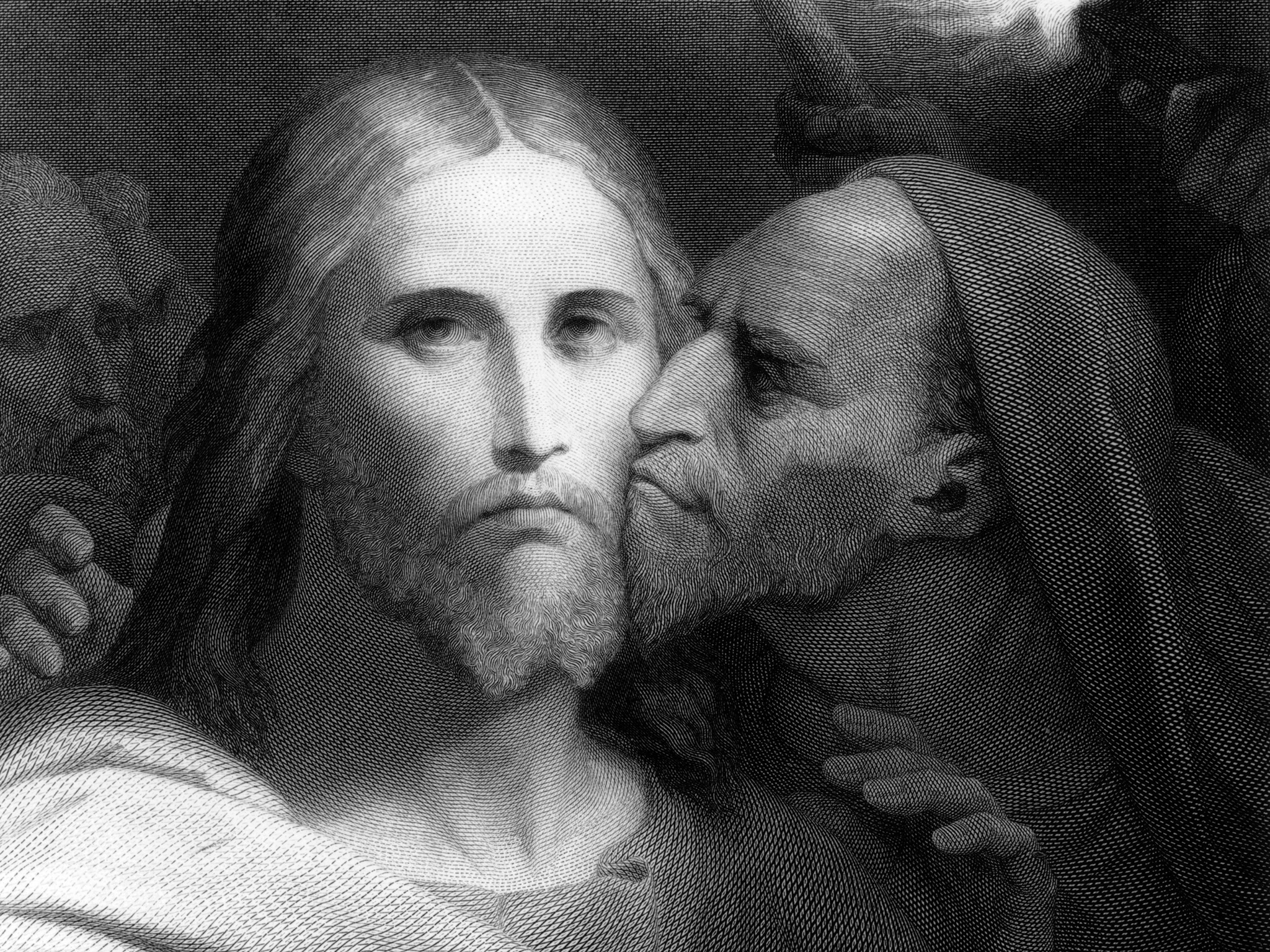
My opinion about him is gleaned from years of Bible stories, Sunday School and of course the scripture itself. The best I could say about him would be he was A Bad Egg; the definition of which is someone who does bad things, a dishonest person. We remember Judas for one thing, his betrayal of Jesus. Judas was with Jesus for three years, which means he witnessed many of the miracles that Jesus did during his ministry, shared many of the times when they were in danger and suffered the hardships that came with being a follower of Jesus. So I guess it is only reasonable to ask why he did what he did. It would also not be inappropriate to wonder why Jesus picked him to start with. Scripture leaves no doubt as to he was. One of the other disciples was named Judas (John 14:22) and in Mark 6:3 a half-brother of Jesus is named Judas. John 6:71 and 13:36, identifies Judas as the son of “Simon Iscariot”. Lastly in Luke 22:48 we read in scripture conformation that it is without a doubt that he made a conscious choice to betray Jesus. All the above leaves no doubt about which Judas is being referred to. There are so many things written about Judas by highly respected theologians that provide a depth to this Biblical account that goes beyond the written word. Having said that let’s move on to some other interesting things about Judas.

In John 6:70 Jesus says “have I not chosen you?” , speaking to the twelve disciples and goes on to state “one of you is a devil”. Reading from John 13:26 Jesus again calls Judas out. Did Jesus know the heart of Judas? Of course he did. The other disciples, well that’s another story. They did not give it a thought, after all he was one of them, a trusted member of the Twelve. Even when Jesus told Judas to “do what he was about to do and do it quickly” (John 13:27) the others simply thought Judas was off to buy food or do something for the poor. Judas betrayed Jesus with a crude brazen display of affection, continuing the sinful deception before the others. Oh how loudly the scripture speaks to us and guides us to our saviors divine nature. In John 13:18 Jesus reveals that it is Judas and his action will fulfill the scripture. Judas was was fully responsible for his actions. Most of us sitting in the pew go no father than betrayal for thirty pieces of silver and the kiss that sealed the deal. There is so much back story here that causes us to think longer about this act and the man who did it. This is what I refer to as the second act of scriptural record and Jesus’ path to the cross.

Why did Judas Betray Jesus? Most writers say we cannot be absolutely sure but there are some things that certain scripture reveal to us. John 6: 64 indicates that Jesus knew, although he picked them, that not all of the Twelve believed and he knew who would betray him. Professions of faith and loyalty from the Twelve are often recorded in scripture (John 6:68, 11:16). Also Judas never referred to Jesus as “Lord” but would address him as “Rabbi”. Judas saw Jesus as no more than a Teacher and like the Pharisees he believed Jesus would not and could not overthrow the Romans. John 12:5,6 reveals another disturbing fact about Judas. Judas was a greedy man and in John 13: 29 we learn that Judas was in charge of the money bag from which he no doubt took some from for his own use. We must be careful not to read to much into all these things but careful reading and study does show us this. If order of the Twelve in written word is an indicator of relationship with Jesus we can note that Judas is always last and infrequent. Theirs was not a strong relationship. Perhaps like many people of that day Judas just simply failed to recognize Jesus as God incarnate. So maybe he was just…..A Bad Egg.

Today we celebrate the resurrection of Jesus! He LIVES! We will rejoice and be glad.

God Bless,
jk

Reference: On Judas Iscariot -Warren Wiersbe

Share this:

  • Tweet
  • Email a link to a friend (Opens in new window) Email
  • Share on Path (Opens in new window) Path
Like Loading...

John Chapter 11…… After The First 44

09 Sunday Apr 2017

Posted by John Kurt Carpenter in Uncategorized

≈ Leave a comment

The events surrounding Lazarus in this chapter are well known and it is possible they were the driving force in the decision to convene the Sanhedrin which was the supreme council, or court in ancient Israel, to deal with this Jesus problem. Last Sunday’s message led me to this weeks blog. Ever wonder what happens to the people recorded in these events? The adulteress saved by Jesus, “go and sin no more”, no other mention is made of her. The blind man, after he is called to verify the event of his regaining his sight, we hear no more about him, and there are many more. While it is important what occurred latter in Lazarus’ life, the real story here to me is what happened to Jesus and because we know what happened let’s look at the why.

We know Lazarus as a follower of Jesus. He is identified as the brother of the sisters Mary and Martha. Lazarus, Mary and Martha lived in the town of Bethany. It is believed that Bethany was less than 2 miles from Jerusalem. Bethphage is believed to have been even closer to Jerusalem. While details are important they can be a distraction. The importance of Bethany and Bethphage to Jerusalem and the story of Jesus’ crucifixion is that their distances and the time period that evolves in these last crucial days leading up to the crucifixion lend to the believability of this biblical event. Much will happen between Bethany, Bethphage, Mount of Olives and the final hours in Jerusalem and their close proximity to each other figures in the flow of events to come. Three important locations, add to that two important groups and our question concerning Jesus and we have a blog. This event is not mentioned in the three other Gospels. After some research I settled on the thought advanced by William Barclay, whom I quote below.

(3) Perhaps the greatest difficulty is that John sees in this miracle the essential cause which moved the Jewish authorities to take definite steps to have Jesus eliminated (11:47– 54). In other words, the raising of Lazarus was the direct cause of the cross. In the other three gospels, the great moving cause of the crucifixion was the cleansing of the Temple. It is difficult to understand why the other three gospel writers have nothing to say of it, if indeed it was the immediate cause of Jesus’ crucifixion. [1]

Lazarus or the temple, I’ll go with Lazarus because the healing acts of Jesus threatened the status and power of the Jewish ruling class. Who might they be? Sadducees and Pharisees would be the most prominent. They would have the largest presence in the council, also known as the Sanhedrin. The council numbered about seventy and the Sadducees were more numerous. The Sadducees were very much political and all of them were Priests. The Pharisees were not a political party at all; their sole interest was in living according to every detail of the law; and they did not care who governed them as long as they were allowed to continue in meticulous obedience to the law. [2]

Reading verses 45 through 48 we can see that the main concern of the Sadducees was to retain political, and social power and the prestige that came with it.

John 11
45 Many of the people who were with Mary believed in Jesus when they saw this happen. 46 But some went to the Pharisees and told them what Jesus had done. 47 Then the leading priests and Pharisees called the high council together. “What are we going to do?” they asked each other. “This man certainly performs many miraculous signs. 48 If we allow him to go on like this, soon everyone will believe in him. Then the Roman army will come and destroy both our Temple and our nation.” [3]

If I am reading this right some of the people went to the Pharisees, who went to the Priests, most of whom were Sadducees and were very astute in the political side of this problem. Thus the Pharisees who only wanted ensure the integrity of the faith had unwittingly energized the political arm of the Sanhedrin. To keep it simple their first concern was to protect themselves and in no way mirrors Jesus’ love and concern for all the people. “ If we allow this man to continue on we will lose control and Rome will impose their will on us with no respect to who we are or our position among our people.” The Sadducees were dominating and arrogant to others and at times even rude to each other. Their judgement had nothing to do with what was right but rather how it would affect their positions of power and influence and of course their wealth. I believe this would be a good place to ask this question. Does this behavior bring to mind the position we find our nation in today and in some cases the state of the “church”. Keeping this in the secular tongue the next verses show the Sanhedrin putting a “HIT” on Jesus and issuing a BOLO on Jesus.

John 11
49 Then one of them, named Caiaphas, who was high priest that year, spoke up, “You know nothing at all! 50 You do not realize that it is better for you that one man die for the people than that the whole nation perish.” 51 He did not say this on his own, but as high priest that year he prophesied that Jesus would die for the Jewish nation, 52 and not only for that nation but also for the scattered children of God, to bring them together and make them one. 53 So from that day on they plotted to take his life. 54 Therefore Jesus no longer moved about publicly among the people of Judea. Instead he withdrew to a region near the wilderness, to a village called Ephraim, where he stayed with his disciples. 55 When it was almost time for the Jewish Passover, many went up from the country to Jerusalem for their ceremonial cleansing before the Passover. 56 They kept looking for Jesus, and as they stood in the temple courts they asked one another, “What do you think? Isn’t he coming to the festival at all?” 57 But the chief priests and the Pharisees had given orders that anyone who found out where Jesus was should report it so that they might arrest him. [4]

As Paul Harvey a popular radio personality of “back in the day” would have said…. “now for the rest of the story”. Looking back to verse 51 Caiaphas, from his lips as the High Priest…..”51 He did not say this on his own, but as high priest that year he prophesied that Jesus would die for the Jewish nation”.

There is a strange twist to all this. The Jews insisted that Jesus must be eliminated so the Romans would not take their authority away. Then some years latter about AD 100, Rome tired of the Jewish problem besieged Jerusalem, left it in ruins and destroyed the Temple. We know what happened to Jesus, but we also know the rest of the story. Jesus died not just for a nation but for[5] all God’s people throughout the world. Of course the most important part, the ending that as a beginning. THE RESURRECTION. HE LIVES!! 

Thanks for joining me in the pew

jk

[1] William Barclay DBS   [2] William Barclay DBS  [3] NLT   [4] NLT  [5] William Barclay

DBS


Share this:

  • Tweet
  • Email a link to a friend (Opens in new window) Email
  • Share on Path (Opens in new window) Path
Like Loading...

What Cost The Price of Forgiveness and Grace

02 Sunday Apr 2017

Posted by John Kurt Carpenter in Uncategorized

≈ Leave a comment

I can’t really say how I was led to this, maybe all the turmoil and hate that has pervaded our nation and world has led me to the importance of Christ and his mission in our lives. We must learn to forgive and seek and understand the grace of God.

Can we put a price on forgiveness and grace as promised by Christ? This won’t be the first time I will ask this question. The following was written by German theologian Dietrich Bonhoeffer.

Cheap grace is the grace which amounts to the justification of sin without the justification of the repentant sinner who departs from sin and from whom sin departs. Cheap grace is not the the type of forgiveness of sin which frees us from the toils of sin. Cheap grace is the grace we bestow on ourselves. Cheap grace is the preaching of forgiveness without requiring repentance, baptism without church disciple, communion without confession, absolution without discipleship, grace without the cross, grace without Jesus Christ, living and incarnate.

From a book written by Kevin DeYoung regarding a totally different subject, I found these questions and answer which seem to fit well here. “Are we to believe that God’s love is conditional? Is there is common grace that all people enjoy and then a saving grace which only the redeemed experience? The answer to that question is no.”

Ok, now I ask that question again. Is God’s love conditional? Lets change that wording a little and ask could it be dependent upon and if yes, dependent on what? Let’s go to scripture, starting with Colossians 1:21-23

21 This includes you who were once far away from God. You were his enemies, separated from him by your evil thoughts and actions. 22 Yet now he has reconciled you to himself through the death of Christ in his physical body. As a result, he has brought you into his own presence, and you are holy and blameless as you stand before him without a single fault.
23 But you must continue to believe this truth and stand firmly in it. Don’t drift away from the assurance you received when you heard the Good News. The Good News has been preached all over the world, and I, Paul, have been appointed as God’s servant to proclaim it.

Take a moment to look a little deeper at these verses.The aim of reconciliation is holiness. Jesus died so that we might be reconciled and present ourselves to God consecrated and blameless. The fact that God loves us does not allow us to do whatever we want. It is our burden to be worthy of that love. Here being the first cost of forgiveness and grace. This love and reconciliation requires that we stand firm in the faith, holding to the hope of the gospel. Good times, bad times…….stand firm in the faith. This being the second item of the cost.

Continuing on….. Jude 1: 21-24

21 and await the mercy of our Lord Jesus Christ, who will bring you eternal life. In this way, you will keep yourselves safe in God’s love.
22 And you must show mercy to those whose faith is wavering. 23 Rescue others by snatching them from the flames of judgment. Show mercy to still others, but do so with great caution, hating the sins that contaminate their lives.
24 Now all glory to God, who is able to keep you from falling away and will bring you with great joy into his glorious presence without a single fault.

Much is said in these verses but the one overriding lesson here is that to walk with God is to walk in safety….and if your still counting this is # 3. God will keep us safe. We know we can go to God in complete joy, all our fears laid aside because the God of sternness is now known to us as God the loving father.

Hebrews 12:14

14 Work at living in peace with everyone, and work at living a holy life, for those who are not holy will not see the Lord.

Even when we suffer it is our Christian duty to be at peace with all men, even those who might be the cause of our suffering. We cannot live a holy life if we are not at peace with those around us. For a true Christian there can be no holiness without peace. The scripture plainly states “for those who are not holy will not see the Lord” Here is #4. The price for this holiness is our willingness to summit to others and live a life at peace with the world around us.

13 But the one who endures to the end will be saved.

The best comment to Matthew24:13 would be the two scriptures below.

1 Peter 1:9New Living Translation (NLT)
9 The reward for trusting him will be the salvation of your souls.

Romans 2:7New Living Translation (NLT)
7 He will give eternal life to those who keep on doing good, seeking after the glory and honor and immortality that God offers.

So we allow that these scriptures will be #5, after the price and cost we have the assurance of salvation.

It costs nothing to receive the forgiveness and grace of God, we simply have to ask………….and in return Repent of our sins, “keep on doing good” and “trust him”.

Join me next week here in the pew……God Bless
jk
Other References: Bible Gateway,William Barclay,Matthew Henry


Share this:

  • Tweet
  • Email a link to a friend (Opens in new window) Email
  • Share on Path (Opens in new window) Path
Like Loading...

Gospel, Immigration And Politics

19 Sunday Mar 2017

Posted by John Kurt Carpenter in Uncategorized

≈ Leave a comment

It was pointed out to me that a certain scripture set forth the biblical reason why Christians should not be supportive of the government’s attempts to control immigration into the US. The scripture referenced was: Leviticus 19:34 Any immigrant who lives with you must be treated as if they were one of your citizens. You must love them as yourself, because you were immigrants in the land of Egypt; I am the Lord your God.

Another close sister scripture would be:
Hebrews 13:1,2
Keep on loving one another as brothers and sisters. 2 Do not forget to show hospitality to strangers, for by so doing some people have shown hospitality to angels without knowing it.

We are all familiar with the use of scriptural references when seeking to strengthen a position or policy but I do have concerns about such activities. Often the verse pulled is done so because it bolsters the position being discussed, or aids in making a point that strengthens our side of the discussion. I used the word pulled because if read in full context the meaning might be much different. One such issue today, right now, real time is the immigration debate we are having in our country. I am prejudice toward the law and the fair and equitable application of it. The Pew does not have a law library and I don’t have a law degree but I do have a dictionary that goes with me everywhere in this digital world we live in. The subject of today’s blog is The relation of the Gospel to the law and politics of the day. We need to know what it is we are writing or speaking about and Merriam Webster is a good place to start.

Definition of immigrant:  one that immigrates: such as a person who comes to a country to take up permanent residence. I believe we can all agree that we have a flood of immigrants coming into our country every day. Now there are many ways to enter the USA , here is another group that contributes to these numbers.
Definition of refugee
:  one that flees; especially:  a person who flees to a foreign country or power to escape danger or persecution; someone who has been forced to leave a country because of war or for religious or political reasons.There is one other classification and I will list it after the next paragraph.

Definition of illegal alien/immigrant
:  a foreign person who is living in a country without having official permission to live there.

Ok, see the difference here? One group comes by choice which might be any number of reasons; economic, educational, religious, there are a host of reasons I am sure. Now that other group, they are fleeing because they have no other choice. So, not everyone is an emigrant some of these folks are refugees. The third groups status is not debatable due to the definition of the first two. BUT, by law there are certain requirements expected of all people who come to the United States. This is a very simplistic view of a very simple person, that being me. So is it reasonable for me to ask just what is the problem here? I’ll answer my own question, of course it is! Keeping this simple, here are the three things that I see are causing the problem. Government, Law and Politics. Government is necessary but messy. Law is complicated and is contrary to what we have been told, not blind. The last one, Politics, is the reason Law is not blind and Government is messy.

Migrant
: a person who goes from one place to another especially to find work.
These folks have been with us for a long time. They supply much of the
labor needed to harvest produce. We have seen at times in the past a great
deal of controversy regarding these people.

Now the last part to this situation. We are a nation in a debate, not always peaceful, that has seen some ridiculous mind boggling statements that are void of any reason other than a “my way or no way” mentality. The disturbing thing about this is that it is not about any individual’s intelligence, it is about a position that has gained a “political agenda” status which is devoid of individual reasoning and has become a “you’re with us thing”. We are a nation of laws and pride ourselves on being fair and compassionate in judging others by law and not agendas. There is no reasonable retort to the fact that our laws regarding immigration are not being enforced or carried out fairly. There is also the fact that law for the sake of law is not always compassionate. What about the gospel, what about “christian charity”? Let’s go back to Leviticus 19:34 and take a closer look at this verse.
34 Any immigrant who lives with you must be treated as if they were one of your citizens. You must love them as yourself, because you were immigrants in the land of Egypt; I am the Lord your God.

I turn to Matthew Henry’s commentary concerning this verse. God had dignified Israel above any other people but that did not give them the right to do others wrong or insult them. It is thought that the stranger referred to here is not an idolater, but a worshiper of the God of Israel. So I think that perhaps just as many of us today cite the law of the land being pushed aside for what I believe to be a partisan agenda,the scripture here alludes to the possibility that the strangers may also worship the God of Israel and require such courtesy. As we read on we are reminded that “Strangers are God’s particular care, as the widow and the fatherless are, because it is his honor to help the helpless, Ps. 146:9.

The Lord watches over the foreigner and sustains the fatherless and the widow, but he frustrates the ways of the wicked.

God also reminds them (the Jews) that they too were also strangers in the land of Egypt at one time. It is important to point out here that the Jews were welcomed into the land of Egypt to escape a famine in their homeland. God reminds them that although the strangers may have many issues, they (the Jews) have no way of knowing how they might turn out and perhaps it was not right or fair to despise them. I asked the question sometime ago what is the problem here?

Here is the view from the pew. Government is responsible for a big part of this mess because of its irresponsibility in enforcing the law as written or at least offering a plan that would allow some discretion within the law. Second and quite honestly even or close to overtaking the Government’s part would have to be Politics and the many different agendas, populated by people whose only goal is to secure their agenda through partisan political action groups. Thirdly, for which I will be roundly criticized is “The Church” in general. The Church should never be in the business of advocating the disobeying of legally established law or participate in helping people who would do that for political reasons. I will also say that the government of Mexico has not done a good job of taking care of it own people, at least the less fortunate among them.

So to the Government and various Political organizations, get out of the way. Both of you have shown an inability to do for the people, rather working only to serve your own interests. I appreciate a strong and stable government and the things that come with it. I do not appreciate an agenda driven political solution to a people problem that is devoid of common sense compassion. To the “Church” get off your high horse of religious indignation and discounting those who disagree with you as prejudice or uninformed. Instead just simply love and care for those that are among you and accept your responsibility to foster harmony and unity among God’s people. The final verdict of this mess is really before us every day. It is Us, We, you and me. The birth, ministry, crucifixion and resurrection of Christ brought about the reconciliation between God and his people. It also was the adoption of all people into the family of God. We are all God’s children. We need to do better for our brothers and sisters.

jk

References:   Matthew Henry Commentaires, Merriam Webster


Share this:

  • Tweet
  • Email a link to a friend (Opens in new window) Email
  • Share on Path (Opens in new window) Path
Like Loading...
← Older posts
Newer posts →

Recent Posts

  • It’s A Matter of Heart
  • Back Porch
  • Ephesians 6:13-17… “God Speak”
  • Back Porch
  • A Christian Tool Box…

Archives

  • February 2026
  • January 2026
  • December 2025
  • November 2025
  • October 2025
  • September 2025
  • August 2025
  • July 2025
  • June 2025
  • May 2025
  • April 2025
  • March 2025
  • February 2025
  • January 2025
  • December 2024
  • November 2024
  • October 2024
  • September 2024
  • August 2024
  • July 2024
  • June 2024
  • May 2024
  • April 2024
  • March 2024
  • February 2024
  • January 2024
  • December 2023
  • November 2023
  • October 2023
  • September 2023
  • August 2023
  • July 2023
  • June 2023
  • May 2023
  • April 2023
  • March 2023
  • February 2023
  • January 2023
  • December 2022
  • November 2022
  • October 2022
  • September 2022
  • August 2022
  • July 2022
  • June 2022
  • May 2022
  • April 2022
  • March 2022
  • February 2022
  • January 2022
  • December 2021
  • November 2021
  • October 2021
  • September 2021
  • August 2021
  • July 2021
  • June 2021
  • May 2021
  • April 2021
  • March 2021
  • February 2021
  • January 2021
  • December 2020
  • November 2020
  • October 2020
  • September 2020
  • August 2020
  • July 2020
  • June 2020
  • May 2020
  • April 2020
  • March 2020
  • February 2020
  • January 2020
  • December 2019
  • November 2019
  • October 2019
  • September 2019
  • August 2019
  • July 2019
  • June 2019
  • May 2019
  • April 2019
  • March 2019
  • February 2019
  • January 2019
  • December 2018
  • November 2018
  • October 2018
  • September 2018
  • August 2018
  • July 2018
  • June 2018
  • May 2018
  • April 2018
  • March 2018
  • February 2018
  • January 2018
  • December 2017
  • November 2017
  • October 2017
  • September 2017
  • August 2017
  • July 2017
  • June 2017
  • May 2017
  • April 2017
  • March 2017
  • February 2017
  • January 2017
  • December 2016
  • November 2016
  • October 2016
  • September 2016
  • August 2016
  • July 2016
  • June 2016
  • May 2016
  • April 2016
  • December 2015
  • August 2015
  • June 2015
  • May 2015
  • April 2015
  • March 2015
  • February 2015
  • January 2015
  • December 2014
  • April 2014
  • January 2014
  • December 2013
  • November 2013
  • May 2013
  • March 2013
  • February 2013

Categories

  • Uncategorized

Meta

  • Create account
  • Log in
  • Entries feed
  • Comments feed
  • WordPress.com

Create a free website or blog at WordPress.com.

  • Subscribe Subscribed
    • From The Pew
    • Already have a WordPress.com account? Log in now.
    • From The Pew
    • Subscribe Subscribed
    • Sign up
    • Log in
    • Report this content
    • View site in Reader
    • Manage subscriptions
    • Collapse this bar
 

Loading Comments...
 

    %d