After The Cross…That Strange Chapter John 21

This past Easter Sunday for many of us will be the one that Church stayed at home. Today, April 15 I am still at home as we shelter in place during this virus pandemic. I have had more time to read and that is a good thing and I have been blessed that I do not have this virus. What will happen after this, I don’t know, we have yet to live that chapter? What happened after the cross? We have ample writings from those who were there and in reading some I was blessed to find this interesting Chapter from the book of John, Chapter 21. After some study of this chapter and other research material I do agree that this  is a strange chapter. It is only 25 verses compared to the 31 verses in the previous chapter. Why is it viewed to be so strange? The gospel seems to come to an end in verse 31 in Chapter 20. But it strangely begins again in Chapter 21. As a layman I do not feel qualified to say why this happened but do feel the need to ask why and try to come to some conclusion. Chapter 20: 30-31 perfectly speaks to the aim of this book. It is impossible for the gospels to give a full account of Jesus’ life as they do not follow his activities day to day. They are instead a truthful and accurate collection of what he was like and the kinds of things he was doing. These collections of his demeanor and activities were meant to present him as Master, Lord and our Savior. If we approach them as a people seeking God we will be blessed and strengthened. So…Let’s take a look beyond the words and explore this what seems to be an addition to an Ending, a PS so to speak. I will be using the DBS, New Interpreter’s Bible and Wikipedia as primary resources.

Our first stop in this journey will be by the Sea of  Tiberias where Jesus showed himself again to his disciples. Verse 2 of the 21st chapter.

 Gathered there together were Simon Peter, Thomas called the Twin, Nathanael of Cana in Galilee, the sons of Zebedee, and two others of his disciples.

They had been fishing all night and it was just after daybreak, Jesus was standing there on the shore but none of them recognized him right away. It was in a gray type of early light that they first saw him. It was Peter who knew it was the Lord. There are always little bits of information that historical fact makes known to us and add a bit of realism to the words. When fishing the normal wear was just the loin cloth but when Peter in awe and joy leaped into the water to greet him because he wanted to be the first to greet him, he paused first to put on his fisherman’s tunic. You see it was Jewish law that a greeting was a religious act, such an act required that he must be clothed. There were many who had said that these appearances of the risen Christ by the disciples are only visions. Now they did not question the seeing of these visions, they did however insist they were only just that, visions. Here right at the first few verses of this chapter we see a possible reason for the addition of this chapter. It demonstrated once and for all the reality of the resurrection. The gospels insist that these were not as some were saying, just visions and hallucinations, they were   not even a spirit, but a real person, the risen Christ. The tomb was empty and his body bore the marks of the crucifixion: the nail holes in his hands and the mark of the spear thrust into his side. Sometimes the way we do things can be used to validate a story or in this case the appearance of Christ to the disciples as they fished. When we speak of visions or even a spirit, it is not likely that either could have started a fire, cooked fish or prepared a meal. He then shared that meal with them! It would be hard for one of the men in the boat to spot a shoal of fish, but it was often done by a person on the shore, it really wasn’t that unusual. In these next verses 15-19, Jesus questions Peter’s love for him. Scripture has a way of putting forth a question or questions that reveal our true feelings. ‘Simon, son of Jonas, do you love me more than these?’ Not being there we cannot be sure but reasonable thinking might lead us to ask what the context of these was. Did Jesus with a sweep of his hand indicate the boat, its nets and other equipment as well as the fish that had been caught? “Do you love me more than these things?” Was he asking Peter if he was willing to give up all this stuff to follow him? We could ask ourselves that question today, right here and now… Are we willing to give up our stuff to follow Jesus. Are we ready to be a shepherd to his lambs? It could have been Jesus asking Peter if he loved him more than his fellow disciples did? Jesus asked this question three times and within those three times we find astonishing revelations. Be a shepherd to my lambs  He said to him a second time: ‘Simon, son of Jonas, do you love me?’ Jesus replied to Peter’s yes ‘Be a shepherd to my sheep.’ Then yet again Jesus asked ‘Simon, son of Jonas, do you love me’? I am sure by this time Peter is confused but there is a purpose in this repeating question… Each answer given requires a task accepted. Peter was tasked with the responsibility of a lifetime of shepherding the sheep and the lambs. Like Peter we can also prove our love for Jesus by our love for others. To love is the hallmark of a Christian but with it comes a great responsibility. Jesus also presents Peter with his own cross. Sometime later in Rome Peter would be nailed to a cross. We should understand that even today to love Jesus will present us with a cross of our own. Our cross might be in the form of ridicule, shunned by family, friends a hostile workplace and yes missionaries who lose their lives loving, caring and bringing the good news to the sheep. So here is Peter, who by no means was anything like Paul, for Paul would have many voyages and adventures taking the word to the world. Most of us will not be able to travel the world or write as Paul wrote, but we who also love the Lord can accept the task of loving and caring and being the shepherd of the sheep of Christ.

This strange chapter shows us two great figures of the Church…Peter and John. Each given a different task, Peter to shepherd the sheep of Christ, to love and care for the lambs of the Lord. To John the task of witnessing to the story of Christ to live to an old age, dies in peace, writing ‘I know Jesus Christ, and I know that these things are true.’ We have been reminded in this strange chapter the reality of the resurrection, the inclusion of all believers in service to the Lord and the tasks of the church being shared by all who love the Lord. Christ has risen and to each of us there are the additional tasks that this strange chapter sets forth and reminds us of the reality of the resurrection.

Life is Good

jk

Last Supper, A Place Called Gethsemane, The Unexpected Gift

Tuesday had been an eventful and full day for Jesus and his disciples. It was a day of confrontation, the Olivet Discourse and warnings about the future after which Jesus and the disciples returned to Bethany to stay the night. Wednesday it is believed they rested and looked forward with great anticipation to the Passover Feast. We Christians refer to the Feast of the Passover as the Last Supper and here we note that the disciples going into it had no idea of what the next few days would bring. The events prior to this meal are of great interest. Jesus was a wanted man, the decision had been made, Judas has agreed to betray Jesus, the Chief Priests and the elders of the people have met in the palace of the High Priest Caiaphas and have conspired to arrest Jesus and kill him. They wanted it done quietly and after the Festival because they feared the people would riot. Jesus had the past few days displayed a defiance to those practices and people whose actions were against the will and word of God. Now on this day as Jesus and the disciples prepared for the Passover meal he gave instructions to send some of their number to purchase the necessary food and drink for the meal as well as secure a place for them to have the meal together. Matthew 26:18 ‘Go into the city to such and such a man, and say to him: “The Teacher says, my time is near. I will keep the Passover with my disciples at your house.”

The Passover Feast was the reason that Jesus had come to Jerusalem. While some allowances had been made because the city was so crowded at this time, the feast itself had to be celebrated within the city of Jerusalem. I add this little tidbit to the story because of an earlier statement I made. Jesus’ life was not ruled by circumstances, it was the will of God that led Jesus. There were many who supported Jesus and as we know a member of the ruling council came to Jesus in the dark of the night. Jesus left nothing to chance and it is suggested that a friend in the city itself had been instructed as to what to do when he was approached and told “The Teacher says, my time is near”. He sent those disciples ahead if you will to give a sort of password that would set the preparations in motion. It is fact that the authorities were looking for Jesus and Jesus knew that. He keep a low profile and avoided any confrontation with the authorities. He would join them when all was ready later that evening. Jesus knew that it was time for the Father’s will to be done and he alone knew the will of the Father. The disciples would have no sense as to what was about to happen, for the Passover Meal would become their last supper with Jesus. As they are eating the Passover Meal Jesus begins to speak to them. It is at this point that this meal becomes the Last Supper we read about in the New Testament. One interesting point is the timeline involved here. The Jewish day begins at 6pm. For us that would be Wednesday evening at 6pm. What that means is that on Thursday, the next day they had until 6pm that evening to make the preparations for the meal. Any time after 6pm. Thursday, that is when the guests might come to the table and it would then be the next day, Friday.

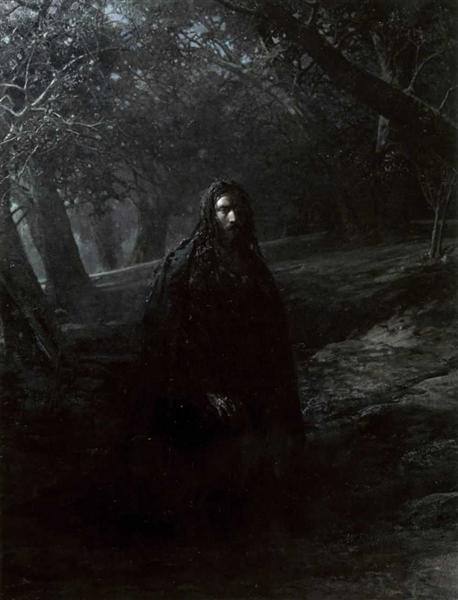
I am going to move forward to Matthew 26: 26-30. They sing a hymn, Psalm 136 and then go out to the Mount of Olives. It is at this point that we need to look at the location of the Mount of Olives in the context of these scriptures. The Mount of Olives is more of a hill across the valley from the Old City, separated by the Kidron Valley and part way down that hill toward the old city lies Garden of Gethsemane. It was here in this garden that the gospels of Matthew and Mark identify this place where in his agony he prayed on the night of his arrest before his Crucifixion. After we follow some translations of the word garden we find it to mean a cultivated tract of land that many believe to have been an olive garden. The Greek word Gethsemane comes from a Hebrew word or a similar Aramaic word, Gat Shemanim, meaning, “a press of oils.” It was an olive press and in all probability it was a private place owned by a person or persons in Jerusalem and Jesus most likely had permission given by a benefactor to enter there.The agony of the cross and the gift of salvation through the blood of Christ shed on the cross is the foundation of our Christian faith. Let there be no mistake that without the cross and the empty tomb, life would be just an event in time. It must be said no matter how harsh it may sound, a Christian lives to die for Christ. That Unexpected Gift, the one that is the motivator for all this….Reconciliation.

Reconciliation, in Christian theology, is an element of salvation that refers to the results of atonement. … John Calvin describes reconciliation as the peace between humanity and God that results from the expiation of religious sin and the appease of God’s wrath.”

Jesus Christ was the Lamb of Atonement, he gave his life to appease the wrath of God because of mankind’s sins. Much has been written about these last three days and much more will be added as to the how, when and where but the words will never capture the reality and joy of the resurrection, we will never know until our time.

The Tomb is Empty

Life is Good

jk


Beyond The Words … Cont’ Journey To The Cross… Days Three and Four

Scripture indicates that Tuesday was also the day Judas Iscariot negotiated with the Sanhedrin, the rabbinical court of ancient Israel, to betray Jesus (Matthew 26:14-16). This was a very busy day for Jesus and his disciples. It was on this day that Jesus also went to the Mount of Olives and it was here that a major discourse took place between Jesus and the disciples. The Olivet Discourse, was an orderly and extensive teaching that Jesus gave on the Mount of Olives. The subject being that of the end times. Matthew has the most extensive record and can be found in Matthew 24:1 – 25:46. This is not the time to address these chapters as they are filled with much information and a few words could never give them justice as to their importance in our savior’s journey to the cross. I suggest you read the Chapters and verses as listed above. There are some points here that help us to better understand the emotional burden and determination of Jesus in the hours before his passion. We tend to set aside the humanness of Jesus, he was God incarnate and walked among us, God in human form. This was his choice and makes all the more revealing the power of the Father, the God of all creation. A discourse is a conversation, a discussion and you might say about a set of principles, or instructions to a certain group, in this case the disciples. In Christianity, the term Five Discourses of Matthew refers to five specific discourses by Jesus within the Gospel of Matthew. One of those discourses was the Sermon on the Mount of Olives. Jesus chose for this discourse to take place in the privacy of the Mount of Olives. We must as difficult as it might be, try and understand that the life of Jesus was not one of circumstance, it was according to the will of the Father, God. Within this discourse is the warning to the disciples that they will suffer tribulation and persecution before the ultimate triumph of the Kingdom of God. This discourse is also known as the Little Apocalypse because it includes the use of apocalyptic language. After this time with the disciples on the Mount of Olives and a full day, Jesus and the disciples returned to Bethany to stay the night. We have no record of what the Lord did on Wednesday but the assumption of many scholars is Jesus and the disciples spent the day in Bethany resting and planning for the Passover Feast. One thing that is important is that at one point Jesus had raised Lazarus from the grave and with the closeness of Bethany to Jerusalem the word of this miracle made it to the Pharisees in short order. You can be certain that this sealed the fate of Jesus in their eyes.   

I will close out this week with a blog to be posted at fromthepewblog.com on Saturday evening entitled…

Last Supper, A Place Called Gethsemane, The Unexpected Gift

Hope you will join us in the Pew this Saturday eve.

Life is Good

jk

Research Sources:  DBS, New Interpreter’s Bible and

https://www.gotquestions.org/Olivet-discourse.html

Beyond The Words …

With all that is happening in the world today I have struggled picking out a blog subject for this week. The whole world of course is fighting this pandemic that has left very few of our lives unchanged. We are sadden by the fact that in all probability only on-line services will mark these important days in the Christian calendar. This Sunday is Palm Sunday and is the start of our Lords journey to the cross. We will hear the falmilar verses and sing those falmilar hymns as we, the Church, celebrate this eventful week in Christendom. The fact is that without the cross, the crrufixtion and the resurrection, there could never be hope for mankind. Sometimes we need to get past the usual rote of worship or even reading of the Scripture, we need to go beyond the words. It would be impossible for us to feel the persecution of Christ, the unfairness of judgement passed on him, the tremendous pain of leather straps tipped with knife edged bone that tore the skin apart and the thorns that were pressed into his head, we just can’t truly feel that physically. It is even harder to access the pain and the endurance of our Lord as he carried the cross to Golgotha on that fateful day. The following is from Wikipedia.

“Via Dolorosa, Jerusalem

The Via Dolorosa (Latin for “Sorrowful Way”, often translated “Way of Suffering”; Hebrew: ויה דולורוזה; Arabic: طريق الآلام) is a processional route in the Old City of Jerusalem, believed to be the path that Jesus walked on the way to his crucifixion. The winding route from the former Antonia Fortress to the Church of the Holy Sepulchre — a distance of about 600 metres (2,000 feet)[1] — is a celebrated place of Christian pilgrimage. The current route has been established since the 18th century, replacing various earlier versions.[2] It is today marked by nine Stations of the Cross; there have been fourteen stations since the late 15th century,[2] with the remaining five stations being inside the Church of the Holy Sepulcher.[3]

Words can paint a picture in our minds and they can bring forth emotions, they can even inflict pain but unless they reside in our hearts and find a place in our souls they are like seeds sown in a field, some will grow increasing our knowledge while others will die not even finding a place in our memories. Join me now as we go beyond the words in our Plan Sunday remembrance.

Day 1: Triumphal Entry on Palm Sunday

Jesus’ triumphal entry is recorded in Matthew 21:1-11

It is the time of the Passover in Jerusalem and the city and surrounding areas were packed. It was a Jewish law that every adult Jewish male within fifteen miles of Jerusalem must attend Passover. This, the greatest of their national festivals brought Jews from not only Palestine but from all over the world. Here in this city full of people who were there primarily for the religious significance and expectations of their Jewish faith came Jesus. He could not have picked a better time but as we will read it was not a spur of the moment thing.  Jesus had a plan… He sent his disciples ahead to the village to get a donkey, the way the text reads he had already made arrangements for this to happen. Now Matthew names the village as that of Bethphage, but Mark 11:1 mentions Bethany. The general consensus is Bethany would have been the village where the donkey was and also Jesus stayed there after his entry into Jerusalem. Bethany was the home of Mary, Martha and Lazarus and the home of Simon the Leper. Mark in 11:2 also gives us another point that is not all that well known. Old Testament scriptures lend authority to the fact that this donkey was special because it had never been ridden before. (Numbers 19:2, Deuteronomy 21:3.) We know they spread their cloaks on the ground before him, they welcomed him like a King. As Jesus entered the city they shouted Hosanna, their excitement at a fever pitch. A people’s cry for deliverance in the day of their oppression. Stop for a moment, savor this moment of the people crying out to their savior and King. This would have been like a ticker tape parade down Fifth Ave, the frenzy of the crowds growing with every step and the ruling Jewish council’s  concern rising with every wave of a palm branch and shout of Hosanna. It is very plain that Jesus’ intent was to awake the people with the methods of the prophets. Words were no longer enough, he felt led to go beyond the words. There was within the Jewish faith a growing casual and indifferent attitude to the will of God. You can call it a parade, a pep rally or whatever you wish, it was in all intent a dramatic action accompanied by symbolic actions that a Jew would recognize, it was a call to salvation. Jesus showed his courage in a city he knew to be hostile to him. Those in authority hated him and were plotting a way to get rid of him. Here he put forth his claim and underscored his calling. He was the God’s Messiah, the Anointed One!  It gets even better. Jesus had a certain quality that people found appealing. He sought their hearts, he came humbly among them seeking the kinship of mankind not the throne. He came on a donkey and in this land and this time a King who came on a donkey came in peace. So we see the courage of Christ, the affirmation of his claim and also his last invitation to men and women to open their hearts to him.

Day 2: On Monday, Jesus Clears the Temple

Matthew 21:12–14

On Monday evening Jesus stayed in Bethany again, probably in the home of his friends, Mary, Martha, and Lazarus. If some would consider the entry of Jesus into Jerusalem one of defiance knowing that he knew the Jewish ruling council hated him and his message, then what was about to happen would be defiance with a Capital D. This is a picture we need to paint with just a few words. The actual Temple itself was a small building but it was surrounded by four  adjoining courtyards. Without going into much detail we will focus on the area that defiance ceases to be just a word and became an action. The courtyard of the Gentiles into which anyone could come was always busy but at the time of Passover it was packed with pilgrims from all over the world. Two things that were problematic were the money-changers and the Temple Tax. The temple tax was one half-shekel and had to be paid close to the Passover time. You could pay that tax at various places set up in advance of the Passover but after a certain time it must be paid at the Temple only. Enter the money-changers…their function was to change unsuitable currency into correct currency. Because so many people came from all over they would need to pay this tax at that time. This was a big business at this time. I’ll not bore you with details but the underlying problem here was that a necessary service had become a questionable practice. The money-changers charged a commission for changing the currency, so people ended up not only paying the tax of a half-shekel but also the extra charge of the money-changers for their services. This extra burden was hard for the ordinary people. Now to be fair this was not an abuse but it led to some instances of the money-changers taking advantage of the situation. The selling of doves, brought for offerings was worse. Any animal to be used as a sacrifice had to be without blemish. You could buy an animal outside the Temple but there were official inspectors who could reject an animal, then direct you to the stalls and booths within the Temple. The problem here was that a pair of doves could cost as much as fives times more from these Temple vendors. His anger was directed against those who would exploit others, using their faith to gain profit in the name of religion. I am sure there were many who came just to pray and worship and were distracted by the din among those buying, selling and bargaining. It was within this context that Jesus allowed his anger to come upon these people. There is a beautiful ending to this in that there still remained in the Temple Court the blind and the lame and the fact that he remained to heal them. Not all had been run out, those that truly needed him had stayed. We best consider this. There is such a thing as the wrath of God, we don’t hear it preached as much these days but we also must allow for the love of God. Both are needed to ensure the Kingdom.

I will wrap this up with these verses:

Matthew 21:15–17

When the chief priests and scribes saw the wonderful things that he did, and the children shouting in the Temple: ‘Hosanna to the Son of David!’ they were angry. ‘Do you hear what these are saying?’ they said. Jesus said to them: ‘Yes! Have you never read: “Out of the mouths of babes and sucklings you have the perfect praise”?’ And he left them, and went out of the city to Bethany, and lodged there.

Next week I will have two blogs, one mid-week concerning days three and four to be followed by my usual Saturday blog.

Life is Good

jk

Revelations…… Turning The Pages

We continue this introduction to Revelations noting that this was a time of rampant sin, oppression by a foreign government and these types of dreams and visions contained in apocalyptic literature would draw people of hope to them. It is said by scholars that because one of the themes of these writings was the destruction of the alien power that was making it difficult to achieve their own recognition and power, it brought about an extraordinary thing. If those who exerted oppressive power could understand these visions and dreams contained in these writings it is very possible that the oppression would only get worse. Some of the commentaries I am reading to better understand this book, suggest that it was very likely they were written in code. The code being the language that would not be understandable to an outsider, so these are the visions and dreams of a people that would be unintelligible to those outside the faith. They are difficult because the codes no longer exists. It is in part because of the historical background of such books we can to some degree interpret them. The Book of Revelations, the Christian apocalypse, is the only one in the new Testament. There were others but they did not get in. We then have to consider why with there being other Christian apocalypses does the Revelation of John stand out. It is believed that the reason for its inclusion was that it alines itself with Jewish thought, containing two basic thoughts, the new age and the old age. Instead of speaking to the Day of the Lord it points to the coming of Jesus Christ. Now we come to another key point. Both apocalyptic and prophecy deal p0int events to come. There is an important difference in these two-forms of communication. The prophets were different because they dealt with the present world. They always spoke of how important it was to serve God in this present world. There is more here but I will just add one other thing about these prophets. No matter how messed up the present state of the world was, they believed if the people accepted the will of God it could be put right. Now a view from the apocalyptic side. The thought here is that this world is already to messed up in the present. It will only change with the avenging wrath of God. They saw a need for destruction of the present world , they were pessimists, who believed that things as bad as they were could never be changed. The new age, that golden time of mankind could only come after this world has been destroyed.  The message of the prophets was always spoken, unlike the apocalyptic message which was always a written thing. Had it been delivered in the spoken word the complexity of such a view would have been overwhelming, as we have noted it was difficult, and involved, often unintelligible. We are not putting people down here we are simply noting that it required a great deal of study before it could be understood. Prophets always spoke under their own names while most of the apocalyptic writings were under no name or at best a false name. The exception to this of course is our New Testament one written by St John. Let’s add a little footnote to this last statement. Those who wrote apocalyptic literature had no confidence in their own standing in this terrible world and assigned names of great figures of the past, believing that this would add authority to the writings much more than their own names would. They were trading on the greatness of the past to condemn the state of the present.

This is a short introduction to this book of Revelation, as seen From The Pew. I encourage you to pursue reading and studying this book. There is no way I can tell you anything other than it is difficult to read and to understand without the commitment to a rigorous study routine. There are many commentaries and writings by theologians and scholars that will give you guidance. The good news is many are available on the internet for free. Revelations sets forth the unconquered faith of the Christian Church in a time when life was truly an agony and people had no hope of a better day. These Christians had an unshakable belief that the horrors of their day would be overcome by a powerful God……WE would do well to believe the same.

Life is Good

jk

I recommend the following study materials if you want to study this remarkable book.

New Interpreters’ Bible   William Barclay’s Daily Bible Study 

Revelation of John……The Forgotten Book

I do not know where I will go with this as I have put it aside many times as being rather ambitious for a layman and rather pretentious of me to think this book is within my understanding. Be that as it may this rather strange book, a book that is universally viewed as difficult to understand has been popping up on my “write about” list for some time now. Because Revelations has over the years been dismissed as being hard to read and understand, many writers have chosen it as a place to spin their own theories and fit their particular interpretations. This is a nice way of saying it allows their eccentricities a moment of consideration and standing. Martin Luther had a very low opinion of it and placed it with James, Jude, 2 Peter and Hebrews at the end of the list in his New Testament bible.Luther was not the only one, Reformation scholar, Huldreich Zwingli, also had a low opinion of the Revelation.  I will not go into their reasons but more than just a few questioned its right to be in the New Testament. I will say that one of the more common reasons for its problem of inclusion was most people were stressed by the number of people who found it confusing and, being unintelligible. But there has always been people who find the book to be a triumph of a literary masterpiece and find St John’s writing even though at times difficult and hard to understand as a piece of pure art in the New Testament.

We can consider this book to be unique in the New Testament as to its content and the way it is constructed but there is a basic fact here that must be considered. It was last yet it was first. Unique it may be in the New Testament but it represents the growth of a type of literature that was common between the Old and New testaments. We know one name applied to the book of Revelation and commonly used is Apocalypse. The real point of interest here is that this apocalyptic literature grew out of Jewish Hope, the indestructible knowledge that they were God’s chosen people’. They believed that the day would come when they were supreme, they longed for their King, who would lead them to greatness.

As I continued to read and research Revelations I will continue to share with you some points of interest that a surface read won’t reveal. The Jews continued to hold close to their hearts that they were the chosen people of God but their history up to this point was one of defeat, bad leadership and a history of disasters which no human person could ever deliver them from. Sometimes when we can’t adjust to the way the world is,  we readjust the world to fit our sense of being. This is what the Jews did. They divided time into two ages, the present age and the age to come. They felt the present age was bad, going nowhere good. They longed for and awaited with great certainty the the age to come. They awaited the Day of The Lord, sinners being held accountable, this then would signal the coming of the new age. The sin of the present age, the period of uncertainty that exists between now and the coming of this new age with its blessings, this is the meat of apocalyptic literature. It can contain dreams and visions of the end, the meanings being mysterious or obscure or confusing and most always mystifying. So for now we will read a bit more and try to understand what we have read so far. This is a challenging read and it is acknowledged by many theologians and scholars of apocalyptic literature to be a masterpiece of writing in this medium. We Christians are always on a journey to perfection, to prepare for the Lord’s Day. Can we find that time to come laid out before us in Revelations? When the first become last and the last first. Next week we will turn a few more pages of this Book.

jk

Life is Good

Study Sources:   NIB, Webster’s Dictionary, The Writings of William Barclay

Koinonia 

Last week I shared with you my concern with the trend toward a more informal type of worship, which I felt allowed an attitude of casual faith and fostered  a lower level of respect and reverence in God’s House. The week before that we were reading through 1Timothy 4: 11-16, which dealt with the duties and responsibilities of church leadership. I pointed out that Christian leadership extended into the lay community also. This week we will look at what brings it all together ……  Koinonia 

(/ˌkɔɪnoʊˈniːə/)  is a transliterated form of the Greek word κοινωνία, which refers to concepts such as communion or fellowship, joint participation, the share which one has in anything, a gift jointly contributed, a collection, a contribution. It identifies the idealized state of fellowship and unity that should exist within the Christian church, the Body of Christ.’ (From Wikipedia, the free encyclopedia)

I found many references to the word Koinonia and to keep it simple the best way to define it in a Christian context would be to look toward the community of faith. There we find communion, coming together as one and sharing the intimacy of faith in Jesus Christ. In the Greek New Testament the word appears nineteen times. In the New American Standard Bible it is broken down a bit more. The word is translated to fellowship twelve times, sharing three times and also refers to participation and contribution two times each. It is necessary to understand that in the New Testament the word is translated according to the  context it is used in. Most of the time this will be found in communion, sharing or fellowship. There are many scriptures that attest to this. In the interest of simplicity I wrap it all up to one simple phrase… Fellowship of  the believers.

Acts 2:42

42They devoted themselves to the apostles’ teaching and fellowship, to the breaking of bread and the prayers.

Two other areas of interest to me would be the following, taken from Wikipedia.

Sacramental

The Eucharist is the sacrament of communion with one another in the one body of Christ. This was the full meaning of eucharistic koinonia in the early Catholic Church. St. Thomas Aquinas wrote, “the Eucharist is the sacrament of the unity of the Church, which results from the fact that many are one in Christ.”

The communion of saints (Latin, communio sanctorum), when referred to persons, is the spiritual union of the members of the Christian Church, living and the dead, excluding therefore the damned. They are all part of a single “mystical body“, with Christ as the head, in which each member contributes to the good of all and shares in the welfare of all.

(Note: I would change “mystical body”, here to read the “body of Christ as the head.)

Fellowship can mean many things applied in many different areas. Sometimes it can take a rather cynical meaning, being nothing more than acquiescing with something not exactly what you believe but in some ways advances your agenda. The importance of Christian fellowship cannot be understated. The Church today, the Universal Church, the Body of Christ, is under much pressure from societal and cultural pressures that our very Christian values are being challenged  or marginalized with little or no opposition from the community of faith.

Being a layman it is difficult to reconcile a simple faith with theological teachings because there is so much valuable insight and understanding in the theological approach that it can and often does overwhelm many of us. One of the strengths of scripture is the simple awareness of intent, what is the purpose of God’s commands and how do they relate to the world today? Who knows the mind of God well enough to imply a different intent, simply to accommodate a societal or cultural agenda that attempts changes to the intent and responsibility of the fellowship of Believers?  The responsibility of leadership belongs to all Christians, it is not something that only a few are capable of. We know from scripture that many have been given the various gifts of the Spirit to lead others to the gospel and meet the daily needs of the church.

Ecclesiastes 4:9-12

Two are better than one,

    because they have a good return for their labor:

10 

If either of them falls down,

    one can help the other up.

But pity anyone who falls

    and has no one to help them up.

11 

Also, if two lie down together, they will keep warm.

    But how can one keep warm alone?

12 

Though one may be overpowered,

    two can defend themselves.

A cord of three strands is not quickly broken.

There is of course the scripture from 1 Corinthians 12: 20-27

20 As it is, there are many parts, but one body.

21 The eye cannot say to the hand, “I don’t need you!” And the head cannot say to the feet, “I don’t need you!” 22 On the contrary, those parts of the body that seem to be weaker are indispensable, 23 and the parts that we think are less honorable we treat with special honor. And the parts that are unpresentable are treated with special modesty, 24 while our presentable parts need no special treatment. But God has put the body together, giving greater honor to the parts that lacked it, 25 so that there should be no division in the body, but that its parts should have equal concern for each other. 26 If one part suffers, every part suffers with it; if one part is honored, every part rejoices with it.27 Now you are the body of Christ, and each one of you is a part of it.

Koinonia, the fellowship of the believers is a necessary thing for those of the faith. There are many reasons for the importance of this fellowship in Christ but to put it in the simplest of words we are strengthen by each others commitment and presence. The goal of being respectable and reverent in God’s house and having a servant based ministry is the responsibility of all Christians. This Koinonia or fellowship is a powerful tool only because it is comprised of the Body of Christ.

Hope to see you back here next week in the Pew.

Life is Good

jk

Reverence, Respect, Majesty and Holy Ground


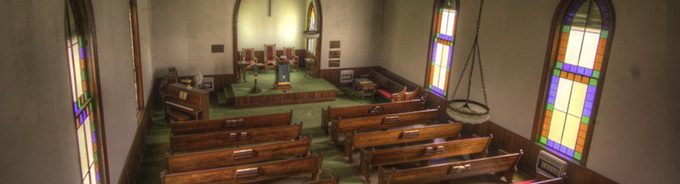
In our desire to update the way we do church and to be more inclusive we have made changes that bring with them an attitude of what I call a casual  faith… The subject this week is the lack of the above. There is a sense of greatness and splendor in Psalm 8 that addresses this attitude of a casual faith. How we do church has changed a great deal over the years, some changes were good and needed and others have marginalized our worship of God. We must remember that there are different ways to worship among the many Christian denominations that are out there. I consider those listed in the title above as extremely important values in developing our relationship with God. We should also be aware that God does not dwell in buildings made with hands, but in the hearts of people who call Him Lord and Savior. Jesus said to those who follow Him, “It is written, ‘My house shall be called the house of prayer; but you have it a den of thieves'” (Matt. 20:13).

There is a lack of reverence due to the increasing casual attitude that seems to be prevalent in our worship today. This I believe is the result of our loss of respect given to elders, strangers and people we come in contact with in our daily travels. This lack of respect is motivated by external pressures of a changing society and the cultural change that is driven by agendas that do not have Christian values as a motivating factor. This change in our respect “for” has extended itself into our worship of God, our creator. It would help to understand the biblical meaning of reverence in any evaluation of our situation. We best consider these words as we move through this. Reverence is showing honor and respect, deference and a sense of profound and adoring awe. In some instances it can be a nod of the head, in some churches it is a simple bowing of the head. I add this because it is so rare these days, this silence of revered respect when we are in God’s house. Reverence is a deep spiritually motivated state of being, it comes from within but manifests itself in our actions and demeanor.

Now a closer look at respect from a biblical perspective. Respect for God comes from experience, that’s right, having a relationship with God who’s actions in your life have led you to value his presence and an awareness that causes you to want to give respect and honor to Him, for He has existed before you were born. The next value we encounter would be that of Holy Ground. We find the phrase Holy Ground used only twice in the Bible, once in the Old Testament Exodus 3: 5 … Then he said, “Come no closer! Remove the sandals from your feet, for the place on which you are standing is holy ground.” Then we have the time that Stephen was preaching the gospel of Jesus Christ before the Sanhedrin and reminded them of that time Moses encountered God. We find this in Acts 7:33 …Then the Lord said to him, ‘Take off the sandals from your feet, for the place where you are standing is holy ground. These two biblical verses can be read as an example of what Holy Ground should mean to a Christian. This holy ground as with any other place or structure is made holy and considered sacred by the presence of God. Reverence, awe and a deep spiritual awareness are appropriate for coming into the place set apart for the worship of God, for wherever the Lord is constitutes holy ground. The only other thing we might add to all of this is the majesty, strength and glory, of his presence.

Micha 5:4. And he shall stand and feed in the strength of the LORD, in the majesty of the name of the LORD his God; and they shall abide: for now shall he be great unto the ends of the earth.

No matter how you do church there must always be  Reverence and Respect for His  Majesty and awareness of Holy Ground, made so by his presence. Paul and Timothy had much to say about the attitude and order of worship. May we always enter His house with prayers of thanksgiving and respect for where we are…. We are standing on Holy Ground….

jk

Life is Good


Leadership, Duties and Responsibilities

 In the last few verses of 1 Timothy 4: 11-16 we discover the beginnings or pattern of the Christian Church service. We do have a description of  a church service written by Justin Martyr in defense of Christianity in the year AD 170. (First Apology, 1:67) We learn from this that there were four things in these first services. There should be readings and explanation of the Scripture. People gather together to hear and learn God’s word, not the opinion of the day or even the preacher’s opinions. A Christian service is to be Bible centered. Those of us who read and study the Bible know it is a difficult book and explanation or well structured study is necessary to understand the written word. The Christian doctrine is not easily understood or applied to our everyday lives. Encouraging others to live a christian life requires that we have a hope and a reason to believe that we can articulate to others. We must share a lasting faith brought about and grounded in a teaching ministry. In the Christian worship service there should always be exhortation with a call for action. The Christian message should always contain something to be done. Our faith should be one that leads to action and does not lie dormant until next week with the closing hymn. William Barclay writes this“Christianity is truth, but it is truth in action.”  Lastly but not by any means the lesser of the other three is the importance of prayer. We meet in the presence of God,  seek the Spirit of God and when we part take the power of God out into the world. There will be no action or accomplishment without the help and leading of the Spirit.

As we bring this chapter to close we have four things of a more personal nature. There are a few unusual points here and I leave them to your discernment. A christian leader is set apart for a special task by the church. Their duty is to work to grow and strengthen the church and the faith. The current commentary I am using stresses that this work cannot be done away from the church because their commission came from the church. The building of the church is best done by a settled ministry, not a traveling ministry. I think here is a warning to not be close minded, becoming lazy not thinking things through. Becoming stuck in one groove and ignoring the possibilities of new truths, new methods, or a fresh way to restate the faith in a modern contemporary way, can lead to stagnation. I for one believe that there is a limit to such thinking and I will leave it at that. The important thing here is to not be so closed minded that we do not seek the leading of the Holy Spirit. The next is focus… we must not lose our ability to concentrate on those things God has charged us with. We should not waste our time on those things that are not central to the faith. It is the duty of a Christian leader to concentrate on those things that build the church, its people and Glorify God. There is the duty of progress or as Methodists leaders are asked, “are you going on to perfection?” Have we grown enough in Christ that others can see that and can we lead others to Christ better this year than last? Progress in mind, body and soul is necessary to serve Christ, we must grow more daily to be like him. I hope this short journey through Timothy has been enlightening for you and you will come back next week as we turn the page and move on through the Good News!

Life is Good

jk

Promise of The Past, … Now…. and In The Age to Come

We return to 1 Timothy chapter 4 starting in verse six. There is no shortage of people or advice in this digital world we live in but it is important for the Christian to know the source of that advice through the seeking and leading of the Holy Spirit. We are a community of faith who have set our hopes on the living God, the Savior of all people. In the verses that follow Timothy is given some practical advice; advice for all who seek to have a servant relationship with our God and to assume the duty of work and leadership of one committed to serving God. Here we find advice tempered with some good old fashioned courtesy. He is told to lay it before the brothers in a gentle, humble way and be kind in demeanor and action. I have had the privilege in past days to speak to others of the church, not as a pastor but just a simple layman. I always liked to say that I was not preaching but rather just doing some intense sharing. Teaching is another matter. You need to be well prepared and teach what you know in your heart to be the true word of God. In turn you must realize that you can’t bully someone into believing something. This is sometimes hard to understand for some but you can’t lead people where they refuse to be driven. Just as you know in your heart what you believe, they too must believe in their hearts what they come to know to be true.

Paul continues on with some very solid advice for those who wish to teach. We must understand that when we chose to teach we are not relieved of our responsibility to continue to learn. We can only give out what we have taken in. Case in point is that each day we must come to know Jesus Christ better, the more we know, the more we can share. The next thing Paul shares is powerful in itself. We must stay focused on the great truths of the word and not become entangled in things that can mislead or distract us from our goal of sharing the word. It is on the truth that people will fill their minds and nourish their faith. Paul likens physical training to be a good thing  but it only develops part of the body and in time passes away. This comparing Christian development to the development of an athlete can be found elsewhere in biblical writings. To train in godliness develops the whole person in body, mind and spirit. These results will not only benefit the person in the present time but in eternity as well. Lastly we must remember the goal of living a Christian life is to live in the presence of God. This is why so many Christians suffer and toil so hard in this life to gain a nearer presence to God. The goal of being in God’s presence is worth all the toil and struggle of this life.

The next set of verses contain some interesting points to be considered. There were those who were concerned with Timothy’s age. We have no reason to believe he was all that young, he had been with Paul for at least fifteen years at this time. The Greek word for youth can be any one of military age up to at least forty.Timothy was in comparison to Paul a young man. Consider this, I have at times seen that the church can be a bit suspicious of the younger generation. It was no different in that time in the church. Figure this out,  The Apostolic Canons laid it down that a man was not to become a bishop until he was over fifty, for by then ‘he will be past youthful disorders’.(DBS) ; whatever they may be. You may correct me if you wish but the church looked toward youth with a certain amount of suspicion. I am going to insert verses 11-16 in 1 Timothy to add some context to what I am sharing with you.

1 Timothy 4:11–16

Make it your business to hand on and to teach these commandments. Do not give anyone a chance to despise you because you are young; but in your words and in your conduct, in love, in loyalty and in purity, show yourself an example of what believing people should be. Until I come, devote your attention to the public reading of the Scriptures, to exhortation and to teaching. Do not neglect the special gift which was given to you, when the voices of the prophets picked you out for the charge which has been given to you, when the body of the elders laid their hands upon you. Think about these things; find your whole life in them, that your progress may be evident to all. Take heed to yourself and to your teaching; stick to them; for if you do, you will save yourself and those who hear you.

In these verses we find some very solid advice but admittedly difficult to follow. Apparently there were those that had raised doubts about Timothy, his age and his experience. Was he mature enough to do the work that he has taken on? This is sold stuff here folks. Paul told him to live in a manner that allowed his conduct to silence their criticism.

Yes, by his conduct they will see their suspicions to be unfounded. Then Paul speaks to the conduct to be expected. One of the greatest Christian virtues is unconditional love and sometimes it is greatly misunderstood. There are things we just naturally love, this is best explained as being an ordinary thing  but here Paul is pointing to a love that is willed to be, from the heart yes but one with no preset boundaries. It is a love that seeks only the best for others, never bitter, resentful or vengeful, refusing to hate and never refusing to forgive. This is the type of love that requires all of our faith strength and constant application. A Christian leader cares for all people no matter what some may do to him. Then there is a complete loyalty regardless of the circumstances. There is no situation that we can’t overcome with Christ in us. The next being purity which is simply described as having an unconquerable allegiance to Christ and the standards and values of a Christ led life.

Come back next week and we will complete the fourth chapter of 1 Timothy.

Life is Good

jk