God’s Call To Unity… Life and Worship In The United Methodist Church

“The issue of homosexuality was first openly debated in the church at the 1972 General Conference, four years after the Methodist and Evangelical United Brethren churches joined to form The United Methodist Church. Issues related to sexuality have continued to be debated at General Conference gatherings since then. General Conference last met in Portland, Ore., in 2016 and will next meet in a special session in St. Louis, Missouri in 2019.” (http://www.umc.org/what-we-believe/human-sexuality-backgrounder

This is another one of those blogs that I have started over more than once. This is an issue that I have always believed to be driven by social and organizational agendas and having no standing in the church. Here I will get a few raised eyebrows, as I believe God settled this issue long ago. Having gained no significant ground over the years it sought a more universal platform, one that would produce a large enough angst among a larger more focused group and then there was the Methodist Church, just one among many.Here is the thing, if you were looking for a way to reach a lot of people who were passionate about something, you need look no further. Next, you need controversy, the more the better. Nothing, absolutely nothing, draws a crowd better than controversy. It was, to use a time-worn phase, “a marriage made in heaven.” So I have come to the conclusion that this same-sex issue has kidnaped the Church and Christianity. Now the Methodist church was an obvious target due to the fact that they are so vast, serving all over the word and taking seriously the charge to “do good whenever you can and wherever you can.” The Methodist church has had a social agenda for a long time, well-funded and active. in Romans 14:1 -15:13 we find Paul dealing with issues within a small church in Rome. Paul’s discussions of the different opinions that separate them is remarkable in that Paul in this section of scripture uses no identifiers such as Jew, Gentiles, circumcised or uncircumcised. He briefly lists the matters that divide them and focuses on the things that bring them together. To put this in context with today’s same-sex issue is not that hard and we must acknowledge that this issue is not the only one facing the church of today but it is the one at this time that seems to be capable of splitting the church. Paul takes these issues concerning the early church and makes it one about opinions, and as you know, everyone has one. The interpretation of scripture is one of the driving forces of this same-sex issue which is  changing church doctrine today. The issues may be different but he stays with the theme of the commonality of the faith. There are people of diverse backgrounds coming to join the people of the one God and acknowledge Jesus Christ as the Messiah. The church at that time was very much still Jewish in many of its practices and these Gentiles were of a different opinion concerning the matters of worship and faith. At that time the big issue was what you could eat and what not to eat, being circumcised or not  being circumcised. Paul knew that the problem was between Jewish Christians and Gentile Christians and there were strong and weak in both as to their adherence to the faith. Here is a point that would help us with this issue in the church today….Paul does not condemn either for their opinion. Paul is worried that the matters that have arisen will threaten the united worship of the one God. Paul is concerned that this worship of all sorts of people will be impacted by social or cultural influences and the insertion of Jewish law into this new “way” for God to be reconciled with his people would impact the church’s growth. Paul knew the elements that were involved here, but wisely chose to not emphasize them, he did not want to be drawing lines in the sand, he preferred to insist that it was possible for people of different opinions to learn to live and worship together.  

Now it gets a little sticky here on. Here again is my opinion, yours may differ. Paul equates “strong or weak” in the faith to a matter of maturity. We should not disqualify people for their opinion, because opinion is not a requisite of Christianity. Can we recognize that people whose faith is anchored by the belief that Jesus Christ, the risen Messiah and Lord belong together in the same family……the “Family of God”? What is the standard for exclusion from the “Family of God” and who makes that judgement? I must make this plain. The research material I am drawing from divides this segment of scriptures (Romans 14: 1 -15- 13) into three segments. In 14: 1-12 we read that the weak and the strong are made aware that they each have the same Lord. He is the Lord of all and we all will be judged and held to account by him. It is not right that any Christian should pre-empt God’s right in advance. Verses 13-14 present a real problem for many of us. Can we cope with the need to not condemn others opinions? Can we learn to respect and not make demands on one another’s consciences? When we get to the verses in chapter 15 there is an insistence on a mutual welcome to all people. Jews and Gentiles, following the risen Christ, the Messiah through whom our God will give the hope and power to be one in the Holy Spirit.

For over thirty years I sat in a pew in the Methodist Church and then a little over three years ago I found another pew. To my beloved church and to my brothers and sisters, I beg you not to leave as I have. We are one in Christ and we should not let opinions and other views drive us from the “Unity of Christian worship.” Judge not, Believe, Respect, Love and Honor God’s call to Unity. 

Life is Good

jk 

Theology….The Church’s Conscience

 Those of you who have followed me in past blogs know I am a big fan of  understanding the meaning of a specific word. A specific word to me is one that is used to introduce a person, place, thing, event, present a question, or direct our thoughts or conversations toward a shared opinion. I know the correct use of a word is important, correct being the context it is used to convey a thought or point. Today’s blog deals with two specific words, Theology and Conscience. First: Theology is the study of religion. … The study of theology is part philosophy, part history, part anthropology, and also something entirely its  own.  Theologians have the complex job of thinking about and debating the nature of God. Studying theology means taking on challenging questions about the meaning of religion. Next: What does it mean to have a conscience? One definition being the inner sense of what is right or wrong in one’s conduct or motives, impelling one toward right action: to follow the dictates of conscience – the complex of ethical and moral principles that controls or inhibits the actions or thoughts of an individual. 

Theology had an important role in the development of the early church. Four important functions of theology were, catechetical, the apologetical, the polemical and the homiletical. Let’s start with the first and keep it simple. Catechetical relates to Christian instruction.

1

: a convert to Christianity receiving training in doctrine and discipline before baptism

2

: one receiving instruction in the basic doctrines of Christianity before admission to communicant membership in a church

Next we look at the word  apologetical, a systemic defense of an, often religious, position.

Apologetics is the religious discipline of defending religious doctrines through systematic argumentation and discourse. Early Christian writers who defended their beliefs against critics and recommended their faith to outsiders were called Christian apologists. In 21st-century usage, apologetics is often identified with debates over religion and theology.

On to polemical which in its polemical function, Christian theologians defended and expounded the biblical faith against heretical threats from within the church. It was the early church defending itself against controversial or other writings that were disputatious to the church. A christian must grow and mature in the faith and not be blown elsewhere by false teachings.

1

: of, relating to, or being a polemic : CONTROVERSIAL

2

: engaged in or addicted to polemics : DISPUTATIOUS

Now the last being Homiletics, in religion, this is the application of the general principles of rhetoric to the specific art of public preaching. One who practices or studies homiletics may be called a homilist, or more colloquially a preacher. Two among many are these scriptures which says a lot in a few words. First Timothy 4:13 Until I arrive, give attention to the public reading of scripture, to exhorting, to teaching.There is also Titus 1:9, one of many attributes needed by an Elder, He must hold firmly to the trustworthy message as it has been taught, so that he can encourage others by sound doctrine and refute those who oppose it.

I have often stated my worry about the increasing pressures on the “church” that are forcing it to take a path that is being guided by those with a personal agenda who are taking biblical texts out of their biblical contexts and allowing them to be driven by societal demands for change. A sound Theology provides a firm foundation to judge whether we are growing and serving Christ as the Great Commission charged us to do and are we obedient to his will? For most of us in the pew, it is the simple direct word of the gospel that drives our Theology.

John 6: 35-40

35 Then Jesus declared, “I am the bread of life. Whoever comes to me will never go hungry, and whoever believes in me will never be thirsty. 36 But as I told you, you have seen me and still you do not believe. 37 All those the Father gives me will come to me, and whoever comes to me I will never drive away. 38 For I have come down from heaven not to do my will but to do the will of him who sent me. 39 And this is the will of him who sent me, that I shall lose none of all those he has given me, but raise them up at the last day. 40 For my Father’s will is that everyone who looks to the Son and believes in him shall have eternal life, and I will raise them up at the last day.” It may seem to many of us in the pew that Theology is the equivalent of a course in Christian Algebra, we need it but just find it hard to understand.

Theology is the Church’s Conscience. Thanks for being in the Pew this week. Below are the reference materials used for today’s blog.

Life is Good

jk

Theology – Wikipedia https://en.wikipedia.org/wiki/Theology

The Role of Theology  By John Jefferson Davis, Ph.D.

Merriam – Webster


John 6: 1-21…The Rest Of The Story

 These are two of the most wonderful stories in the Fourth Gospel. Bible study can sometimes lead us to things that challenge our faith and yet at the same time increase our understanding of scripture that in a way captures and here I barrow from Paul Harvey  “The rest of the story.”  There is quite a story here and if you are preaching, one whale of a sermon. Looking at the feeding of the five thousand the improbability of feeding that many people does challenge our faith. It is even more challenging considering the amount Jesus had to work with, now the rest of the story. Setting the scene:

-the people had seen Jesus heal the sick

-Jesus and the disciples had withdrawn to a hill nearby

-at the base was a grassy field

-the field was near a main road 

-the Passover Feast was at hand and the roads were full of people 

-Jesus saw the multitude coming toward him and had compassion for them

The players in this story include not only people but time, place and circumstance.  Now the passover, the feast of the Jews, was at hand and the roads were full of travelers eager to be in Jerusalem for this holiday. There was a main road that ran close by to this grassy field. Jesus asked Philip where they could buy food to feed these people, even though he knew what he would do. Philip replied that it would take six months wages to buy enough food to feed these people. One of the disciples, Andrew stepped forward and told Jesus about a boy who had five barley loaves and two fish! Andrew followed Jesus’ instructions and with the rest of the disciples distributed enough to feed all those present and still have enough left over to fill 12 baskets. Some things to remember. Philip, thinking like any of us often do, saw the enormity of the need and no real practical way to meet it. Now scripture doesn’t say it but I believe it very possible that this young boy offered what he had believing it would help the situation. Andrew apparently was not willing to accept that they just give up and was willing to reach out and put forward any hope of finding a way to feed these people. We see here a perfect example of turning over to God the impossible and having faith God will make it happen! 

Included in these verses is the story of Jesus walking on water and here again we allow mortal practicality to marginalize our faith. Here in verses 16-21 we are again challenged and our faith tested. Jesus had finished feeding the five thousand and the crowds surged toward him and he left quietly instructing the disciples to take the boat to the other side of the lake. It was his intention to walk around the head of the lake while they rowed across and rejoin them in Capernaum. It was as Snoopy was known to say “a dark and stormy night. The Jews would refer to it as the second evening, the time between twilight and dark. They had been rowing for almost four hours due to the intensity of the storm. Then they suddenly saw Jesus walking on the water toward the boat. Now in this day and time all people were superstitious and they believed it to be a ghost and were terrified. In verse 20 Jesus calls out to them and they took him into the boat and in 21 they immediately reached land. Now there is a lot of commentaries and opinions as to what really happened here, all designed to make an improbability a probable. I will not go there but offer these thoughts. These verses contain one phrase that sets to rest any need to ponder what happen here. But he said to them, ‘it is I; do not be afraid” and they took him into the boat. How often in times of uncertainty and fear do we not hear the voice of God because of our lack of faith?

The rest of the story is rather simple. How many times have we as a church using our human reasoning limited our faith that God can do anything? Why can’t we be like that little boy and Andrew? Willing to give, giving it to God and trust he will make it happen. Why are we not able to realize how important it is to listen for God’s voice as he calls out to us and allow him to make our impossibilities, possible, removing our fears of the uncertainties of this life? There are many “rest of the stories”  in the good book and to find them you have to go beyond the words to the faith of a believer who knows the word but also hears the calling of God.

Thanks for joining me in the Pew this week.

Life is Good!

jk 


Tanakh, The Hebrew Bible…Jews, Christians and The Word of God

I am not sure how I got to this title but I will go with it any way. While it might seem strange why I would focus on the Jewish Bible, consider this. If you took the “good book” and open it to Genesis read a bit and then opened the Jewish Bible, Tanakh, read it a bit, it would almost be like looking in a mirror.  Oh there will be some different words here and there and there is only one Bible which has been translated into over 2000 languages. Currently, there are more than 40 different versions in English, from the King James Version, which was published in 1611 and is still going strong, to modern versions, some of them very simplified. (English.https://www.quora.com/How-many-different-types-of-Bibles-are-there-How-are-they-written)

I was drawn to this subject by the differences of the day that plague us in increasing fervor in the church today. There are so many issues that divide us because of societal pressures and the church’s struggle to remain relevant in the lives of its people. Both the OT and the NT are of one God but there is a natural tendency to view each differently and negate one to a lesser role.  Bible translation began about 2000 years ago. It connects us with our heritage and our inheritance, we are after all the adopted children of God through the body and blood of the risen Christ. Now days there is little of the OT in our bible studies in church.The Tanakh , the result of the coming together of a number of Jewish scholars and rabbis from the three largest branches of organized Jewish life in America, resulted in bringing together the three main translations of the Jewish bible. Started in 1955 the ongoing translation was published in  three main stages. The Torah in 1962, The Prophets, (Nevi’im) in 1978 and The Writings (Kethuvim) 1982, all three with applicable revisions were brought together in English in the form of today’s Tanakh. What drew me to the Jewish Bible was the sudden realization that this great written treasure of God’s mercy and redemption was not due to random events of history but rather the will of God and his desire to reconcile with his people.

(The Scriptural witness to the Son of God, however, did not begin with the New Testament – it first appears in the Old Testament in the abbreviated form of “Son” (with one exception).  While the number of Old Testament references to Son [of God]are nowhere near as numerous as that in the New Testament, they are extremely significant and have helped Christians recognize that Jesus Christ is indeed this Son of God and what the Bible means by this phrase.)   

 http://biblicalmissiology.org/2013/02/11/son-of-god-in-the-old-testament/ 

For it is written:

But the LORD will still give you proof. A virgin is pregnant; she will have a son and will name him Immanuel. (Isaiah 7:14)

A child is born to us!

A son is given to us!

And he will be our ruler.

He will be called, “Wonderful Counselor,”

“Mighty God,” “Eternal Father,”

“Prince of Peace.” (Isaiah 9:6)

New Testament writing: 

Galatians 3:28-29 King James Version (KJV)

28 There is neither Jew nor Greek, there is neither bond nor free, there is neither male nor female: for ye are all one in Christ Jesus.

29 And if ye be Christ’s, then are ye Abraham’s seed, and heirs according to the promise.

I find peace, continuity, certainty, promise and redemption in the scriptures. There is one God, one salvation and one savior before whom all people will stand to be judged by the only judge that matters. We as mortals may find many things that divide us but old things prepare us for the wonders of new things. All things are of God…..Amen

Come back next week, God bless.

Life is Good

jk

Responsibility The Glue That Holds It All Together


Authority, Accountability, neither works well unless there is a reasonable amount of responsibility that is driving these two attributes. God has given us both individually and collectively a sense of responsibility. Quite reasonable to say that this particular thing, responsibility, differs in intensity among we humans. God at that moment in the garden gave the human race a guide to their responsibilities: Genesis 28 God blessed them and said to them, “Be fruitful and increase in number; fill the earth and subdue it. Rule over the fish in the sea and the birds in the sky and over every living creature that moves on the ground.”

We shouldn’t look at that verse as a to do list but rather a very plain listing of what was expected, you might say, our earthly responsibilities. Responsibility can and often does mean different things to different people. In Matthew 25: 14-30 we have the story of the master who was to be traveling for a while  choose  to give three of his servants each a different number of these bags for them to keep safe until he returned. He had wisely thought it best not to carry such wealth while on the road. Sometimes this biblical account leaves me wondering. I find no instruction as to what they were to do with this wealth that had been entrusted to them other than keeping it safe and they would be held accountable to him because they and they alone were responsible for it. There are many scriptures where responsibility is given by God to certain individuals and it is often followed by accountability. Here is a twist I didn’t see coming when I started this weeks blog,  responsibility can also be a corporate thing. Groups, organizations, even churches have corporate responsibilities to their members and their communities. Be a good time here to look at the definition of responsibility.the state of being the person who caused something to happen

: a duty or task that you are required or expected to do

: something that you should do because it is morally right, legally required, etc.

One of the more common aspects of responsibility is the nature of a man to deny responsibility for his failures or transgressions . This usually takes the path of blaming others when we fall short of the goal. Of course one of the best known “blame games” in the Bible took place in the garden. Adam blamed Eve, and ultimately even the Lord, for the sin in which he found himself. Of course Eve blamed the serpent. The scripture is full of examples of God’s people blaming others for many different things. Sarah was not happy with Abraham when Hagar bore him a son, even though it was her advice to Abraham that initiated that event. Esau sold his birthright to his brother Jacob then complained that Jacob had deceived him to get the birthright. Arron made the golden calf but would not own up to it and Pilate washing his hands of any responsibility for Jesus’ death. 

  Paul addresses the issue of accountability in the Book of Romans. He also established that God is righteous and his judgment is based on truth (Romans 2: 2).  We all, each one of us will be individually  held accountable before God. (Romans 14:12)

Paul reminds us in Romans 1:25:

25 They exchanged the truth about God for a lie, and worshiped and served created things rather than the Creator—who is forever praised. Amen.

The Israelites had the law, in some ways they were privileged but with that privilege came a greater responsibility. (Romans 2:9)   

There are none among us that are righteous, we have all sinned. Jews, Gentiles, all must come to Christ and repent. 

Wrapping this series up I will leave you with these thoughts. It is my opinion that of the three responsibility is the most important and here is why. Authority is granted or given, Accountability is imposed……responsibility is an inherent trait which when all is said and done will determine how we use that authority and how we hold others accountable. 

Thanks for sticking with us through this series. Hope to see you back in the pew next week.

Life is Good

jk

With Authority Comes……..Accountability

This is the second in a three-part series. Last week we started with authority looking at the biblical side of this word. As we did last week let’s first look at the secular side of the word.

Accountability

: the quality or state of being accountable; especially : an obligation or willingness to accept responsibility or to account for one’s actions

Part of being held accountable is to accept responsibility and next week we will look at that. I have always felt that one of the attributes of the Christian that is a problem for many people is that we are not fond of being held accountable. Romans 14: 12 is a fair summary of the teaching put forth in this scripture.

12 So then, each of us will give an account of ourselves to God.

This can get a bit confusing but we will try to put some weight behind our reasoning. From a Christian perspective we acknowledge that authority begins with God. Romans 4: 12 above clearly states that there is a moral ruler of the world whose desires for us  were revealed to all through the law but in Romans 4:15 those of us who believe that God gave us free will, we are given this little nugget to ponder.

15 because the law brings wrath. And where there is no law there is no transgression.

There were those to whom the law of Moses was not given yet they are not excused from accountability because it is shown that even heathen had the law to some extent revealed in conscience; so that they are “without excuse” (Romans 1:20). 

20 For since the creation of the world God’s invisible qualities—his eternal power and divine nature—have been clearly seen, being understood from what has been made, so that people are without excuse.

Now we will carry this a bit further. Paul wrote in Romans 2: 12

12 All who sin apart from the law will also perish apart from the law, and all who sin under the law will be judged by the law.

Then we point to the book of Luke and his recording of Jesus Christ’s words on this subject.

Luke 12: 47-48

47 “The servant who knows the master’s will and does not get ready or does not do what the master wants will be beaten with many blows. 48 But the one who does not know and does things deserving punishment will be beaten with few blows. From everyone who has been given much, much will be demanded; and from the one who has been entrusted with much, much more will be asked.

Simply put we will all be held accountable. There is always the truth that as we grow it is reasonable to believe we mature and our knowledge grows and it is only reasonable that so does our accountability for our actions in this life. WE seem to put too great a premium on ignorance, using it as an excuse for our behavior. Sometimes we excuse bad behavior because of  mitigating circumstances. In our secular dealings concerning accountability this often can determine the severity of judgement. Consider this if you will. Christians know that there is a higher authority that calls us to account for our actions. Suppose you say “I was drunk and did not know what I was doing.” It is best we understand   God’s accountability and will and in this higher court you will be guilty twice….for being drunk and then for your actions. Why do some find this concept of accountability before God as being so strange, even among the non-believers there is a sense of judgement for personal actions. Everywhere in the world today there is some kind of law or form of acceptable behavior. When broken there is accountability and judgement. Jesus spoke often of the life to come and of being held accountable in the form of a divine judgement that all people would face. It is not unreasonable to believe that this includes all people, did not God create all things?

I could go on and on with this but the end result is the same for God’s people.  For Christians Authority is a God thing and so is Accountability. While we are not exempt from secular law, we are made strong through the promise of God’s Law.

Next week the last in this series, we will look at Responsibility in a Biblical sense. 

Thanks for coming by.

Life is Good

jk


Authority, Accountability and Responsibility A RE-DO

While reviewing some past blogs I came across one written on February 8, 2015, Authority, Accountability and Responsibility. We had these motivational meetings that were designed to help us all be of one mind, you know a team thing. I recall thinking of those days as the Feel Good About Me and You Days. It was like Mr. Rogers had come to work. I have always remembered the three words that this particular training exercise was designed around. Authority, Accountability and Responsibility three words that I supposed were important to us as individuals and as a team. Here are the secular definitions for each.

Authority

: the power to give orders or make decisions: the power or right to direct or control someone or something

: the confident quality of someone who knows a lot about something or who is respected or obeyed by other people

: a quality that makes something seem true or real

Accountability

: the quality or state of being accountable; especially : an obligation or willingness to accept responsibility or to account for one’s actions

Responsibility

the state of being the person who caused something to happen

: a duty or task that you are required or expected to do

: something that you should do because it is morally right, legally required, etc.

 It is amazing to read the Christian perspective as written in the Gospel. For the next three weeks we will look at each of these words in the biblical sense. This week we will start with Authority, the secular definition.

: the power to give orders or make decisions: the power or right to direct or control someone or something

: the confident quality of someone who knows a lot about something or who is respected or obeyed by other people

First we should acknowledge that authority begins with God, for there is no authority except from God ( Rom 13:1 ). Remember we are looking at authority in a biblical way. We might note that authority is the freedom to decide or a right to act without hindrance. God has the right to create and shape our world as he pleases.( Rom 9:21 ) Authority is a thing of prerogative and  is valueless without the power to make it effective. God granted and provided the power of authority to the Prophets, to the Apostles and how can we not believe that through God’s authority and power, Paul took the gospel to all the people as he was commanded to do. To the Christian, authority is a God thing. 

Second, we are reasonably sure that authority requires the power, and ability given by God for it to become a factor in any situation. Example, Satan has the authority to function within the area established by God. God gave Jesus the authority to forgive sins ( Matt 9:6-8 ) and to drive out spirits. ( Mark 6:7 ) It’s a Powered by God thing.

Third, the word authority is often used to justify or validate an action or procedure, a warrant if you will to perform said action or procedure, a granting of said authority. Another word used here is a “license”, for example to build up the church.( 2 Co 10:8 ) Saul was sent to Damascus with a warrant to persecute the Christians by the authority of the priests. ( Acts 26:12 ) Jesus was asked by what authority he taught such things.( Matt 21:23 ) 

Christians know or should know that all power and authority is from God. We must look at the Greek word exousia, (ex-oo-see’-ah) from which translated comes the word authority whose short meaning is power to act, authority. Strong’s Concordance puts forth this definition: (a) power, authority, weight, especially: moral authority, influence, (b) in a quasi-personal sense, derived from later Judaism, of a spiritual power, and hence of an earthly power. Let’s go to the next point that is important in the study of God’s word. What of the prophets, disciples, and even Jesus? Returning to Strong’s Concordance and that word, exousia,  

In the NT, 1849 /eksousía (“delegated power”) refers to the authority God gives to His saints –authorizing them to act to the extent they are guided by faith (His revealed word).

This brings us to our Fourth point. It is written that the fourth use of authority is noteworthy from a theological perspective. All of us at different points of our lives submit to authority by constraint or conviction. We live under the authority of God, our creator. When we seek to live under our own authority or place our trust in other things, we are then open to sin and separated from God. It is a tendency of human nature that we seek independence from authority, setting ourselves up as the ruling and final authority of our life actions. There are many interesting things written on this subject of Godly authority and the areas of our life where it should prevail. All of us will find issues with authority within our homes, with government and of course the church. We can find scriptural guidance in God’s word. In Peter 2:13-14 we find instructions concerning governing authorities. In Ephesians 6:1-2 children are told to obey their parents. We must be mindful that it is with God’s granting of that authority that we comply. If that authority violates God’s trust, then such authority no longer exists. But if God’s trust, word and will are subverted, then we may as we read in Acts 5:29 disobey.

Much more could be written on this subject and some of it I am sure would be controversial. During the time of Christ, the disciples received their authority from the lordship of God the Father through obedience to Jesus. Then Jesus Christ delegated authority to the apostles to lead the church in its affairs. Are those things which we do today in the church, in God’s name and authority in keeping with his will. And do they warrant his trust and granting of authority?

Thank you for coming by the pew this week. God bless and remember,

Life is Good

jk

Teaching, Coveted Prestige…Greater Condemnation

It is James’s conviction that teaching is a dangerous profession and failure is always met with greater condemnation because it is chosen not imposed and far greater is expected of those who chose to teach. In the early church the teachers had the awesome responsibility of receiving the converts and instructing them in the New Way and educating them in the Christian faith. The apostles and the prophets were constantly traveling, they did not have a particular congregation to minister to, to these teachers they handed over the converts. Just think of how inspiring it was to know that you had the opportunity to instill your faith values on those who were entering the Church for the first time. This was a huge responsibility and with it came a problem.This system, for lack of a better word, was fraught with teachers who sought to simply make Christianity just another form of Judaism. There were those whose lives were a contradiction of what they taught and they only brought dishonor to the faith. Then there were those who sought to teach without the knowledge needed and of course those who pandered to the desires of the crowd. All of the aforementioned problems are still to this day present in the church.

Today’s blog is meant to enlighten not to condemn teachers or those who are considering such a calling. Those who follow that call set out on a perilous journey because of the temptations that challenges our character. James has much to say about Christian teachers in these first few words in chapter three. As stated above you will find many examples in the NT writings of teachers that failed their responsibilities, James laying much of that on the fact that speech was the instrument they had to use, a dangerous thing in itself, powered by of course, the tongue. Let’s look at other distractions, while subtle, are very much are at play. Many of these teachers took the place of the Rabbis in Judaism. Many of these were saintly men but like the Rabbis were treated with such respect and awe that it was possible to ruin a man’s character, to give them an overwhelming sense of importance brought about by the treatment of the people around them. There is the danger of spiritual and intellectual pride. They would be teaching young people and those new to the faith and James lists two other things that could be cause of failure. 

-They must teach the truth, free of their own opinions or even their own prejudices.

A couple of things here to be considered. We are in a period in the church today where the way we look at things is being driven by societal needs and the heightened awareness of social justice. It is a Christian attribute to love your neighbor as yourself, no argument here but there should be concern when the intent of scripture as written is debated and marginalized to include those agendas that contradict its intent. I will follow that up with an opinion of my own. To use truth to marginalize another person is also not right. I know you can’t have it both ways but it seems to me that truth without compassion is not a Godly thing.

-When what you say is overpowered by what you do, you have failed. Never get into the position where those you are teaching cannot hear you because they are  listening to what you are. Do not say one thing and then do another. James leaves us with two thoughts in verse 2 that are woven into Jewish thought and literature.

-we all sin at one time or another, we are sometimes caught off guard, we mess up and we lose our focus on living a Holy Life.

-It is made plain that sin is made easy and consequences greater through carless spoken words.

In the next set of verses James speaks to the issues of the tongue. That is another blog in itself. I just simply wanted to share a view from the pew of how important a role those who teach and lead need to realize the importance of their work in the Church. People have been playing loose with the word forever but it is more important now than ever that we welcome those new to the faith, those struggling with their faith, those living in the faith and those just watching God’s people in everyday life, are told the truth. 

I close the blog today with another personal opinion. There are many great teachers, commentaries and books and of course the Bible itself but there is only one truth.

John 1:14

 14 The Word became flesh and made his dwelling among us. We have seen his glory, the glory of the one and only Son, who came from the Father, full of grace and truth.

John 1:17

17 For the law was given through Moses; grace and truth came through Jesus Christ.

Pray, seek the guidance of the Holy Spirit and be faithful to your God. As always thanks for coming by the Pew this week. 

God Bless, Life is Good

jk

Resource Material for this blog…..DBS, William Barclay

On Even Ground, Respect of Persons

Respect of Persons,  sounds innocent enough, no word or phase exercise here. In studying James chapter two we find a different way of viewing the phrase as used. Seems it had come to mean undue and unfair favoritism; it means pandering to others because they are rich or influential or popular. Such favoritism is consistently condemned in biblical writings. It is a fault of which the orthodox Jewish leaders completely acquitted Jesus. Even they were bound to admit that there was no favoritism with him. The case for the condemnation of respecting persons according to their social or group status is wrong and many examples exist to prove this. Peter after his vision in Acts 10:34 learned that there is no partiality in God’s view of people. Romans 2:11, both Jews and Gentiles were subject to  the same judgement in God’s sight. This is a view that Paul lays upon his people again and again. The Old and New Testaments condemn partiality of judgment and favoritism of treatment by giving undue weight to a person’s social standing, wealth or worldly influence. Even today we know that at some time we are guilty of this and in some instances it extends into our churches at times.

Proverbs 22:2 The rich and the poor have this in common: the Lord is the maker of them all.

This subject is critical to the ministry of God’s people to His people. There were problems in the early church even though at that time the church was the only place that social distinctions did not exist. You know there had to be some uncomfortable moments, it would only be natural and I will guarantee those moments occur even now after all this time. It is hard for many of us to admit but we do make differences between ourselves and other people and groups. The harsh reality of Christianity is that in the presence of God, all are one. At this point it is important for me to be on record……My greatest concern is the knowledge that every day I fail to serve God, by allowing the world I live in to distract from what I know to be right in God’s eye. The question that begs to be asked is, do you sometimes make judgements based on appearance, status, ethnicity or just the plain fact they aren’t like us.

In James 2:4 the people are called out so to speak,”have you not made distinctions among yourselves, and become judges with evil thoughts?”

We can look to Matthew 7:1,2 for a blunt to the point judgement of what James is saying.

“Do not judge, so that you may not be judged. For with the judgment you make you will be judged, and the measure you give will be the measure you get.”

Plain and simple, no misunderstanding…….You are breaking a commandment when you judge others.

In James chapter two verses 5-7 there is a scathing indictment of those who continue to be judgmental. We must be careful as Christians not to engage in a judgement reversal here. The church needs rich and poor but here again is the weight of God’s will for his people….There is no Jew, no Gentile, no rich or poor in God’s eye all are equal. Many in the early church were poor. They heard the message in the streets, in homes and along the trade routes. They came to the church because there they found Hope, Grace, Forgiveness, Welcome and a God that loved all people. A God who loved all people without qualifiers. Here is a lesson we all would do well to note… “the message of Christianity was that those who mattered to no one else mattered intensely to God.” (Daily Bible Study, James pg 76”) In the society that James lived the rich did oppress the poor. In Christ there was welcome for all, especially for those who have no one to welcome them and a value had now been set on those who were once regarded as valueless. I close this weeks blog with these verses from James.

James 2:8–11 

If you perfectly keep the royal law, as the Scripture has it: ‘You must love your neighbor as yourself’, you do well. But if you treat people with respect of persons, such conduct is sin and you stand convicted by the law as transgressors. For, if a man keeps the whole law and yet fails to keep it in one point, he becomes guilty of transgressing the law as a whole. For he who said ‘Do not commit adultery’ also said ‘Do not kill’. If you do not commit adultery but kill, you become a transgressor of the law. 

God holds all People to be Equal and Sin is Sin, and Sin separates from God. Living a Christian life in a world of different values is not easy and requires a constant effort of a faith that continuously seeks going on to Perfection. I pray your path follows the light that is Jesus Christ….Hope and Love for all people.

Life is Good

jk

The “Daily Bible Study” is a series of  NT Books, written by William Barclay and was a source for today’s blog.

Pharisees and Scribes…Self-Righteous Hypocrites or Zealots of Tradition?

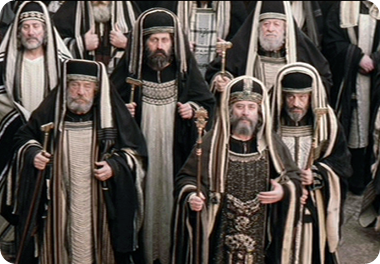
Todays blog requires an additional question. Are there Pharisees among us today? Many believe that the Pharisees somehow are looked at a bit to harshly. Here is what we know. The Pharisees were an influential religious sect within Judaism in the time of Christ and the early church. The name, Pharisee, comes from a Jewish word meaning separated. They included the oral tradition in addition to the written law and they insisted that all Jews must obey all 600 plus laws in the Torah, along with the rituals contained in the purification ceremony. These men were mostly middle-class and held leadership positions in the synagogues. An interesting point is that they were a minority in the Sanhedrin as to the number of positions they held as priests, yet they also seemed to be able to control the decision-making of the Sanhedrin because they were popular with the people. Fast forward to today. There are many things that are contrary to our faith values today along with   questionable leadership which yet seems to flourish simply because it is popular with the people. I have included the Pharisees in other writings in the past but here is a fact that has eluded me until my recent readings. Among the Pharisees were two schools of thought, based on the teachings of two rabbis, Shammai and Hillel. No need to delve into that at this time but is interesting that after a period of time these two schools within Pharisaism became so hostile to each other that they would no longer worship together. Sound familiar? Think the of church splits that happen in today’s Christian community. You can find much more information about the Pharisees and the Sanhedrin in other books and study material.  

We are using scripture from Mark 7:1-8, 14-15, 21-23. Most of us have always been taught that the Pharisees and Scribes were self-righteous hypocrites, the bad guys in the narrative. Jesus himself calls them out as such. Are we to question our Lords spoken words, of which Mark has noted in these scripture readings? I don’t think so but I also believe that motive and intent are reasonable qualifiers in any situation and are pivotal to understanding the scripture fully. Sometimes good intentions can blind people and cause them to not trust God. Remember motive and intent? It is important that we at least consider the intent and motive of the Pharisees when reading these scriptures. Before God gave the law he told the people that they were to be a holy nation, priestly in their behavior among the nations around them. These men understood that God was calling them to be His people. They believed that the law was a gift to bring order into their lives as God’s people. For them to observe that law was a witness to the nations around them and  gave glory to God. I do not want to burden you with details and there are many but rather present a few facts for you to consider in future discussions about the Pharisees. One thing we all have in common with the Pharisees would be our attachment to traditions. They believed that the laws concerning the priests serving in the temple applied  to all of God’s people and all aspects of their lives. The fact that the priests had to wash their hands before entering the temple or offering a sacrifice was the basis of interpreting the law to mean that all Jews must wash their hands before a meal, making it a sacred time. The Pharisees intent was to bring all aspects of life under the canopy of God’s law. Their motive of protecting these traditions was their way of protecting the Jewish faith and way of life amid the Roman occupation. One of the best examples of this protective attitude is found in Mark 7:1-8. The real issue here was not proper hygiene. The Pharisees looked upon it as a neglect of tradition and undermining of God’s law. 

These Pharisees may have had some legitimate concerns in their day and time. It is my opinion that they acted with closed minds and sought to undermine anything that challenged what had become the tradition of Jews living out their lives and worshiping their God. There is one other factor that we must include….Power…Power to control God’s people and influence their religious life with the Law being first and foremost in all their life actions. In Mark 7  Jesus makes it very plain why he is so displeased with the Pharisees.

Mark 7:6-8, 14-15, 21-23 

6 He said to them, “Isaiah prophesied rightly about you hypocrites, as it is written, “This people honors me with their lips, but their hearts are far from me; 7 in vain do they worship me, teaching human precepts as doctrines.’ 8 You abandon the commandment of God and hold to human tradition.” 

14 Then he called the crowd again and said to them, “Listen to me, all of you, and understand: 15 there is nothing outside a person that by going in can defile, but the things that come out are what defile.”

 21 For it is from within, from the human heart, that evil intentions come: fornication, theft, murder, 22 adultery, avarice, wickedness, deceit, licentiousness, envy, slander, pride, folly. 23 All these evil things come from within, and they defile a person.”

There is no tradition that can protect us from the evil behavior of others or ourselves. The Pharisees got to the point where they thought themselves to be a rung above everyone else. They used the law as a leverage to separate themselves from those they deemed not worthy of God’s love. The Pharisees built a wall of law and tradition to keep others out. Now what about that other question? Are there Pharisees among us today? Yes, most definitely and here is a thought to take with you. The gospel shows us that true faithfulness is going among those considered unclean, loving those who are unloved and serving and giving our lives, time and resources to all people —

Matthew 25:35-36 New International Version (NIV)

35 For I was hungry and you gave me something to eat, I was thirsty and you gave me something to drink, I was a stranger and you invited me in, 36 I needed clothes and you clothed me, I was sick and you looked after me, I was in prison and you came to visit me.’

Matthew 22:37-40

37 Jesus said unto him, Thou shalt love the Lord thy God with all thy heart, and with all thy soul, and with all thy mind. 38 This is the first and great commandment. 39 And the second is like unto it, Thou shalt love thy neighbor as thyself. 40On these two commandments hang all the law and the prophets.

Sharing the word with you is an important part of my life for which I am most grateful. I am also grateful for the numerous authors, commentaries and articles that provide the material for these blogs. They, prayer and the Holy Spirit are my guides through this wonderful world of God’s word. As always I will endeavor to acknowledge the sources that provide these insights into the gospel each week.

Life is Good

Jk

Resource material for today’s blog is from an article written by Elisabeth Johnson, Professor, Lutheran Institute of Theology.