• About

From The Pew

~ A Layman's Look At The Gospel

From The Pew

Author Archives: John Kurt Carpenter

Great Chapters of The Bible…Titus 1…Standards and Procedures…

03 Saturday Jul 2021

Posted by John Kurt Carpenter in Uncategorized

≈ Leave a comment

Those of us who at one time worked for a large company will at once grasp the words standards and procedures. Chapter 1 in the book of Titus is just that, it gives Titus the standards and the procedures to follow needed to strengthen the church and to grow the faith.

We know very little about Titus to whom this letter is written until we step back a moment and allow ourselves to let scripture reveal him to us. It is rather strange that Titus who had garnered enough standing in the early Church that one of the great Apostles to the Gentiles took the time to write a letter to him with instructions and responsibilities he is to share and undertake in Crete. There is evidence in scripture that Titus was a frequent companion of Paul in his journeys, Yet Titus is not mentioned once in the book of Acts of the Apostles. It is safe to say that Titus was very dear to Paul and Paul put much trust and confidence in his “son in the faith” (Titus 1:4 ). In 1 Timothy Paul had set out in detail the qualifications of an Elder in the church. Crete was an island of many cities and there would be many more little cities and Paul had always insisted that small churches should be encouraged to stand on their own feet as soon as possible. This chapter is special to me and made my list because we get an insight into the organization of the early church. The Council of Carthage had set down the standard for Bishops, elders and deacons that all members of their families should be believers of the faith. It was the council’s opinion that Christianity begins at home. No matter the path we follow in life it should not result in neglect of family. There is also the reference that families or individuals should not be involved in licentious or disruptive behavior. There is much to be said in our world today that the best avenue for training one to be a leader and productive member of society starts at home and is reinforced by christian standards taught in the church. Back to Chapter 1, Book of Titus…. all are the servants of God…There is truth in the gospel that there is value in teaching not so much fear of God as just plain awe of His Divinity and Power. The intent of the gospel is to raise the people’s faith and hope. To remove the burdens of the everyday world and point to the Heavens and the things above the everyday, that being, the gospel, the divine promise and the privilege of salvation! Our faith is strengthen by hearing the word of God and those who are called to preach the word, must do so with vigor and discipline. The fruits of God’s grace and favor are freely given to those who believe. The fruits of this favor are many…There is mercy in the pardoning of our sins, blessed relief from our miseries now and later on. Another fruit would be peace…peace through Jesus Christ with all others and ourselves. Consider please, that this blessing is the fountain of all blessings from which mercy, peace and all good things come forth. In verse 7b we are told what elders must not be. We start right off with the admonishment that we must not live our life to please just ourselves. Not easy because within this standard lies the fact that we cannot be intolerant of others or arrogant . We are standard bearers of the church, even more important that those who hold office should put aside such behavior. Elders should not be quick tempered. It is a common trait that those of quick temper are more likely than not to nourish their anger against others. 

Paul writes to Timothy that the leaders, here in referred to as bishops and elders must meet certain qualifications. They are to be overseers of the flock, set an example as how to live and to manage the affairs of the household of God. It is made clear what they are not to be and is shown that they are to be, servants of Christ, minister to the practice and letter of the Gospel. We are also shown that they are to be examples of good works. Paul addresses the issue of false teachers in the church. He stresses that the faithful oppose them, they must not be allowed to continue with their false messages and immoral actions against the word of God. They serve a worldly interest, pretending to be of Godly mind and spirit. They do so to gain the riches of worldly sin. Shame them by presenting to the people the sound doctrine of the Scriptures. Actions such as theirs is far from that you have been taught. 

“falsehood and lying, envious craft and cruelty, brutal and sensual practices, and idleness and sloth, are sins condemned even by the light of nature.” (Matthew Henry’s Concise Commentary on the Bible)

 It is true that there are many evil doers among you and it was one of their very own who said “Cretans are always liars, vicious brutes, lazy gluttons” and for these reasons you should rebuke them sharply. Verses 13 – 16 are a good example of what Titus is having to contend with….

Titus 1:13-16

13 This saying is true. Therefore rebuke them sharply, so that they will be sound in the faith 14 and will pay no attention to Jewish myths or to the merely human commands of those who reject the truth. 15 To the pure, all things are pure, but to those who are corrupted and do not believe, nothing is pure. In fact, both their minds and consciences are corrupted. 16 They claim to know God, but by their actions they deny him. They are detestable, disobedient and unfit for doing anything good.

It might be said Paul wastes no words here, he is direct and to the point. There is an underlying thought in this rebuke thing that is worth noting. You will find it in verse 13… This saying is true. Therefore rebuke them sharply, so that they will be sound in the faith . (NRSV) As is in all things of God’s, mercy and grace are always offered. “So that they will be sound in the faith”… I will close this blog by writing what I believe to be a Gospel based truth…Our God is a God of restoration, not condemnation. There is always salvation for those who believe and repent.

Life is Good

jk 

Share this:

  • Tweet
  • Email a link to a friend (Opens in new window) Email
  • Share on Path (Opens in new window) Path
Like Loading...

Great Chapters of The Bible…1 Corinthians 15

26 Saturday Jun 2021

Posted by John Kurt Carpenter in Uncategorized

≈ Leave a comment

1 Corinthians chapter 15 has always been a favorite of mine, I call it the resurrection chapter. This week we will read a little closer the words of Paul and hopefully they will give you encouragement and hope. Be sure to read the highlighted verses.

1 Corinthians 15: 1-11

In the first eleven verses of this chapter the apostle seeks to prove the resurrection of Christ to unbelievers and oddly enough some believers who had some doubts. The very foundation of our faith and of Christianity, rests on the death and resurrection of Christ. We must have faith in the cross and in the empty tomb. Take this from us and we sink into an abyss of sin and no hope. It is by a firm faith in the cross and the resurrection that we of the faith will stand firm in the days of trial that lie ahead. Unless we keep the faith and believe in the gospel, all is in vain. Believing what you cannot see or have not seen is difficult in the world today, one of instant gratification. The truth of Paul’s testimony is confirmed by Old Testament prophecies and recorded testimony of those who saw the risen Christ. There is also the difference of the gift of divine grace. Paul was well thought of but he always had a low opinion of himself. It seems that when sinners turn from their old ways and by divine grace they are made new, there is always the times of remembrance of past sins that keeps them humble and faithful. It is safe to say and often remembered that Jesus Christ crucified and risen from the dead is the substance and power of Christianity.

1 Corinthians 15: 12-19

Paul is still answering the questions and attacks of others than the faithful, as to the resurrection…There would be no justification or salvation if Christ had not risen and would not our faith in Christ be in vain and of little use to us if Christ were still among the dead? If Christ had not risen from the dead we all would die in our sin…forever. Christ is our redeemer and in him alone lies our hope for salvation. Here is a thought that should resonate in this life this very day. The conditions of mankind at the time of the Apostles writings were not that good but Christians were hated and persecuted by all men. But they had the comfort and promise of the risen Christ and could find peace amidst all the persecution they suffered.

1 Corinthians 15: 20-34

In one of my sources for this blog there is the statement “There will be an order in the resurrection.” All who have faith in Jesus Christ can be assured by his resurrection they to will experience their own. The resurrection shall see Christ as the first fruits of the promise made followed by the redeemed and last will be wicked, who will stand for their judgement. Our salvation and resurrection will be because of our acceptance and following his will, then we shall live again in glory to him our savior. Much value can be added to fact that to live a Godly life is indeed better than conforming to those who find comfort in their ignorance and those who choose to live in sin, they should be avoided as to their behavior, but prayed for and helped to find Christ and salvation.

1 Corinthians 15:35-50

Questions are raised and answered. 

  1. How are the dead raised up? that is, by what means? How can they be raised? . 
  2. As to the bodies which shall rise. Will it be with the like shape, and form, and stature, and members, and qualities. 

Much has been written to explain this resurrection thing. There were many who sought to discredit it, those who embraced it and of course those who preached it. But there is no better way to explain this issue which was often challenged in the early church than the words written in the 15th Chapter of 1Corinthians verses 35-58. This will take but a moment of you time, please take this moment to do so, for the very foundation of the faith rests on the cross, the resurrection and Jesus Christ.

1 Corinthians 15:51-58

In time we too (the saved) will experience the pain of death. In one of my research materials there is an interesting point…we can calmly face the tomb knowing that we have the assurance that while our bodies may well sleep there, in the in-between time our souls will be present with the Redeemer. The other important point to be made is that we are to remain stedfast and firm in the faith. We must never lose our hope or expectation of the privilege of the resurrection, raised incorruptible and immortal.

We have the power by the presence of the Holy Spirit to to live a life of joy and triumphant now and in the life to come.

Life is Good

jk  

Share this:

  • Tweet
  • Email a link to a friend (Opens in new window) Email
  • Share on Path (Opens in new window) Path
Like Loading...

Ebenezer…Stone of Help

19 Saturday Jun 2021

Posted by John Kurt Carpenter in Uncategorized

≈ Leave a comment

This is one of my most read blogs. I wrote it in May of 2018…I hope you find a blessing in it.

There is a fine old hymn many of us have sung and many of us may have tripped over that stone in verse two, not knowing where it came from or what it meant.

Sorrowing I shall be in spirit,
  Till released from flesh and sin,
Yet from what I do inherit,
  Here Thy praises I’ll begin;
Here I raise my Ebenezer;
  Here by Thy great help I’ve come;
And I hope, by Thy good pleasure,
  Safely to arrive at home.

The hymn was written in 1757 by Robert Robinson. Most of us associate Ebenezer with the character in “A Christmas Carol”. Ebenezer had a few problems but he did become a different man at the end of the story.

Today we look at a story from the Bible found in 1 Samuel 7 beginning in verse 7.

7 When the Philistines heard that Israel had assembled at Mizpah, the rulers of the Philistines came up to attack them. When the Israelites heard of it, they were afraid because of the Philistines.

The people told Samuel to not stop asking the Lord to rescue them from the Philistines (v 8) and Samuel sacrificed a suckling lamb to the Lord (v 9). Verses 10 and 11 tell of Israel’s victory. In recognition of the victory because of the help of the Lord we are told of Samuel’s action in verse 12.

12 Then Samuel took a stone and set it up between Mizpah and Shen. He named it Ebenezer, saying, “Thus far the Lord has helped us.”

One thing we do not want to pass by here is the very first few verses of this chapter. The importance of repentance, verses 2-4. The people come together and confessed their sins and Samuel offers a sacrifice on their behalf. (verses 5-9) Ebenezer means Stone of Help, and Samuel put it there as a reminder to all Israelites that saw it of the Lord’s power and protection. The Lord had kept his promise to bless his repentant people.  V 3–4: Samuel insists that a returning to the Lord must include the putting away of foreign gods and idolatry, and involve a wholehearted commitment to serve Him. The Israelites do this and ‘served the Lord only’.

The people had not been living a Holy life and verses 3-4 indicate the seriousness of their actions. They embrace the fact that they must turn from their sins and do so in mind, body and soul. Not only do they turn from their sin but they dedicate themselves to changing the way they live. Repentance always demands a certain amount of contrition but without change it is a meaningless gesture. Back to verse 12… 12 Then Samuel took a stone and set it up between Mizpah and Shen. He named it Ebenezer, saying, “Thus far the Lord has helped us.” We know from a previous episode that the Israelites carried the ark into battle only to suffer a resounding defeat. The Israelites presumed they could not be defeated in battle with the ark among them. An interesting thought I acquired while doing research for this blog, from the Reformation Study Bible.

“Now God has given them a great victory over the same enemies. Samuel sets up a memorial stone with the name Ebenezer, “Stone of Help,” not only to commemorate the victory but also as reminder of the different results brought about by presumption on the one hand and by repentance on the other.”

When we seek to live a Christian life, the challenges of this life do not cease. We won’t always be successful but from these scriptures we see that God is receptive to prayers for forgiveness and herein lies another lesson. Showing contrition and seeking forgiveness without changing our ways is worthless. Maybe I am being to harsh here. This I do believe to be true. Contrition, forgiveness and change of how one lives is a process that in the Christian world succeeds only when we give ourselves over to God completely, remembering this from verse 12… “Thus far the Lord has helped us”. We might ask ourselves if “thus far, have we have served our Lord faithfully?”

Life is Good

jk

Share this:

  • Tweet
  • Email a link to a friend (Opens in new window) Email
  • Share on Path (Opens in new window) Path
Like Loading...

Great Chapters of The Bible…Romans 8

12 Saturday Jun 2021

Posted by John Kurt Carpenter in Uncategorized

≈ Leave a comment

 In my readings and research for subjects I came across one article that put forth the Book of Romans, chapter 8 as being one of the great chapters of the Bible. I re-read chapter 8 and after spending a more in-depth read decided to share some thoughts with you. 

There are six reasonable motivations for the apostle’s writings here. Matthew Henry’s Concise Commentary gives us a clearer understanding of his motives…and I quote…

“to answer the unbelieving, and to teach the believing Jew; to confirm the Christian and to convert the idolatrous Gentile; and to show the Gentile convert as equal with the Jewish, in respect of his religious condition, and his rank in the Divine favor.” 

Paul plainly states that salvation and acceptance in God’s eyes is by grace and through faith in Jesus Christ. There is no implying that any distinction of nation has a place in the grace and mercy of  God or Christ in bestowing of such on anyone. We can see that there is an area of concern by a certain group within the Christian movement known as Judaizing Christians who had set terms of acceptance with God to be a mixture of the Law and the Gospel. Sometimes the mass of words are better understood when personal circumstances are at stake. For example it should be a source of comfort to know that the Lord might well rebuke the believer, but they will not be condemned with the world. This is because through Christ with faith they are secure. In these first 9 verses we read of the freedom of believers from condemnation. The Christian faith is one of restoration not condemnation. 

 The verses that follow state that there are privileges granted to those believers, for they shall be known as children of God. The gift of the spirit that dwells in us, then also shall Christ be in us. Our very soul is new in its nature, renewed by grace is engulfed by a holy happiness that will endure forever. We are blessed to know

it is our duty to walk in righteous. Those who live a life that is corrupted by sin and lusts of the flesh and mind will surely die. The spirit will allow us to be more and more ashamed of those things that corrupt our lives and put them aside. Regeneration by the Holy Spirit brings a new and Divine life to the soul. There was the  bondage of the law in the Old Testament Church but this spirit of adoption, poured out in grace now gives his children peace and hope. 

There is a turn to reality in these verses 18-25 that gives us pause to think about our lives and our place in this creation. God’s creation has suffered much since the fall of man,  impurity, deformity, and infirmity, and the hostility of one creature to another. Indeed, the creation is in a deplorable state but there is hope. The writer states that God will deliver it from man’s depravity. We are to understand that the miseries of the human race are of our  own doing. But because we have been awaken by the first fruits of the Spirit, our hopes, desires and expectations have risen. We should awaken ourselves to the fact that our sins have brought these woes upon the creation. It is only reasonable that we should find comfort in our place in this creation as believers. For us it is the hope of what is to come…our comfort does not lie in the things of this world. We wait in the certainty of a Spirit filled renewed soul resting in the goodness of God’s grace. He will come. Christians are not exempt from the infirmities of this world, which are many and could be easily overpowered by them if it were not for the Holy Spirit’s support. Verses 26-27 reveals the Spirit as an enlightening force in our lives. It teaches us to pray for our needs, fills us with grace and hope, lifts us above our discouragements.The Holy Spirit is like a well, from which all our desires toward God flow freely. Remember, ‘drink of this water and you will thirst no more.’ The enemy cannot prevail when the Spirit makes intercession. 

As we move to verses 28-31, you can read the that the apostle speaks and writes as one who is in awe and admiration of the height and depth, the inclusiveness of the love of Christ which passeth all understanding. With Gos’s love we can with assurance defy the powers of darkness. All we read in the pervious verses is good for His Children. It is necessary to bring us closer, part us from the evil of the world, lift us up and preparing for salvation and the haven to come. There is a golden chain of salvation here in these verses….take time to read vv.28-31… This empowers our hope and faith…God’s way, God’s work is perfect.

The last verses of this chapter, vv. 37-39 are assurances that that God’s grace and power can never be taken from us. We can give it away through sin and perversions of the faith but God in us…Christ in us…the power of the Holy Spirit is best summed up in these closing verses of this chapter.

Romans 8

37 No, in all these things we are more than conquerors through him who loved us. 38 For I am convinced that neither death, nor life, nor angels, nor rulers, nor things present, nor things to come, nor powers, 39 nor height, nor depth, nor anything else in all creation, will be able to separate us from the love of God in Christ Jesus our Lord.

Life is Good

jk

Share this:

  • Tweet
  • Email a link to a friend (Opens in new window) Email
  • Share on Path (Opens in new window) Path
Like Loading...

Road Trip…The Seven Churches… Revelations Chapters 2-3

05 Saturday Jun 2021

Posted by John Kurt Carpenter in Uncategorized

≈ Leave a comment

Last week we were looking at Revelations 3: 14-21 and the harsh words Christ had for the church in Laodicea. In Revelations chapters 2 and 3 we have the account of all seven churches in John’s vision. I encourage you to read these messages to each church after reading this weeks blog. Here is a quick look at those churches.

Ephesus 

There is much to share about the city of Ephesus which is located in modern day Turkey. Rome made it a provincial capital and at one time it boasted over 200,000 residents. It was the third largest city in the Roman Empire. Three things about Ephesus, it had size, wealth and power. Among this mix the city was known for trade and idol worship. Located there was what some referred to as the seventh wonder of the ancient world…the temple of Artemis. Ephesus had much to offer and was a major cultural center in the ancient world. Paul visited Ephesus on his second missionary journey. (Acts 18:19) On his third missionary journey he again came to Ephesus, this time staying three years. The time spent there was longer than any other of his church plants. It came to a sudden end when the silversmiths of that city came against him. Seems his presence, preaching and teaching were hurting their sales of trinkets made to sell in honor of the goddess Diana. (Acts 19: 26-41) There is much more but this is a brief summary of the church in Ephesus.

Smyrna:

As one of the principal cities of Roman Asia, Smyrna vied with Ephesus and Pergamum for the title “First City of Asia.” A Christian church and a bishopric existed here from a very early time, probably originating in the considerable Jewish colony there. Was one of the seven churches addressed in the Book of Revelation.

https://bible.org/seriespage/3-smyrna-suffering-church

Note: When I quote an article or Blog directly I will always place that quote in Italics and include the web address. I encourage the readers of my blog to go to that address at some time and read that authors comments.

According to others research this church in Smyrna was founded by Paul during his time in Ephesus. (Acts 19:10) There are some other interesting facts in that article you might want to read about. The church at Smyrna was under some heavy persecution and tribulations and could be found everywhere. But they remained strong in their faith and the message Jesus gave them was to encourage them to continue to stand strong and pray to God that they may continue to endure, whatever the cost. 

Pergamon:

The Church here had an interesting profile. Pergamum served as the capital of the Roman Province of Asia Minor for over 25 years. The City had the distinction of being the center for a number of pagan cults.There was during that period of time the rise of Caesar worship, the City built a temple there and it became the capital of the Caesar worship cult. The commitment of the City to cults and idol worship was greater than all other Asian cities and places.We know very little about the founding of this church other than some believe it was Paul who planted it during his ministry at Ephesus. (Acts 19: 10) It was at this time that the gospel was being preached throughout Asia. 

The church at Pergamum was awash in sinned the godliness which sadly should remind us of the world we are living in this day.

Thyatira

Thyatira was 45 miles southeast of Pergamum and was famous for its textiles, production of purple dye and its trade guilds. Though it was the smallest of the seven cities it received the longest of the letters.The story here is about as simple as you can get. This church was doing well and was an asset to the city and its people. But there was one among them who made false claims about her personage and sought to influence the church to join the powerful trade unions. Joining such unions required participation in the guild feasts that included immoral acts and the worship of idols. God sends a message to those who would disregard and distort His word. Stand Firm in Your Faith.

Sardis

The greatness of Sardis lay in its past. Much had been written about its past wealth and splendor. It was also known for it geographical position. It sat on a mountain which boasted steep cliffs which would be impossible to scale and there was only one narrow way of approach.This thought to be impregnable city would be attacked and defeated twice! They were an arrogant people given to carelessness. (Revelations 3: 2-3) The City was known for its woolen, textile and jewelry industry. Their sinfulness was great and there is no need for me at this time to give space to it. There were many good external works and activities, however the church was know as the sleeping church. (2Timothy 3: 5)

Philadelphia

Not much to coverer but it is noted that was a small church with little influence. It had the saving graces of a church that was pure, holy and faithful to God’s Word. The members of this church had experienced personal victories over sin.

Last week we took a look at the church in Laodicea. So now we have completed the Road Trip…The Seven Churches of Asia. 

Personal note to you who visit us in The Pew. I have been having a problem with vertigo and it has been a struggle to complete this work this week. Every week I end my blog the same way Life is Good… This week I add to it…

Life is Good…Because God Is Good.

Jk

Share this:

  • Tweet
  • Email a link to a friend (Opens in new window) Email
  • Share on Path (Opens in new window) Path
Like Loading...

A Legacy To Be Avoided…Revelations 3: 14- 16

29 Saturday May 2021

Posted by John Kurt Carpenter in Uncategorized

≈ Leave a comment

 14 “And to the angel of the church in Laodicea write: The words of the Amen, the faithful and true witness, the origin of God’s creation: 15 “I know your works; you are neither cold nor hot. I wish that you were either cold or hot. 16 So, because you are lukewarm, and neither cold nor hot, I am about to spit you out of my mouth.

Did the Church at Laodicea experience the damnatio  memoriae, the condemnation of a person’s memory? What could the church had done to warrant such a punishment? Many opinions exist but of the two that garner the most support I favor that of Adolf von Harnack, a much respected German scholar. In later times, the church in Laodicea sadly fell from grace. It is his theory based on scripture from the book of Revelation referring to the letter to Laodicea, which makes sad reading… in the letter, to the church of Laodicea the risen Christ, says in that vivid phrase: ‘I am about to spit you out of my mouth’ (Revelation 3:16). So what was damnatio memoriae? It would have resulted in the church at Laodicea records being erased from all books, obliterated from all inscriptions and chiseled out of all memorials. It would be as if they never existed. The biblical equivalent of our current day cancel culture. What did they do that would merit such punishment? The answers lie within the scripture and can be an uncomfortable recognition of current attitudes.  

Laodicea was a wealthy city during the Roman period. Located on major trade routes that passed through important cities like Ephesus, Smyrna and Sardis, Laodicea also was a center of textile production and banking. Like the city it resided in the church had done well, as noted in Revelations 3:17 it was a wealthy church. Wealth has a way of corrupting our character, lessening our resolve to follow the right way and hampers good intentions for the sake of acquiring more of worldly things that cools our faith. The scripture indicates that the people had become lukewarm and that attitude was shown by their deeds. In Revelations 3:14-21 the Lord describes them as such. There are many examples of analogies to be found among the scriptures. The people of Laodicea would have picked up on this one in these verses. Those who would read John’s “Revelation” would have also. The cities drinking water came by aqueduct from a spring six miles to the south of the city and when it arrived it was lukewarm, not refreshing at all. There were hot springs near by that people bathed in, seeking to heal their bodies. Hot water can clean and purify, cold water can refresh and give life to a tired soul. Lukewarm water could do neither. Scripture tells us that the seven churches in Asia Minor each received a letter, the harshest being the one to the church at Laodicea. Their deeds or lack of drawing the Lord’s displeasure. In the eyes of Jesus, this is a dead church. This church practiced a faith of convenience being neither hot or cold. They had become comfortable in their wealth and were arrogant to others around them. 

Mark 10:23 (ESV)

23 And Jesus looked around and said to his disciples, “How difficult it will be for those who have wealth to enter the kingdom of God!”

Jesus and scripture often equates deeds as an indicator of a person’s spiritual health.

Matthew 7:16–17 (ESV)

16 You will recognize them by their fruits. Are grapes gathered from thorn  bushes, or figs from thistles? 17 So, every healthy tree bears good fruit, but the diseased tree bears bad fruit.

The Church at Laodicea was prosperous in material goods and its people were also. They enjoyed the fruits of their physical labour but in return they became victims of their wealth and allowed themselves to become comfortable with a semblance of the faith…  Their attitude of self-sufficiency  and lukewarm faith placed them in constant danger of the evils of this world.

Where are you and your church in this world today? Have we become so comfortable in the things of this life that our legacy will be that of the church at Laodicea? I hope and pray not. 

Join us in the Pew next week….

Life is Good

jk

Share this:

  • Tweet
  • Email a link to a friend (Opens in new window) Email
  • Share on Path (Opens in new window) Path
Like Loading...

….Attitude Is A Choice

22 Saturday May 2021

Posted by John Kurt Carpenter in Uncategorized

≈ Leave a comment

 While not stepping completely out of The Pew I am figuratively at the end of the pew and I must be careful with my words and thoughts. We will have many choices to make in our lives and all will in some way be influenced by people, places and things, timing and for many of us our faith… 

 Let me introduce you to Viktor Frankl… who was an Austrian neurologist, psychiatrist, philosopher, author, and Holocaust survivor. Viktor Frankl was a practicing Jew his entire life, but he was very careful not to impose, or even be seen to be imposing, his religious conviction upon others; that was not the way he operated as a therapist, physician or man. Frankl believed that humans are motivated by something called a “will to meaning,” an overwhelming desire to find meaning in life. He argued that life can have meaning even in the most miserable of circumstances and that the motivation for living comes from finding that meaning.  According to Frankl, “We can discover this meaning in life in three different ways:

(1) by creating a work or doing a deed

(2) by experiencing something or encountering someone 

(3) by the attitude we take toward unavoidable suffering” and that “everything can be taken from a man but one thing: the last of the last of the human freedoms – to choose one’s attitude in any given set of circumstances” 

City Slickers a 1991 movie, gave us an exchange between Jack Palance and Billy Crystal that lasted a whole 1:03  and gave us a question that people have spent a life time asking and trying to answer. What is the meaning of life? Curly Washburn’s answer was… ‘just one thing, stick to that and everything will be all right’. When asked what that one thing was, Curly replied… ‘that’s what you have to figure out’.  I found it interesting that Mr. Frankl, a man of degrees has narrowed down the ways to discover the meaning of life. My friend Webster defines attitude as follows…. “a settled way of thinking or feeling about someone or something, typically one that is reflected in a person’s behavior.” We can enlarge on that somewhat by adding this….

“The definition of an attitude is a way of feeling or acting toward a person, thing or situation. Passion for a sport, dislike for a certain actor and negativity toward life in general are each an example of an attitude.”

Ok, next I found myself reading this…

The four basic types of attitudes and behaviors that are positive, negative and neutral.

  • Positive Attitude: This is one type of attitude in organizational behaviour. …
  • Negative Attitude: A negative attitude is something that every person should avoid. …
  • Neutral Attitude: …
  • Sikken Attitude:

“The silken attitude was new to me, so I dug a little deeper and found this….People with a sikken attitude demonstrate a negative state of mind. They try to destroy the image of every element that reflects into their mind. However, you may consider it as a type of much more aggressive negative attitude.”

If we accept that attitude is a choice, I would then ask you to consider that a biblical attitude is one that should be added to that list. The bible has much to say about attitude, the one that resonates the most with me is from Philippians 4: 8-9…

“Finally, brothers, whatever is true, whatever is honorable, whatever is just, whatever is pure, whatever is lovely, whatever is commendable, if there is any excellence, if there is anything worthy of praise, think about these things. What you have learned and received and heard and seen in me practice these things, and the God of peace will be with you. “

 On the other hand the Bible is full of folks who are in need of an attitude adjustment. Some sins of  attitude include, a false pride, unjust anger, bitter envy, malicious hatred. When attitude becomes a verb, a negative one…it always brings with its actions hurt, pain and the lessening of value of the people, places and things it is directed at. We can unpack and pull up scripture and still miss the point. Curly said it in a simple and short conversation… I believe it starts with the attitude you have toward doing one thing and doing it well. Live a Godly life, lifting up Jesus Christ and the good news of the salvation for all who believe and call on his name and those who are in need of God’s love. Remember, a biblical attitude is one of affirmation, not one of condemnation. You can start doing just that by remembering this 

Romans 12:2

“Do not be conformed to this world, but be transformed by the renewal of your mind, that by testing you may discern what is the will of God, what is good and acceptable and perfect.”

What does God say is the purpose of life? In one sense, you are always living in God’s purpose. God is God and He works all things, including your life, according to his purposes. … Psalm 57:2 says, “I cry out to God Most High, to God who fulfills his purpose for me.” This is key in understanding God’s purpose for your life.(What Is God’s Purpose for Your Life And How to Find It … https://www.cornerstone.edu › blog-post › what-is-gods-p..)

“When Jesus spoke again to the people, he said, ‘I am the light of the world. Whoever follows me will never walk in darkness, but will have the light of life. “

Walking with Jesus will give you the answer to the question of the meaning of life… Your life. Apply what Curly said…‘just one thing, stick to that and everything will be all right’. 

Yes, attitude is a choice. Hear what God has told you…Micah 6: 8

He has shown you, O mortal, what is good.

    And what does the Lord require of you?

To act justly and to love mercy

    and to walk humbly with your God.

Life is Good

jk

Share this:

  • Tweet
  • Email a link to a friend (Opens in new window) Email
  • Share on Path (Opens in new window) Path
Like Loading...

The Woman, The Well, A Revelation

15 Saturday May 2021

Posted by John Kurt Carpenter in Uncategorized

≈ Leave a comment

Last week behind the words we found these facts.

  • there was a history between the Jews and the Samaritans
  • Whether  to worship God in the Temple in Jerusalem or on Mt Gerizim
  • We are there for the beginning of a new stage in Jesus’ ministry
  • It was the sixth hour of the day, rather late for her to come for water she would need for house hold chores
  • the reason of going through Galilee to get to Jerusalem
  • The possibility of a theological point
  • The woman had no idea who she was talking to.

This week we will read of the conversation between Jesus and the woman, the arrival of the disciples and her departure then Jesus’s conversation with the disciples and finally the reaction of the town people. 

When we get to verses 5-6 there is a detailed description of the location of this conversation between Jesus and this woman. The location of the well and whose well it is provides a reference to the   importance of patriarchal  traditions. These traditions will have an influence on their conversation. (Patriarchal -having a system that relates to a society or government controlled by men.) 

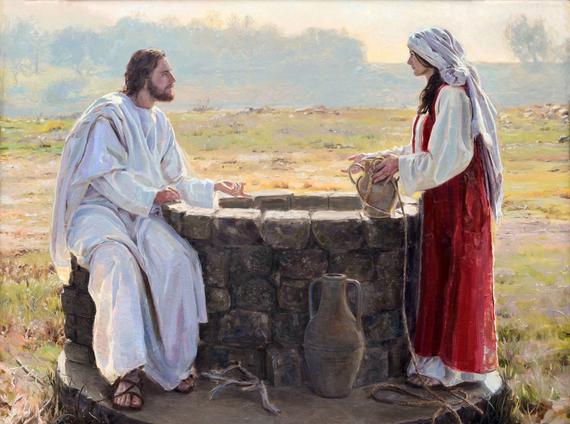
Reading carefully we note that Jesus arrives at the well in the heat of the day (about the sixth hour NIV) He is tired from his journey and is in need of water. There are some things here we can glean that add a richness to this story and as always history adds in part of our understanding scripture. There will be thirteen exchanges between the two of them. There are two sections to these exchanges, each one introduced by a request or command from Jesus. The first being vv. 7-15 “give me a drink” the second occurring in vv. 16-26 “go call your husband”. As we continue to read this remarkable story the walls continue to figuratively  fall. The social conventions of the day forbid a Jewish man to initiate a conversation with an unknown woman. It was also not proper to engage in a public conversation with a woman. Jews did not invite contact with Samaritans. There was no social intercourse between them. We also see that as in other conversations there were times Jesus refused to answer the question directly, he lets her answer the question for herself…”if you knew”. She hears only the words living water. The concept of such a thing was not within her reasoning…again, she does not know who she is talking to. She is thinking, this man who cannot acquire water for himself now offers me running water. As readers of this story we must realize the reasoning of her thoughts. We know about the living water but she only knows and understands the literal meaning. We do not want to confuse but the woman sees no visible means available to Jesus to draw the water and she challenges Jesus by simply asking “you are not greater than Jacob, are you?” You have nothing to use to draw the water from the well and only a miracle similar to the one traditionally to Jacob at Haran could produce the water he needed. Jesus responds by asserting to her that Jacob’s gift may have been miraculous and abundant but it would not quench her thirst permanently.  In these two verses vv. 13-14 Jesus says that his water will become a spring in her gushing up to eternal life. Her response indicates that she has once again missed the point entirely….

 Consider these verses….

27 Just then his disciples came. They were astonished that he was speaking with a woman, but no one said, “What do you want?” or, “Why are you speaking with her?” 28 Then the woman left her water jar and went back to the city. She said to the people, 29 “Come and see a man who told me everything I have ever done! He cannot be the Messiah, can he?” 30 They left the city and were on their way to him.

Verses 39-42 are a fitting end to the story of the woman at the well, pay close attention to verses 41 – 42.

39 Many Samaritans from that city believed in him because of the woman’s testimony, “He told me everything I have ever done.” 40 So when the Samaritans came to him, they asked him to stay with them; and he stayed there two days. 41 And many more believed because of his word. 42 They said to the woman, “It is no longer because of what you said that we believe, for we have heard for ourselves, and we know that this is truly the Savior of the world.”

It is hard to know when to back away from the keyboard there is so much here that a surface read  misses. 

-Jesus challenges and breaks down boundaries.. the boundaries between chosen people and rejected people, male and female

–Jesus offers the Samaritan woman the gift of God v.10 and revealed His identity to her vv.25-26 

25 The woman said, “I know that Messiah” (called Christ) “is coming. When he comes, he will explain everything to us.”

26 Then Jesus declared, “I, the one speaking to you—I am he.”

-read carefully because this hate of other people and nations is ever present today. Across the Middle East, Africa, Asia and Europe

-She is the first person to whom he boldly makes known His identity. Here in this verse 26 is the Revelation we wrote of earlier. 

-the despised Samaritans get to spend two days with the “Savior of the world.

There is more but for now may we all have that Samaritan experience. May we be the one to whom the good news comes in unexpected places and at unexpected times.

Life is Good

jk 

Share this:

  • Tweet
  • Email a link to a friend (Opens in new window) Email
  • Share on Path (Opens in new window) Path
Like Loading...

Jesus’ Ministry…Added Direction…The Woman At The Well …John 4

08 Saturday May 2021

Posted by John Kurt Carpenter in Uncategorized

≈ Leave a comment

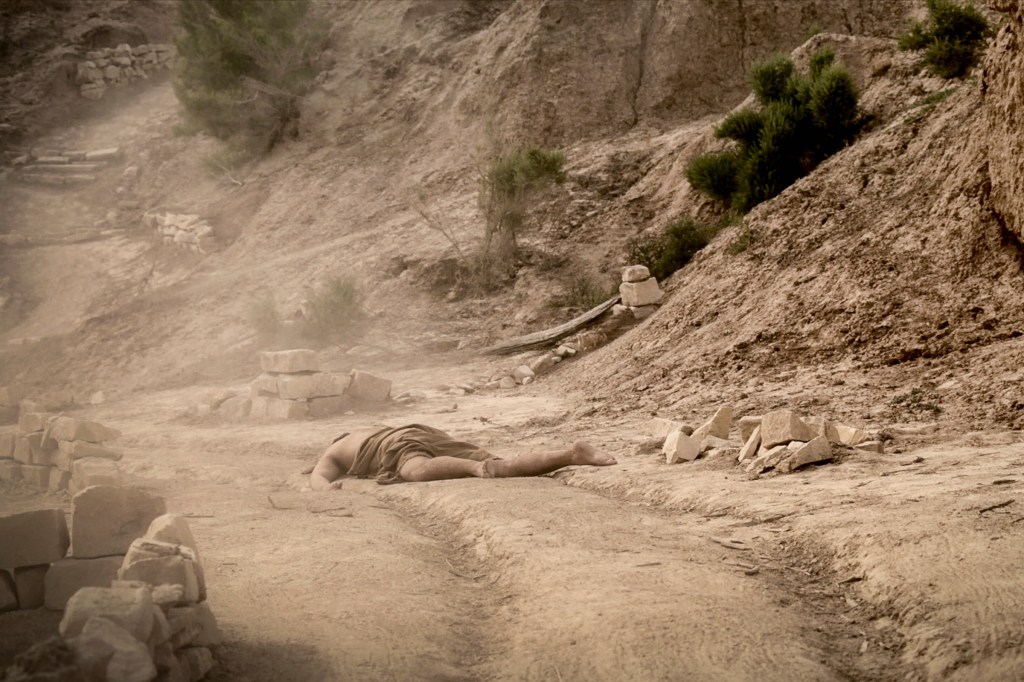
We all know of the parable found in the Book of Luke, 10: 25-37, about a traveler who is stripped of clothing, beaten, and left half dead alongside the road. First a Jewish priest and then a Levite comes by, but both avoid the man. Finally, a Samaritan happens upon the traveler and offers comfort and needed help. There is a history between the Jews and the Samaritans that adds cause and reason to the story of this encounter of Jesus and this woman. It is my belief that to really read the Bible we must get past what I will call a surface read. Each word, sentence and paragraph builds on those before, building a foundation of thought and reason. That’s my way as a layman to get into the word and it works for me. Get past the surface and behind the words and seek the meaning and message of our Lord and Savior. In my own small way I will try to do this as we read this story of Jesus and the Samaritan woman. 

A New Stage…

We read in the Book of John, Chapter 4 Jesus’ ministry enters a new stage. Jesus was a Jew and up until this time in the ministry he had always been confined to traditional Judaism, that which reckoned outsiders and enemies as a threat to the precepts of Judaism and viewed the Samaritans as such. The nearest event to have caused this intense dislike occurred about 200 BCE. The dispute that caused these hard feelings between the Jews and the Samaritans was about the correct location of the cultic center. The Samaritans had built a shrine on Mt. Gerizim during the Persian period and claimed that the shrine was the proper place to worship, not in the Temple in Jerusalem. The Temple was destroyed in 128 BCE but the hostility between the Samaritans and the Jews continued. So…let’s continue. As Jesus travels through Samaria he comes to a town called Sychar. It is here that Jacob’s well was located and here he encounters the woman late in the day who had come to draw water. As we read on we come to know why she came so late in the day a good example of a surface read  is found here. If we remember this little fact later we can arrive at the possibility she came late to avoid others because of her reputation in the village. Just a quick pass over and we might miss this foundational block of our story. Jesus’ ministry was always the salvation of all of people. I am sure this is not Jesus’ first break from the traditional practices of Judaism. Here at this moment His actions and intentions are made clear as to this salvation Jesus speaks of… It is for ALL. We must not let ourselves let this moment pass. Two things here are pivotal. He speaks directly to a Samaritan, who happens to be a woman who has come to draw water from the well. This is someone who stands in marked contrast to all that has preceded in the Gospel so far. Jesus had spoken with Nicodemus, a male of high standing in the Jewish religious establishment. But now Jesus speaks with a Samaritan woman, an unnamed female of an enemy people. 

The next surface read is found in verses 4: 4-6  and asks the question. Was the choice to go through Samaria geographical or did it have some theological reasoning also, that would support it? Was Galilee the quickest and best? There is scripture to indicate that there was some theological value included in this decision. 

Look at verses John 3:14…14 – 15 Just as Moses lifted up the snake in the wilderness, so the Son of Man must be lifted up,[15 that everyone who believes may have eternal life in him.” .  V 30: He must become greater; I must become less.”  V 9: 4…4 As long as it is day, we must do the works of him who sent me. Night is coming, when no one can work. 

These verses do add a theological consideration in answering this question. There is the very real possibility that Jesus believed that his calling was to go among those whom social and behavior paths was deemed unacceptable to God’s plan and will. To bring them to salvation, they would need to hear the word of God.  Our last point for this week will be is something we might go by at first. These next verses 4: 5,6,7 are reminiscent of some old testament images and do in some way add to the narrative of these verses.  In both the stories, Elijah and the widow of Sidon, (1 Kgs 17: 10-11) and of this encounter at that well tell of women being interrupted while engaged in housework by a gesture of hospitality. The parallel here suggests the image of Jesus as a prophet and this will become an observation that plays a part in their conversation.

We all know of the parable found in the Book of Luke, 10: 25-37, about a traveler who is stripped of clothing, beaten, and left half dead alongside the road. First a Jewish priest and then a Levite comes by, but both avoid the man. Finally, a Samaritan happens upon the traveler and offers comfort and needed help. There is a history between the Jews and the Samaritans that adds cause and reason to the story of this encounter of Jesus and this woman. It is my belief that to really read the Bible we must get past what I will call a surface read. Each word, sentence and paragraph builds on those before, building a foundation of thought and reason. That’s my way as a layman to get into the word and it works for me. Get past the surface and behind the words and seek the meaning and message of our Lord and Savior. In my own small way I will try to do this as we read this story of Jesus and the Samaritan woman. 

A New Stage…

We read in the Book of John, Chapter 4 Jesus’ ministry enters a new stage. Jesus was a Jew and up until this time in the ministry he had always been confined to traditional Judaism, that which reckoned outsiders and enemies as a threat to the precepts of Judaism and viewed the Samaritans as such. The nearest event to have caused this intense dislike occurred about 200 BCE. The dispute that caused these hard feelings between the Jews and the Samaritans was about the correct location of the cultic center. The Samaritans had built a shrine on Mt. Gerizim during the Persian period and claimed that the shrine was the proper place to worship, not in the Temple in Jerusalem. The Temple was destroyed in 128 BCE but the hostility between the Samaritans and the Jews continued. So…let’s continue. As Jesus travels through Samaria he comes to a town called Sychar. It is here that Jacob’s well was located and here he encounters the woman late in the day who had come to draw water. As we read on we come to know why she came so late in the day a good example of a surface read  is found here. If we remember this little fact later we can arrive at the possibility she came late to avoid others because of her reputation in the village. Just a quick pass over and we might miss this foundational block of our story. Jesus’ ministry was always the salvation of all of people. I am sure this is not his first break from the traditional practices of Judaism. Here at this moment His actions and intentions are made clear as to this salvation Jesus speaks of… It is for ALL. We must not let ourselves pass this moment pass. Two things here are pivotal. He speaks directly to a Samaritan, who happens to be a woman who has come to draw water from the well. This is someone who stands in marked contract to all that has preceded in the Gospel so far. Jesus had spoken with Nicodemus, a male of high standing in the Jewish religious establishment. But now Jesus speaks with a Samaritan woman, an unnamed female of an enemy people. 

The next surface read is found in verses 4: 4-6  and asks the question. Was the choice to go through Samaria geographical or did it have some theological reasoning also, that would support it?Was Galilee the quickest and best? There is scripture to indicate that there was some theological value included in this decision. 

Look at verses John 3:14…14 – 15 Just as Moses lifted up the snake in the wilderness, so the Son of Man must be lifted up,[15 that everyone who believes may have eternal life in him.” .  V 30: He must become greater; I must become less.”  V 9: 4…4 As long as it is day, we must do the works of him who sent me. Night is coming, when no one can work. 

These verses do add a theological consideration in answering this question. There is the very real possibility that Jesus believed that his calling was to go among those whom social and behavior paths was deemed unacceptable to God’s plan and will. To bring them to salvation, they would need to hear the word of God.  Our last point for this week will be is something of we might not read at first. This Samaritan woman had no idea who she was talking to. These next verses 4: 5,6,7 are reminiscent of some old testament images and do in some way add to the narrative of these verses.  In both the stories, Elijah and the widow of Sidon, (1 Kgs 17: 10-11) and of this encounter at that well tell of women being interrupted while engaged in housework by a gesture of hospitality. The parallel here suggests the image of Jesus as a prophet and this will become an observation that plays a part in their conversation. So, beyond the words, what have we found?

  • there was a history between the Jews and the Samaritans
  • Where to worship God  in the Temple in Jerusalem or on Mt Gerizim
  • We are there for the beginning of a new stage in Jesus’ ministry
  • It was the sixth hour of the day, rather late for her to come for water she would need for house hold chores
  • the reason of going through Galilee to get to Jerusalem
  • The possibility of a theological point
  • The woman had no idea who she was talking about

I will stop here this week, next week we will read the conversation between Jesus and the woman, the arrival of the disciples and her departure then Jesus’s conversation with the disciples and finally the reaction of the town people. I enjoy being back in the word and hope you have enjoyed your visit to The Pew. Meet you here next week.

Life is Good

jk

Share this:

  • Tweet
  • Email a link to a friend (Opens in new window) Email
  • Share on Path (Opens in new window) Path
Like Loading...

The “Christian Woke”

01 Saturday May 2021

Posted by John Kurt Carpenter in Uncategorized

≈ Leave a comment

A new word or at least a new slant on the meaning of an old word when it is used in the context of  US Slang, Woke, the simple definition as in Webster’s means to be aware. To know what is going on around you…people, places and things. The first use of the word as an adjective was in 1972. Here is a recent up-grade to that word from Webster’s dictionary.

chiefly US slang

: aware of and actively attentive to important facts and issues (especially issues of racial and social justice)

So a simple meaning would be, being aware. But let’s not stop there.

The Urban Dictionary, which published its original definition two years prior to the official dictionary, defines it as “being woke means being aware… knowing what’s going on in the community (related to racism and social injustice)”. In other words, it means to be awake to sensitive social issues, such as racism.Jan 21, 2021

Being Woke calls fore people to be Aware of Social justice and Racism. I am disturbed not by what is written here but more disturbed by what is not included in this latest social and cultural interest and lifting up the state of being Woke is the fact that being Woke to God’s word and will is a necessary component. As I wrote earlier…the simple Webster’s meaning is to be Aware.

In this day and time words and things can be hijacked to meet a need or serve an agenda. In 1984 another term popped up and joined those buzz words which are used to get our attention. Spin Doctor, the definition of which is….: a person (such as a political aide) responsible for ensuring that others interpret an event from a particular point of view. I believe that interpreting an event from a particular point of view is now fashionable in this agenda, social justice, culture-driven world we live in. The Woke and Canceled led society of the day is woefully misguided. Dealing with the cancel culture at this writing is best left for another time. It is in itself a whole other blog. So join me for a few as we look to the state of Christian Woke.

 From a  Christian Perspective

Remember the saying God’s got this, well He has and for a long time. In the birth, ministry, crucifixion and the resurrection of Jesus Christ…those of the faith have been Woke for a long time. Here are some thoughts from gotquestions.org

-as Christians we must be aware that racism in the USA has brought shame upon our nation and at certain times in our history has resulted in terrible violence.

-we must be aware that the very principles of civil rights, respect for others and equal justice cannot ensure these very things. No law can change what’s in our hearts. As Christians we know that change, an awareness of Christ and God’s will in our life can and will change what’s in a person’s heart. Real Justice can happen only when we are justified in Christ. “You shall love your neighbor as yourself” in the way taught by Christ (Mark 12:31).  

–awareness that reconciliation in the church, our lives and others occurs when we put Christ first, the love of God and our duties to the faith. When that happens we set aside racial categories and ethnicity and see others through God’s eyes.We are all children of God, part of the family of God… “There is neither Jew nor Greek, there is neither slave nor free man, there is neither male nor female; for you are all one in Christ Jesus” (Galatians 3:28).

2 Corinthians 4: 4

4 In their case the god of this world has blinded the minds of the unbelievers, to keep them from seeing the light of the gospel of the glory of Christ, who is the image of God. 

–Real change and real answers to the problems of racism, injustice, other societal evils are found in God’s Word and in the peace He gives. (This is a direct quote from the article in gotquestions.org)

The faith and the gospel of Jesus Christ have been woke for well over 2000 years, more accurately  since God the Creator said… “let there be light”. Perhaps we of the faith have been napping and have forgotten the need to be Woke, or as I prefer The Christian Perspective….AWARE of our Lord’s commands.

1 Corinthians 16:13-14

13 Be watchful, stand firm in your faith, be courageous, be strong. 14 Let all that you do be done in love. 

Simple enough…To be Woke you must be Aware. The solutions needed will not be found in the streets or the destruction of other people or things. Be Aware of God and his will, the answers lie there.

Life is Good

jk

Share this:

  • Tweet
  • Email a link to a friend (Opens in new window) Email
  • Share on Path (Opens in new window) Path
Like Loading...
← Older posts
Newer posts →

Recent Posts

  • Back Porch
  • Before The Good Way… Leviticus
  • Back Porch
  • The Good Way…Proverbs 3 Wisdom, Love, Humility, and Fear.
  • Back Porch

Archives

  • January 2026
  • December 2025
  • November 2025
  • October 2025
  • September 2025
  • August 2025
  • July 2025
  • June 2025
  • May 2025
  • April 2025
  • March 2025
  • February 2025
  • January 2025
  • December 2024
  • November 2024
  • October 2024
  • September 2024
  • August 2024
  • July 2024
  • June 2024
  • May 2024
  • April 2024
  • March 2024
  • February 2024
  • January 2024
  • December 2023
  • November 2023
  • October 2023
  • September 2023
  • August 2023
  • July 2023
  • June 2023
  • May 2023
  • April 2023
  • March 2023
  • February 2023
  • January 2023
  • December 2022
  • November 2022
  • October 2022
  • September 2022
  • August 2022
  • July 2022
  • June 2022
  • May 2022
  • April 2022
  • March 2022
  • February 2022
  • January 2022
  • December 2021
  • November 2021
  • October 2021
  • September 2021
  • August 2021
  • July 2021
  • June 2021
  • May 2021
  • April 2021
  • March 2021
  • February 2021
  • January 2021
  • December 2020
  • November 2020
  • October 2020
  • September 2020
  • August 2020
  • July 2020
  • June 2020
  • May 2020
  • April 2020
  • March 2020
  • February 2020
  • January 2020
  • December 2019
  • November 2019
  • October 2019
  • September 2019
  • August 2019
  • July 2019
  • June 2019
  • May 2019
  • April 2019
  • March 2019
  • February 2019
  • January 2019
  • December 2018
  • November 2018
  • October 2018
  • September 2018
  • August 2018
  • July 2018
  • June 2018
  • May 2018
  • April 2018
  • March 2018
  • February 2018
  • January 2018
  • December 2017
  • November 2017
  • October 2017
  • September 2017
  • August 2017
  • July 2017
  • June 2017
  • May 2017
  • April 2017
  • March 2017
  • February 2017
  • January 2017
  • December 2016
  • November 2016
  • October 2016
  • September 2016
  • August 2016
  • July 2016
  • June 2016
  • May 2016
  • April 2016
  • December 2015
  • August 2015
  • June 2015
  • May 2015
  • April 2015
  • March 2015
  • February 2015
  • January 2015
  • December 2014
  • April 2014
  • January 2014
  • December 2013
  • November 2013
  • May 2013
  • March 2013
  • February 2013

Categories

  • Uncategorized

Meta

  • Create account
  • Log in
  • Entries feed
  • Comments feed
  • WordPress.com

Blog at WordPress.com.

  • Subscribe Subscribed
    • From The Pew
    • Already have a WordPress.com account? Log in now.
    • From The Pew
    • Subscribe Subscribed
    • Sign up
    • Log in
    • Report this content
    • View site in Reader
    • Manage subscriptions
    • Collapse this bar
 

Loading Comments...
 

    %d