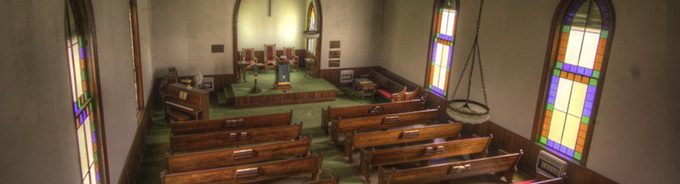
Reverence, Respect, Majesty and Holy Ground


In our desire to update the way we do church and to be more inclusive we have made changes that bring with them an attitude of what I call a casual  faith… The subject this week is the lack of the above. There is a sense of greatness and splendor in Psalm 8 that addresses this attitude of a casual faith. How we do church has changed a great deal over the years, some changes were good and needed and others have marginalized our worship of God. We must remember that there are different ways to worship among the many Christian denominations that are out there. I consider those listed in the title above as extremely important values in developing our relationship with God. We should also be aware that God does not dwell in buildings made with hands, but in the hearts of people who call Him Lord and Savior. Jesus said to those who follow Him, “It is written, ‘My house shall be called the house of prayer; but you have it a den of thieves'” (Matt. 20:13).

There is a lack of reverence due to the increasing casual attitude that seems to be prevalent in our worship today. This I believe is the result of our loss of respect given to elders, strangers and people we come in contact with in our daily travels. This lack of respect is motivated by external pressures of a changing society and the cultural change that is driven by agendas that do not have Christian values as a motivating factor. This change in our respect “for” has extended itself into our worship of God, our creator. It would help to understand the biblical meaning of reverence in any evaluation of our situation. We best consider these words as we move through this. Reverence is showing honor and respect, deference and a sense of profound and adoring awe. In some instances it can be a nod of the head, in some churches it is a simple bowing of the head. I add this because it is so rare these days, this silence of revered respect when we are in God’s house. Reverence is a deep spiritually motivated state of being, it comes from within but manifests itself in our actions and demeanor.

Now a closer look at respect from a biblical perspective. Respect for God comes from experience, that’s right, having a relationship with God who’s actions in your life have led you to value his presence and an awareness that causes you to want to give respect and honor to Him, for He has existed before you were born. The next value we encounter would be that of Holy Ground. We find the phrase Holy Ground used only twice in the Bible, once in the Old Testament Exodus 3: 5 … Then he said, “Come no closer! Remove the sandals from your feet, for the place on which you are standing is holy ground.” Then we have the time that Stephen was preaching the gospel of Jesus Christ before the Sanhedrin and reminded them of that time Moses encountered God. We find this in Acts 7:33 …Then the Lord said to him, ‘Take off the sandals from your feet, for the place where you are standing is holy ground. These two biblical verses can be read as an example of what Holy Ground should mean to a Christian. This holy ground as with any other place or structure is made holy and considered sacred by the presence of God. Reverence, awe and a deep spiritual awareness are appropriate for coming into the place set apart for the worship of God, for wherever the Lord is constitutes holy ground. The only other thing we might add to all of this is the majesty, strength and glory, of his presence.

Micha 5:4. And he shall stand and feed in the strength of the LORD, in the majesty of the name of the LORD his God; and they shall abide: for now shall he be great unto the ends of the earth.

No matter how you do church there must always be  Reverence and Respect for His  Majesty and awareness of Holy Ground, made so by his presence. Paul and Timothy had much to say about the attitude and order of worship. May we always enter His house with prayers of thanksgiving and respect for where we are…. We are standing on Holy Ground….

jk

Life is Good


Leadership, Duties and Responsibilities

 In the last few verses of 1 Timothy 4: 11-16 we discover the beginnings or pattern of the Christian Church service. We do have a description of  a church service written by Justin Martyr in defense of Christianity in the year AD 170. (First Apology, 1:67) We learn from this that there were four things in these first services. There should be readings and explanation of the Scripture. People gather together to hear and learn God’s word, not the opinion of the day or even the preacher’s opinions. A Christian service is to be Bible centered. Those of us who read and study the Bible know it is a difficult book and explanation or well structured study is necessary to understand the written word. The Christian doctrine is not easily understood or applied to our everyday lives. Encouraging others to live a christian life requires that we have a hope and a reason to believe that we can articulate to others. We must share a lasting faith brought about and grounded in a teaching ministry. In the Christian worship service there should always be exhortation with a call for action. The Christian message should always contain something to be done. Our faith should be one that leads to action and does not lie dormant until next week with the closing hymn. William Barclay writes this“Christianity is truth, but it is truth in action.”  Lastly but not by any means the lesser of the other three is the importance of prayer. We meet in the presence of God,  seek the Spirit of God and when we part take the power of God out into the world. There will be no action or accomplishment without the help and leading of the Spirit.

As we bring this chapter to close we have four things of a more personal nature. There are a few unusual points here and I leave them to your discernment. A christian leader is set apart for a special task by the church. Their duty is to work to grow and strengthen the church and the faith. The current commentary I am using stresses that this work cannot be done away from the church because their commission came from the church. The building of the church is best done by a settled ministry, not a traveling ministry. I think here is a warning to not be close minded, becoming lazy not thinking things through. Becoming stuck in one groove and ignoring the possibilities of new truths, new methods, or a fresh way to restate the faith in a modern contemporary way, can lead to stagnation. I for one believe that there is a limit to such thinking and I will leave it at that. The important thing here is to not be so closed minded that we do not seek the leading of the Holy Spirit. The next is focus… we must not lose our ability to concentrate on those things God has charged us with. We should not waste our time on those things that are not central to the faith. It is the duty of a Christian leader to concentrate on those things that build the church, its people and Glorify God. There is the duty of progress or as Methodists leaders are asked, “are you going on to perfection?” Have we grown enough in Christ that others can see that and can we lead others to Christ better this year than last? Progress in mind, body and soul is necessary to serve Christ, we must grow more daily to be like him. I hope this short journey through Timothy has been enlightening for you and you will come back next week as we turn the page and move on through the Good News!

Life is Good

jk

Promise of The Past, … Now…. and In The Age to Come

We return to 1 Timothy chapter 4 starting in verse six. There is no shortage of people or advice in this digital world we live in but it is important for the Christian to know the source of that advice through the seeking and leading of the Holy Spirit. We are a community of faith who have set our hopes on the living God, the Savior of all people. In the verses that follow Timothy is given some practical advice; advice for all who seek to have a servant relationship with our God and to assume the duty of work and leadership of one committed to serving God. Here we find advice tempered with some good old fashioned courtesy. He is told to lay it before the brothers in a gentle, humble way and be kind in demeanor and action. I have had the privilege in past days to speak to others of the church, not as a pastor but just a simple layman. I always liked to say that I was not preaching but rather just doing some intense sharing. Teaching is another matter. You need to be well prepared and teach what you know in your heart to be the true word of God. In turn you must realize that you can’t bully someone into believing something. This is sometimes hard to understand for some but you can’t lead people where they refuse to be driven. Just as you know in your heart what you believe, they too must believe in their hearts what they come to know to be true.

Paul continues on with some very solid advice for those who wish to teach. We must understand that when we chose to teach we are not relieved of our responsibility to continue to learn. We can only give out what we have taken in. Case in point is that each day we must come to know Jesus Christ better, the more we know, the more we can share. The next thing Paul shares is powerful in itself. We must stay focused on the great truths of the word and not become entangled in things that can mislead or distract us from our goal of sharing the word. It is on the truth that people will fill their minds and nourish their faith. Paul likens physical training to be a good thing  but it only develops part of the body and in time passes away. This comparing Christian development to the development of an athlete can be found elsewhere in biblical writings. To train in godliness develops the whole person in body, mind and spirit. These results will not only benefit the person in the present time but in eternity as well. Lastly we must remember the goal of living a Christian life is to live in the presence of God. This is why so many Christians suffer and toil so hard in this life to gain a nearer presence to God. The goal of being in God’s presence is worth all the toil and struggle of this life.

The next set of verses contain some interesting points to be considered. There were those who were concerned with Timothy’s age. We have no reason to believe he was all that young, he had been with Paul for at least fifteen years at this time. The Greek word for youth can be any one of military age up to at least forty.Timothy was in comparison to Paul a young man. Consider this, I have at times seen that the church can be a bit suspicious of the younger generation. It was no different in that time in the church. Figure this out,  The Apostolic Canons laid it down that a man was not to become a bishop until he was over fifty, for by then ‘he will be past youthful disorders’.(DBS) ; whatever they may be. You may correct me if you wish but the church looked toward youth with a certain amount of suspicion. I am going to insert verses 11-16 in 1 Timothy to add some context to what I am sharing with you.

1 Timothy 4:11–16

Make it your business to hand on and to teach these commandments. Do not give anyone a chance to despise you because you are young; but in your words and in your conduct, in love, in loyalty and in purity, show yourself an example of what believing people should be. Until I come, devote your attention to the public reading of the Scriptures, to exhortation and to teaching. Do not neglect the special gift which was given to you, when the voices of the prophets picked you out for the charge which has been given to you, when the body of the elders laid their hands upon you. Think about these things; find your whole life in them, that your progress may be evident to all. Take heed to yourself and to your teaching; stick to them; for if you do, you will save yourself and those who hear you.

In these verses we find some very solid advice but admittedly difficult to follow. Apparently there were those that had raised doubts about Timothy, his age and his experience. Was he mature enough to do the work that he has taken on? This is sold stuff here folks. Paul told him to live in a manner that allowed his conduct to silence their criticism.

Yes, by his conduct they will see their suspicions to be unfounded. Then Paul speaks to the conduct to be expected. One of the greatest Christian virtues is unconditional love and sometimes it is greatly misunderstood. There are things we just naturally love, this is best explained as being an ordinary thing  but here Paul is pointing to a love that is willed to be, from the heart yes but one with no preset boundaries. It is a love that seeks only the best for others, never bitter, resentful or vengeful, refusing to hate and never refusing to forgive. This is the type of love that requires all of our faith strength and constant application. A Christian leader cares for all people no matter what some may do to him. Then there is a complete loyalty regardless of the circumstances. There is no situation that we can’t overcome with Christ in us. The next being purity which is simply described as having an unconquerable allegiance to Christ and the standards and values of a Christ led life.

Come back next week and we will complete the fourth chapter of 1 Timothy.

Life is Good

jk

The Appeal To Timothy


We return this week to the Book of Timothy, Chapter Four. We need to be reminded that judgement before Christ is a certainty for all of us. There are always motivators in life, those things that take us down different paths. For Christians those things we do should be presentable to Christ. The criticism or judgement of others should not be a motivator of our behavior. We can remove a great deal of the uncertainty in our lives if we sought the leading of the spirit in many of the things we do. Perhaps we would be less offended by others criticisms, be less likely to develop the self-importance that fosters an attitude of personal prestige and can lead to being self-centered. We should not expect or require thanks for every right thing we do. Paul goes on to encourage Timothy to be prepared for the return of Christ. He is saying to Timothy, “do your work in a way that all of the people  will be ready whenever and wherever he appears.” We should live our lives in a way that we will be ready for the coming of Christ. We should remember that the day is coming that all the kingdoms of this world will be the Kingdom of Jesus Christ. For us to become citizens of his kingdom, our lives must stand up to his judgement making it possible for us to become a citizen of the Kingdom of God.

As we continue on in these first five verses the message from Paul moves to the duties of Christian Teachers. It is necessary that we convey an enthusiastic effort to share the word and we must be able to express the message with an urgency that compels others to listen. The other point to be made here is the value of persistence. We should not only be aware of but should always seek, or even dare I say, make opportunities to speak about Christ. We should always remember we must be courteous and respect others time and place. Sin is to be addressed as such and it is the Christians job to create an awareness of sin. Ours is not a goal to condemn but rather to establish or restore people to a relationship with Christ. It is difficult to compel people to see things as they really are and it takes patience and love to do that. I have written before how it seems that the church no longer has a place at the table. There was a time when the opinions and objections to questionable acts or policies were given by the church with fearlessness and many times that made a difference in the quality of life for all people. The church has lost its voice when it comes to speaking up about those things that marginalize God’s word, fearing to rebuke those acts that challenge Christian values. Here we must be careful to not become moral judges and juries but it is our duty to speak up when a word needs to be spoken. It is important to tie every rebuke with an encouragement. A Christian has an obligation to exhort others to do better and to help in any way they can. We must learn to believe in others because we have a resolute belief in the changing power of Christ. Here is a thought for your consideration. In Timothy’s day and even now in our day, we are surrounded by people who encourage us to believe we should be able to do whatever we want to do. It is our right or to put it as we have heard it said “it is our God given right.” Such should not be the plight of we who would answer the saviors call……”run from these people for they and those of like mind are a menace to Christianity and society in general.”(DBS)

Next week we will return to the fourth chapter of Timothy. Come back, there is always room in the Pew.

jk

You Cannot Legislate Unity

“Stipulations in the Traditional Plan approved by General Conference 2019 are unacceptable, said the executive committee of The United Methodist Church in Germany, and the church in Germany will not impose the stricter penalties laid out in the plan.”  This is a direct quote from the executive committee of the United Methodist Church in Germany. I have provided the link to the full statement below and encourage you to take the time to read it.

https://www.umnews.org/-/media/umc-media/2019/03/12/15/21/2019_03_10_botschaft_eng.ashx

There are times that even in the pew the discords of the day find their way in. I have written other posts on this subject and I started to pass by this latest bit of news from Germany but I find some things here worth discussing and to use an old term, worth pondering. I again encourage you to go to the link above and read the full statement from the brothers and sisters in Germany. One point I will make at the outset here is at least we are talking about this situation but I fear it is to little to late. The damage to the UMC is overwhelming in regard to the time money and effort spent over, pay attention here, the last four decades. I want to be as accurate as possible and for that reason I will be including some research material here at different spots in this blog. With that said the following is added for your consideration.

The Council of Jerusalem or Apostolic Council was held in Jerusalem around AD 50. It is unique among the ancient pre-ecumenical councils in that it is considered by Catholics and Orthodox to be a prototype and forerunner of the later ecumenical councils and a key part of Christian ethics. The council decided that Gentile converts to Christianity were not obligated to keep most of the Law of Moses, including the rules concerning circumcision of males. The Council did, however, retain the prohibitions on eating blood, meat containing blood, and meat of animals not properly slain, and on fornication and idolatry, sometimes referred to as the Apostolic Decree or Jerusalem Quadrilateral. (note information below**)

**Accounts of the council are found in Acts of the Apostles chapter 15 (in two different forms, the Alexandrian and Western versions) and also possibly in Paul‘s letter to the Galatians chapter 2.[1] Some scholars dispute that Galatians 2 is about the Council of Jerusalem (notably because Galatians 2 describes a private meeting) while other scholars dispute the historical reliability of the Acts of the Apostles. (Wikipedia)

As you read this, understand it is not the first time that an issue of doctrine versus the word of God has happened and won’t be the last. One point here is that they are looking to the Law of Moses and how it would pertain to those coming into the church. The Church is still young and many of its members are Jews who have accepted Jesus Christ but still look to the first five books of the Bible for guidance and remember there was no New Testament writings at that time. We must also remember that Social Justice causes have always been a part of the Methodist Church. This situation of same-sex discourse, being driven in my opinion by those within and outside the Methodist Church and by social justice warriors along with cultural changes is quite the norm of a denomination which has always been at the forefront of meeting the needs of God’s children, Scripturally and otherwise. So what is different here? Let’s start with Church leadership. The Book of Discipline for many years has stated the position of the Methodist Church in reference to same-gender unions and “self-avowed practicing” gay clergy. There have always been penalties and accountability for transgressions of those bans. The Church in Germany has stated that they will not accept the Traditional Plan because they will not follow the chosen way of controlling people in their chosen lifestyle by imposing stricter penalties. The words  they use for chosen lifestyles is disposition. They have some very compelling reasons for this decision. Here again I quote direct from their article.

“There is hardly any region on the (United Methodist) map of the world where, according to the decision of the General Conference, shards, break-ins and deep trenches did not emerge,” said Germany Area Bishop Harald Rückert in opening the session of the executive committee.

The area Bishop shared that there was a “great sadness” concerning the state of the unity of the Church. I find them to be genuine in their desire to find a way to preserve the unity of their church. This issue of same-sex relationships reaches into all areas of the church all over the world. Back to the LEADERSHIP THING. There has been none as to the enforcement of the Book of Discipline. We have seen and continue to see an outright disobedience to the Church polices and doctrinal standards or rules of behavior if you wish. I do not want to be harsh but this extends to the highest level of leadership, the Bishops themselves. We have among us a culture that accepts guidance and direction only if fits their opinions, beliefs and agendas. I believe that the pressures of social change, culture change and the desire to be relevant in the changing world has created a culture within our church that minimizes the place of Scriptural guidance, discounts Christian compassion and in our rush to be at the table of societal change, not truly seeking the guidance of the Holy Spirit. Having read their statement several times I am certain they are in a great deal of pain and uncertainty but are resolute in their determination not to accept the Traditional Plan that was passed last year.

“ Even so, we want to stay together as a church where people of differing opinions can live with each other. We don’t want to let go of each other and we don’t want to separate from each other, but we want to hold on to each other and to be there for each other. For we are convinced that Jesus wants to use us and our gifts jointly and together.”

The above is taken from the statement of the German Executive Committee and was sent to all the congregations. Some items of interest here are the recognition that there are many differing opinions but they wish to find a way to co-exist. They feel that the many diverse gifts can be of benefit to the whole. They follow that up by the realistic admission that they must be able to come together even if they can’t agree on the important questions. They then make very plain what their expectations are.

“We therefore want to be a church where people with homosexual sensibilities can be ordained and blessed in a marriage ceremony, and also where traditionally minded people can uphold their ideas and lifestyles. The “Kirchenvorstand” has reached agreement on this objective.”

This is an interesting approach to an issue that really has no middle ground, for years the church has “kicked the can down the road” and the laity has for the most part not been a part of the discussions. Now we find ourselves scrambling to preserve the financial obligations of the Church such as properties and other assets and the point we are at now is how do we split and retain, who gets what? These brothers and sisters in Germany do have what seems to be an inflexible position, putting that aside it is a blessing to see what seems to be their most important goal is how do we stay together, how do we remain a family of God? 

I do not believe there is a clear path for those such as myself who have a problem with the same-sex issue in relation to how we have been lead by prayer and seeking of the Holy Spirit. Then there is the inescapable fact that Jesus Christ came to offer salvation to all people, no one is to be turned away from the Lord’s table. Sin is anything that drives a wedge between a person and God. Simple fact is any sin is incompatible with Christian teaching. The Book of Discipline puts it this way.

Regarding the ministry of the ordained

  • ¶ 304.3: The practice of homosexuality is incompatible with Christian teaching. Therefore self-avowed practicing homosexuals are not to be certified as candidates, ordained as ministers, or appointed to serve in The United Methodist Church
  • 341.6: Ceremonies that celebrate homosexual unions shall not be conducted by our ministers and shall not be conducted in our churches.

The whole situation is fluid and it is no wonder we have been decades working through this. Consider this….

  • Methodist viewpoints concerning homosexuality are diverse because there is no one denomination which represents all Methodists. The World Methodist Council, which represents most Methodist denominations, has no official statements regarding sexuality. British Methodism holds a variety of views, and permits ministers to bless same-gender marriages.[1] American Methodism concentrates on the position that the same-sex relations are incompatible with “Christian teaching”, but extends ministry to persons of a homosexual orientation, holding that all individuals are of sacred worth.

So there you have it. I think I have a way out of this. No Christian should ever condone or fail to recognize the cost of sin but we must never become judgmental of others…. What….? It is the Christian obligation to welcome all to the Lord’s table and community of faith. I would suggest that when we allow sin to be put aside or leave unchallenged we fail in our responsibility to lead people to Christ. It is not our task to judge, it is our calling to present the Gospel of Jesus Christ to all people. We do an injustice to the Faith when we look the other way in regard to Christian values and discipline. I say we remove this language from the Book of Discipline and instead simply attach the caveat that the Methodist Church believes same-sex practices are one of many sins but the Church welcomes all people to the community of faith and leaves God’s judgement to just that….God. We pray for all people to find peace, dignity, love and forgiveness within the community of faith. Let’s get on with the calling of the Church….Salvation and forgiveness through the redemptive power of the Holy Spirit.

Life is Good

jk

Living In a World Of Contrasts

Two weeks from now I will once again have the privilege of sharing God’s word with others. I will be sharing the life of the Apostle Paul and the wonder of redemption, dedication and single minded perseverance that were the qualities of one of the greatest purveyors of the Good News in the early church. Our bible study will cover some thirty or more years of his ministry and we will travel some 10,282 miles he covered in four journeys as he served God and preached the Gospel of Jesus Christ. I am not an Apostle nor am I Timothy, a loyal disciple of Paul and it is from this Book of 2 Timothy chapter Three vv. 10-17 that this blog is inspired.

This world will never be perfect but in my seventy plus years I feel overwhelmed by the contrasts of human behavior that shape how I live and try to influence my behavior and the principles I live by. I love to study and read the bible, I find peace within its words and take comfort in the promises made by our Lord, resting in the promises and the assurances of a better day to come. Paul in these verses from Chapter Three lists the duties and the qualities of an Apostle in this letter to Timothy. I am struggling to find a word that best expresses who or what we need to be or do  that fits all of us who choose to walk in the Way. I think the word I am looking for would be Disciple. The Greek word is parakolouthein and literally means to follow alongside but it means much more. It means to follow someone physically, Mentally and spiritually and to put it simply, with the complete obedience of a dedicated servant. It is Paul’s belief that there are certain duties, qualities and experiences that both an Apostle and a disciple share, things which are common to their ministries. First the duties which he, Paul, considers to be a shared responsibility of their ministry.

-Teaching – We cannot teach those things we do not know. We must prepare ourselves through study, prayer and divine leading to know the Glory and the story of Jesus Christ. Even after much study we will find ourselves lacking if we do not know Christ ourselves. Have we as a person experienced the forgiveness, redemption and infilling of the Holy Spirt? Have we had our Damascus Road experience?

-Training – Christian life is not only knowing something but should consist of living what we know and believe. Telling the story of Christ is just the start, we should also be training others to live in the Way, to be an example of the faith and what it means to live for Christ.

  • Life – As Christians, what is the aim of our life? What is it we are trying to communicate to people? Is it solely knowledge or is it life? What do we think will be the most useful to them? I will say life because without it there is no goal, no reason to be. From a Christian standpoint, Jesus Christ is life, therefore our purpose, our aim, should be to tell the world about Him.
  • Paul then speaks of faith, faith that God will do what he says he will do. He alludes to the importance of patience. People will always do stupid things and in some instances evil things but we  must have the patience to forgive them just as we have been forgiven. That requires the love that our God has for all people. God loves and forgives all our human follies. It is the Christian’s duty to have the patience born of the love of God to forgive. It is important to acknowledge that only God can enable us to do that.

Paul has shared with Timothy some of the experiences he has encountered in his mission to share the good News. He then speaks to the quality of endurance which has a most wonderful meaning in the Greek. It is not an attitude of bearing things, being passive in the face of challenges but rather facing those challenges in a way that from evil can come hope, good things and a better day. It is not a matter of accepting what life throws at you but stepping forward and taking control of your life. I like the way William Barclay puts it. It is an attitude of conquering endurance because as a person of the faith and the way, persecution will be a large part of your experience in your ministry. Timothy has seen first hand what Paul has shared with him and Paul has kept nothing back but to Timothy’s credit and strength of character he never hesitated to join with Paul in the ministry. We move on from these passages with the assurance of these things. Persecutions, will always be part of a Christian life and the ungodly will continue to sow the seeds of sin. There is no good that comes from a life of sin and those who refuse to accept the way of God have no future here or in the life to come.

The last three of these verses also completes chapter three. Timothy’s mother was a Jew married to a Greek. It is reasonable to assume that Timothy’s knowledge of Jewish law was instilled in him via his mother and grandmother. Two points to make here…. The first being that Timothy from his earliest childhood had known the sacred writings and we secondly remember that the New Testament had yet to be written and Paul was imparting not only what he knew from his spiritual enlightenment but also scripture from the Old Testament. Here in these last verses he stresses the usefulness of Scripture.

-Scripture opens the way to God, it has the wisdom of the Saints and most importantly is the Word of God. Scriptures hold the key to the book of life here and of the life to come.

  • Scriptures are to be used to teach. They provide accounts of the life of Jesus and paint a picture of his ministry as written in the New Testament. This is the place where we get first hand accounts of Jesus and his teachings. The church today would find it impossible to teach without the gospels.
  • The Scriptures are valuable for reproof. They are not meant to find fault but are to be used to convince people of the error of their ways and point out the better way to live this life. They can when shared with love and patience convince others of the power of Christ.

-Using Scriptures for correction: Wherever we go in the world today there are many theories, theologies, ethics or just plain opinions that seek to influence or even test our faith. We should use Scriptures to test all of these, do they contradict the teachings of the Bible? Are they in agreement with the teachings of Jesus Christ as put forth in Scripture?

We must study the Scriptures to equip ourselves to serve, to bring the power of the word to those who are lost. Certainty such study will improve our own knowledge and strengthen our faith but the bottom line must be a burning desire to serve and save others. Have a great week in the faith and may the word be with you.

Life is Good

jk


A Hard Love … A Brighter Side

This week we continue in Hebrews starting in verse nine. This is the only   time in this letter that Paul addresses the people as beloved and it comes after a stern warning in verses 4-8. We all have heard of or perhaps experienced “tough love”. It is far better to speak the truth than being hurt by not doing so. It is even more important to love so strongly that you take a risk to protect those things and people you love. We need to note here that the writer is not speaking to a mass or even grouping them together, he is in his love for them expressing a desire that as individuals they hear the truth. The writer sees them as individuals of worth and worthy of God’s love.  There is a message here that applies to all of us. There are times the fire burns low, we began to fall away. Maybe the church services aren’t speaking to us, we are not receptive to the Sunday school teachings and maybe the music does not speak to us, in such times we have two alternatives. We can give up our worship and service and risk being lost and without hope, or the other alternative is to continue on in our service and faith because christian values and habits will return the joy to us once more.

Here we find something wonderful and important to the faith. Paul tells us to imitate those who have passed this way before us, noting that their faith and patience enabled them to inherit the blessings and rewards of faith. Scripture tells us of others and the results of such behavior of those,“before you and they have won.” We, you and I are to be an example to others. They are not treading a path where no others have been, they and we are treading a path where saints have tread. These next verses 13-20 concern the promise God made to Abraham. God made many promises to Abraham but one he made, followed by an oath is of great importance to the church today. From the DBS we find this: “the promise was to the Christian Church, for the Church was the true Israel and the true seed of Abraham.”  Just as Abraham never wavered from his hope and trust in God’s promises, we also must be of patient and trust in God. The writer of Hebrews lays out a path of hope and presents the underlying foundation that we as Christians processes the greatest hope in the world. There was a time that only certain people could pass that veil into the presence of God, but because of what Jesus did God became assessable to all who called upon the name of his Son, Jesus Christ.

This brings us to the end of chapter six and ends on a reference to the high priest Melchizedek. In the future we will look at Melchizedek in an expanded study. Next we move on to other things, join us here in the Pew as we continue to share a layman’s view of the Scripture. Hope to see you here next week.

Life is Good

jk


A Stern Warning … Surrounded By Hope

Welcome to the Pew, open your bibles to Hebrews 6:4, we start our study with these next few verses. Some have the opinion that these verses, (4-8) should be considered as one of  the most terrible passages in scripture. Who can possibly say that another person is beyond the forgiveness of God? That is one of the challenges of the verses we will read through this week. We will add a new word to our layman’s vocabulary, apostate, look at the word enlightened from a New Testament perspective and read words of warning that are surrounded by hope.

There is a pattern here familiar to Hebrews: a stern warning vv. 4-8, followed by words of encouragement and hope, vv. 9-12. One commentary notes an unusual point in that in the preceding unit vv. 1-3 there are words of encouragement. This produces the effect of a warning surrounded by positive and affirming words, which in this context makes vv. 4-8 stand out even more. To add to the difficulty of these verses they are not to taken as a description of the current condition of those to whom this is being addressed; if it were, these people would not be able any longer to hear it. The intention is that would be their fate should they turn their backs on the faith.

We must not let the word impossible become the center of the message being given here. There is an alternative here to not let the enlightenment of baptism be taken from us by the sins of the world. There is a list of good things that this enlightenment brings to a Christian life. Christians have the free gift of the forgiveness of God, they have the Holy Spirit, whose presence and power will guide and enable them to be good stewards of the Gift. In God’s word they have found the truth and meaning of life. They remind us that Christians are having the opportunity to experience now the blessings of living in a faith centered world, they have been given a foretaste of the joys of eternity. Then, without warning comes the warning … there are those who will reject all this and in times of hardship, they will become Apostates, those who rejected the faith and will find it impossible to renew their repentance. These verses lay upon the heart the unbelievable possibility that those who have fallen away, can never find their way back to God’s all forgiving love. Many of the commentaries I have read about these verses try to find a way around this word impossible. Erasmus, a Dutch reformer preferred the sense that it should be taken as being difficult almost to the point of impossibility. Then we have the writing of the German scholar Johannes Bengel, that what might seem impossible for us was possible for God’s mercy and grace. Bible and scripture study always leads us to the footprints of history left by those who walked in the day. It is an historical fact that this was written in an age of persecution and therefore apostasy would be the supreme sin. There is another thought that is disturbing also here in these verses. Throughout all history and in times of persecution people have always denied or turned away from something to save their lives, even to the point of denying Christ. To bring this a little closer to home, how many times have we denied or let slide our Christian values and faith because of relationships in family, job or just those around us? Could we as has been suggested, counted our lives and comfort dearer to us than Jesus Christ?

These verses are perhaps a condemnation of those who love life more than they do Christ. Most all writings concerning these verses agree that they were not intended to be built up into a doctrine that professes no forgiveness for post-baptismal sin. It should make us aware of the serious nature and intent of baptism, an enlightenment that says we choose loyalty to Christ over those things of this world. These first few verses presents an impossibility, There are three others in this letter to the Hebrews. Next week we will read through verses 9-12. It is impossible for God not to love, forgive and have mercy on you…. But without faith it is impossible to believe.

Come back next week,

Life is Good

jk

Back To Hebrews …… Immersion and Other Things

We pick up this week in Hebrews 6 1:1-3. People were coming to the church from all different directions. There were those that believed in one of the many deities of the day, some who had no religious affiliation of any kind and baptism was the means of reception into the Church and confession of faith. There was a book of instruction written about AD 100 called Didache, The Teaching of the Twelve Apostles. It contained instructions about living a Christian faith and Christian life. This is written about baptism, I am inserting those written remarks here. 

Concerning Baptism, baptize in this way. When you have instructed the candidate in all these things, baptize in the name of the Father and of the Son and of the Holy Spirit in running water. If you do not have running water, baptize in any other kind of water. If you cannot baptize in cold water, baptize in warm. If both of these are unobtainable, pour water three times upon the head of the candidate in the name of the Father and of the Son and of the Holy Spirit. Before baptism, let him who is to baptize and him who is to be baptized fast, and let any others who can do so do the same. You must bid him who is to be baptized to fast for two or three days before the ceremony.’

Using this early writing we see that baptism in the early church, if possible, was by immersion. It shows that there was a period of instruction and indicates that those who wished to become part of the church have been instructed in the way of Christian faith and life. It also sets forth alternatives should total immersion not be possible. There is a period of personal preparation that is to be considered. There is another interesting thing here. In the early days of the church no one, in the words of one commentary “ no one slipped into the Church without knowing what they were doing.”  In some ways I think we don’t communicate the importance and the responsibilities of living a Christian faith and life and the fact that it is a bit more than just church membership. You must now go on to build a stronger life based on your faith in Christ. As we noted last week you must go on to perfection, having a firm foundation never look back, press on in the faith. Another point of interest was the practice of the laying on of hands and in the early church it always accompanied the baptism as the way the Holy Spirit was conveyed to those just baptized. Christianity has always dealt with immortality and righteous living, thus there is the resurrection, the forgiveness of sins, a reason to live a Christ like life. You could say that as a Christian your life from the day you accepted Christ has been one of Christian judgement. Christian judgement will never let us forget that the day will come that we at the end of this life must face God. The judgement of God is far more important than what other people think of us.

Next week we will move on to verses 4-8 in Hebrews 6. Please read these verses and prayerfully consider their meaning. See you in the Pew next week.

Life is Good

jk

The New Year and The Necessity Of Progress

We start the new year off with Chapter 6 of Hebrews and a reminder that we have a responsibility as people of the Faith to grow and learn that which we are charged by our Lord and Savior to do. There must be progress in the Christian life. Just as a builder lays a good foundation, he moves on to other aspects of the build to ensure its completion. The word used by the writer of Hebrews translates from the Greek to perfection.

Philo. … 50 CE), also called Philo Judaeus, was a Hellenistic Jewish philosopher who lived in Alexandria, in the Roman province of Egypt. Philo used philosophical allegory to harmonize Jewish scripture, mainly the Torah, with Greek philosophy.’  (*1)

Philo divided his students into three groups. There were those just beginning, those who were making progress and those beginning to reach maturity. This is often referred to as going on to perfection. We must not allow ourselves to be mislead by this use of the word perfection. We know or should be aware of the fact that we will never reach perfection in this life. Most commentaries agree that what the writer is more concerned with here is the aspect of maturity, giving us two things to consider.

-He equates it to something to do with the mind. As we grow older we should have by this time thought out some things in life and be better able to articulate our faith in Jesus and why we believe he is the Son of God. We should have a deeper understanding of the importance and significance of the Christian faith and living as a disciple of Christ.

-He means it has something to do with life. Our lives should reflect Christ more and more as we seek to remove the spiritual faults and striving for a more virtuous life. There should be in our lives a spiritual peace that can be seen by those around us. We must continue to build upon the foundation of faith and share that faith with a maturity gained in reflective study of God’s word.

We are only into the first three verses of this chapter and the intensity of the writer can be experienced in the words he puts to the paper. There are some basic teachings of the early Church revealed in these verses. The repentance of sins is a major event in the early christian life. Putting aside those things that separate us from Christ, a literal change to how we live life. There is a faith that looks to God. Our actions are determined not by the actions of others but by the will of God as  given by the discernment of the Holy Spirit. Then there is the teachings about washings. Simply put, Christians must know what baptism really means. I am going to stop here and pick up next week with some things about baptism that are extremely interesting concerning the many different methods employed in the Christian church today. We will look at the biblical explanation of this very important step on our journey to perfection. Please join us in the Pew next week.

Life is Good

jk

Sources .   (*1) Wikipedia      DBS/Barclay