Teaching, Coveted Prestige…Greater Condemnation

It is James’s conviction that teaching is a dangerous profession and failure is always met with greater condemnation because it is chosen not imposed and far greater is expected of those who chose to teach. In the early church the teachers had the awesome responsibility of receiving the converts and instructing them in the New Way and educating them in the Christian faith. The apostles and the prophets were constantly traveling, they did not have a particular congregation to minister to, to these teachers they handed over the converts. Just think of how inspiring it was to know that you had the opportunity to instill your faith values on those who were entering the Church for the first time. This was a huge responsibility and with it came a problem.This system, for lack of a better word, was fraught with teachers who sought to simply make Christianity just another form of Judaism. There were those whose lives were a contradiction of what they taught and they only brought dishonor to the faith. Then there were those who sought to teach without the knowledge needed and of course those who pandered to the desires of the crowd. All of the aforementioned problems are still to this day present in the church.

Today’s blog is meant to enlighten not to condemn teachers or those who are considering such a calling. Those who follow that call set out on a perilous journey because of the temptations that challenges our character. James has much to say about Christian teachers in these first few words in chapter three. As stated above you will find many examples in the NT writings of teachers that failed their responsibilities, James laying much of that on the fact that speech was the instrument they had to use, a dangerous thing in itself, powered by of course, the tongue. Let’s look at other distractions, while subtle, are very much are at play. Many of these teachers took the place of the Rabbis in Judaism. Many of these were saintly men but like the Rabbis were treated with such respect and awe that it was possible to ruin a man’s character, to give them an overwhelming sense of importance brought about by the treatment of the people around them. There is the danger of spiritual and intellectual pride. They would be teaching young people and those new to the faith and James lists two other things that could be cause of failure. 

-They must teach the truth, free of their own opinions or even their own prejudices.

A couple of things here to be considered. We are in a period in the church today where the way we look at things is being driven by societal needs and the heightened awareness of social justice. It is a Christian attribute to love your neighbor as yourself, no argument here but there should be concern when the intent of scripture as written is debated and marginalized to include those agendas that contradict its intent. I will follow that up with an opinion of my own. To use truth to marginalize another person is also not right. I know you can’t have it both ways but it seems to me that truth without compassion is not a Godly thing.

-When what you say is overpowered by what you do, you have failed. Never get into the position where those you are teaching cannot hear you because they are  listening to what you are. Do not say one thing and then do another. James leaves us with two thoughts in verse 2 that are woven into Jewish thought and literature.

-we all sin at one time or another, we are sometimes caught off guard, we mess up and we lose our focus on living a Holy Life.

-It is made plain that sin is made easy and consequences greater through carless spoken words.

In the next set of verses James speaks to the issues of the tongue. That is another blog in itself. I just simply wanted to share a view from the pew of how important a role those who teach and lead need to realize the importance of their work in the Church. People have been playing loose with the word forever but it is more important now than ever that we welcome those new to the faith, those struggling with their faith, those living in the faith and those just watching God’s people in everyday life, are told the truth. 

I close the blog today with another personal opinion. There are many great teachers, commentaries and books and of course the Bible itself but there is only one truth.

John 1:14

 14 The Word became flesh and made his dwelling among us. We have seen his glory, the glory of the one and only Son, who came from the Father, full of grace and truth.

John 1:17

17 For the law was given through Moses; grace and truth came through Jesus Christ.

Pray, seek the guidance of the Holy Spirit and be faithful to your God. As always thanks for coming by the Pew this week. 

God Bless, Life is Good

jk

Resource Material for this blog…..DBS, William Barclay

On Even Ground, Respect of Persons

Respect of Persons,  sounds innocent enough, no word or phase exercise here. In studying James chapter two we find a different way of viewing the phrase as used. Seems it had come to mean undue and unfair favoritism; it means pandering to others because they are rich or influential or popular. Such favoritism is consistently condemned in biblical writings. It is a fault of which the orthodox Jewish leaders completely acquitted Jesus. Even they were bound to admit that there was no favoritism with him. The case for the condemnation of respecting persons according to their social or group status is wrong and many examples exist to prove this. Peter after his vision in Acts 10:34 learned that there is no partiality in God’s view of people. Romans 2:11, both Jews and Gentiles were subject to  the same judgement in God’s sight. This is a view that Paul lays upon his people again and again. The Old and New Testaments condemn partiality of judgment and favoritism of treatment by giving undue weight to a person’s social standing, wealth or worldly influence. Even today we know that at some time we are guilty of this and in some instances it extends into our churches at times.

Proverbs 22:2 The rich and the poor have this in common: the Lord is the maker of them all.

This subject is critical to the ministry of God’s people to His people. There were problems in the early church even though at that time the church was the only place that social distinctions did not exist. You know there had to be some uncomfortable moments, it would only be natural and I will guarantee those moments occur even now after all this time. It is hard for many of us to admit but we do make differences between ourselves and other people and groups. The harsh reality of Christianity is that in the presence of God, all are one. At this point it is important for me to be on record……My greatest concern is the knowledge that every day I fail to serve God, by allowing the world I live in to distract from what I know to be right in God’s eye. The question that begs to be asked is, do you sometimes make judgements based on appearance, status, ethnicity or just the plain fact they aren’t like us.

In James 2:4 the people are called out so to speak,”have you not made distinctions among yourselves, and become judges with evil thoughts?”

We can look to Matthew 7:1,2 for a blunt to the point judgement of what James is saying.

“Do not judge, so that you may not be judged. For with the judgment you make you will be judged, and the measure you give will be the measure you get.”

Plain and simple, no misunderstanding…….You are breaking a commandment when you judge others.

In James chapter two verses 5-7 there is a scathing indictment of those who continue to be judgmental. We must be careful as Christians not to engage in a judgement reversal here. The church needs rich and poor but here again is the weight of God’s will for his people….There is no Jew, no Gentile, no rich or poor in God’s eye all are equal. Many in the early church were poor. They heard the message in the streets, in homes and along the trade routes. They came to the church because there they found Hope, Grace, Forgiveness, Welcome and a God that loved all people. A God who loved all people without qualifiers. Here is a lesson we all would do well to note… “the message of Christianity was that those who mattered to no one else mattered intensely to God.” (Daily Bible Study, James pg 76”) In the society that James lived the rich did oppress the poor. In Christ there was welcome for all, especially for those who have no one to welcome them and a value had now been set on those who were once regarded as valueless. I close this weeks blog with these verses from James.

James 2:8–11 

If you perfectly keep the royal law, as the Scripture has it: ‘You must love your neighbor as yourself’, you do well. But if you treat people with respect of persons, such conduct is sin and you stand convicted by the law as transgressors. For, if a man keeps the whole law and yet fails to keep it in one point, he becomes guilty of transgressing the law as a whole. For he who said ‘Do not commit adultery’ also said ‘Do not kill’. If you do not commit adultery but kill, you become a transgressor of the law. 

God holds all People to be Equal and Sin is Sin, and Sin separates from God. Living a Christian life in a world of different values is not easy and requires a constant effort of a faith that continuously seeks going on to Perfection. I pray your path follows the light that is Jesus Christ….Hope and Love for all people.

Life is Good

jk

The “Daily Bible Study” is a series of  NT Books, written by William Barclay and was a source for today’s blog.

Pharisees and Scribes…Self-Righteous Hypocrites or Zealots of Tradition?

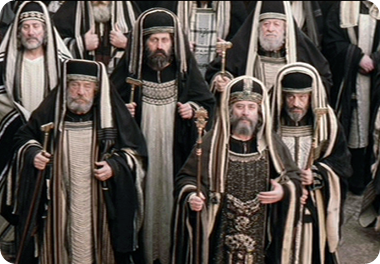
Todays blog requires an additional question. Are there Pharisees among us today? Many believe that the Pharisees somehow are looked at a bit to harshly. Here is what we know. The Pharisees were an influential religious sect within Judaism in the time of Christ and the early church. The name, Pharisee, comes from a Jewish word meaning separated. They included the oral tradition in addition to the written law and they insisted that all Jews must obey all 600 plus laws in the Torah, along with the rituals contained in the purification ceremony. These men were mostly middle-class and held leadership positions in the synagogues. An interesting point is that they were a minority in the Sanhedrin as to the number of positions they held as priests, yet they also seemed to be able to control the decision-making of the Sanhedrin because they were popular with the people. Fast forward to today. There are many things that are contrary to our faith values today along with   questionable leadership which yet seems to flourish simply because it is popular with the people. I have included the Pharisees in other writings in the past but here is a fact that has eluded me until my recent readings. Among the Pharisees were two schools of thought, based on the teachings of two rabbis, Shammai and Hillel. No need to delve into that at this time but is interesting that after a period of time these two schools within Pharisaism became so hostile to each other that they would no longer worship together. Sound familiar? Think the of church splits that happen in today’s Christian community. You can find much more information about the Pharisees and the Sanhedrin in other books and study material.  

We are using scripture from Mark 7:1-8, 14-15, 21-23. Most of us have always been taught that the Pharisees and Scribes were self-righteous hypocrites, the bad guys in the narrative. Jesus himself calls them out as such. Are we to question our Lords spoken words, of which Mark has noted in these scripture readings? I don’t think so but I also believe that motive and intent are reasonable qualifiers in any situation and are pivotal to understanding the scripture fully. Sometimes good intentions can blind people and cause them to not trust God. Remember motive and intent? It is important that we at least consider the intent and motive of the Pharisees when reading these scriptures. Before God gave the law he told the people that they were to be a holy nation, priestly in their behavior among the nations around them. These men understood that God was calling them to be His people. They believed that the law was a gift to bring order into their lives as God’s people. For them to observe that law was a witness to the nations around them and  gave glory to God. I do not want to burden you with details and there are many but rather present a few facts for you to consider in future discussions about the Pharisees. One thing we all have in common with the Pharisees would be our attachment to traditions. They believed that the laws concerning the priests serving in the temple applied  to all of God’s people and all aspects of their lives. The fact that the priests had to wash their hands before entering the temple or offering a sacrifice was the basis of interpreting the law to mean that all Jews must wash their hands before a meal, making it a sacred time. The Pharisees intent was to bring all aspects of life under the canopy of God’s law. Their motive of protecting these traditions was their way of protecting the Jewish faith and way of life amid the Roman occupation. One of the best examples of this protective attitude is found in Mark 7:1-8. The real issue here was not proper hygiene. The Pharisees looked upon it as a neglect of tradition and undermining of God’s law. 

These Pharisees may have had some legitimate concerns in their day and time. It is my opinion that they acted with closed minds and sought to undermine anything that challenged what had become the tradition of Jews living out their lives and worshiping their God. There is one other factor that we must include….Power…Power to control God’s people and influence their religious life with the Law being first and foremost in all their life actions. In Mark 7  Jesus makes it very plain why he is so displeased with the Pharisees.

Mark 7:6-8, 14-15, 21-23 

6 He said to them, “Isaiah prophesied rightly about you hypocrites, as it is written, “This people honors me with their lips, but their hearts are far from me; 7 in vain do they worship me, teaching human precepts as doctrines.’ 8 You abandon the commandment of God and hold to human tradition.” 

14 Then he called the crowd again and said to them, “Listen to me, all of you, and understand: 15 there is nothing outside a person that by going in can defile, but the things that come out are what defile.”

 21 For it is from within, from the human heart, that evil intentions come: fornication, theft, murder, 22 adultery, avarice, wickedness, deceit, licentiousness, envy, slander, pride, folly. 23 All these evil things come from within, and they defile a person.”

There is no tradition that can protect us from the evil behavior of others or ourselves. The Pharisees got to the point where they thought themselves to be a rung above everyone else. They used the law as a leverage to separate themselves from those they deemed not worthy of God’s love. The Pharisees built a wall of law and tradition to keep others out. Now what about that other question? Are there Pharisees among us today? Yes, most definitely and here is a thought to take with you. The gospel shows us that true faithfulness is going among those considered unclean, loving those who are unloved and serving and giving our lives, time and resources to all people —

Matthew 25:35-36 New International Version (NIV)

35 For I was hungry and you gave me something to eat, I was thirsty and you gave me something to drink, I was a stranger and you invited me in, 36 I needed clothes and you clothed me, I was sick and you looked after me, I was in prison and you came to visit me.’

Matthew 22:37-40

37 Jesus said unto him, Thou shalt love the Lord thy God with all thy heart, and with all thy soul, and with all thy mind. 38 This is the first and great commandment. 39 And the second is like unto it, Thou shalt love thy neighbor as thyself. 40On these two commandments hang all the law and the prophets.

Sharing the word with you is an important part of my life for which I am most grateful. I am also grateful for the numerous authors, commentaries and articles that provide the material for these blogs. They, prayer and the Holy Spirit are my guides through this wonderful world of God’s word. As always I will endeavor to acknowledge the sources that provide these insights into the gospel each week.

Life is Good

Jk

Resource material for today’s blog is from an article written by Elisabeth Johnson, Professor, Lutheran Institute of Theology.


Immigration and The Church

 Once again a murder committed by an illegal alien has awakened the passions of both sides of this debate. I am of a small majority and there is the possibility, I may be the only one who believes that immigration is an issue of its own and the Church does not need to be involved in it. Say that again….The Church does not need to be involved in the immigration issue. It is fine for christians to bring their Christian Values to the debate and at this time in our nations history it is sorely needed. The church needs to direct its resources to the needs of those who are the victims of this ongoing immigration problem. As always another loss of life involving an illegal alien and down the same road we go. Here we see this identity trend pop up, more on that later.

As always in situations of this nature,  the narrative centers on the perpetrator and not the weapon, I make this distinction to make a point that the loss of life is overshadowed by the rush to gain political or social credit and to boost personal or organizational agendas. Because church today is influenced more than in past days by the pressure of social relevance, this is indeed a subject that resonates in the pew. Almost all denominations have issued position papers by leadership that explains their stance on immigration. Not everyone in every pew agrees totally with these particular statements, they differ from denomination to denomination. It is my opinion this has become a difficult issue because of an unintended turn of events surrounding immigration. We have been hearing about the evils of identity politics, which in turn has found its way into the immigration debate. This is taking us down a winding road that leads to no solution. Immigration has become a problem, why? People from all over the world have been coming to the United States from its very inception. I believe it is because we have assigned other factors to it, that complicate a very simple definition of immigrant as a person who comes to a country to take up permanent residence and does so as prescribed by law. Notice that no where in this definition is there an identifier that makes one immigrant different from another. There are just to many labels being ascribed to those people caught in this dilemma, consider this list:  immigrant, alien, illegal alien, illegal alien/immigrant or that shortened description uttered in total frustration, an illegal. Here is another one to add, it is a bit milder and strangely enough, the least used. Migrant…but “there’s no one simple description of a migrant. Across the U.S. political spectrum, politicians and activists present Central American migrants as either dreamers or law-breakers; those fleeing violence or those abusing immigration loopholes; crying toddlers or MS-13 gangsters. These labels force migrants into rigid categories, losing the diversity of their reasons and their wide-ranging demographics and backgrounds.”  I continue to quote from the article listed below. “The face of migration has also changed. Back in 2000, Mexican nationals made up 98 percent of the total migrants and Central Americans referring to Honduran, Guatemalan, and Salvadoran migrants only one percent. Today, Central Americans make up closer to 50%.”(lawfareblog.com  June 23 2018) 

The road we are on has more turns than the “yellow brick road” and there will be no Oz and no Wizard to make things right at the end of our journey. Conservatives favor the term “illegal immigrants,” which hardliners often shorten to “illegals”; immigrant advocates prefer “undocumented immigrants,” a phrasing that they say prods the conversation back toward the humans in question, but “Unauthorized” often shows up as a neutral alternative. That is a brief history or background of where we are today. Now, what about the Church? 

I have a rule when writing that it is important the information you share is as accurate as possible. I also believe that I don’t know everything. I have an opinion about everything but knowledge does not dwell in opinions. I have researched this immigration thing quite a bit. Churches have always been involved in humanitarian ministries, it is the Christian calling and we of the church are to lift up, protect the helpless, feed the hungry and oppose the injustices that marginalize those less fortunate than ourselves. There is a small detail that we often get wrong. We are to serve God’s people. Who are God’s people? We agree I am sure, that God created all things…. Here we find that detail, we sometimes pass over, all.  All people are God’s people, period. Back to my earlier statement “The Church does not need to be involved in the immigration issue.” The church does need to be cleaning up this mess created by Governments and organizationsalso people with personal agendas as well as political parties who seek to strengthen their voting bases. The church needs to be on the people side of this issue, trust God to deal with the rest. The secular world is a good example of why the church needs to remain true to its calling. There are those, outside the church, who believe making placards, marching and chanting or screaming obscenities at those you disagree with or in general becoming a mob with an opinion does nothing to deal with or relieve the human suffering caused by this issue. In my research I have found two excellent articles that are well-balanced and I believe worth the read. Scott Rae is Professor of Ethics at Talbot School of Theology and author of numerous books on Christian ethics. The link to his article is posted below. The other author is Lynne Bollinger for which I do not have a direct link to. You will find her article “The Church as a Place of Belonging” included in a book by Dan Boone “A Charitable Discourse, Volume 2.” I have listed the publishing house below.

If you have read this far I encourage you to follow-up by reading the suggested material. We must as the church look beyond the issue of immigration as a social and political issue and do all we can to make it a “people” issue, “God’s People”. Pray, seek to be informed, become involved in your community through the many church programs that serve this immigrant community and remember 

Matthew 25:34-36 New International Version (NIV)

34 “Then the King will say to those on his right, ‘Come, you who are blessed by my Father; take your inheritance, the kingdom prepared for you since the creation of the world. 35 For I was hungry and you gave me something to eat, I was thirsty and you gave me something to drink, I was a stranger and you invited me in, 36 I needed clothes and you clothed me, I was sick and you looked after me, I was in prison and you came to visit me.’

We must do the Kingdom’s work.

Life is Good

Jk

https://zondervanacademic.com/blog/bible-immigration/

Boone, Dan. A Charitable Discourse, Volume 2: Uncomfortable Conversations (Kindle Location 1361). Nazarene Publishing House. Kindle Edition. “The Church as a Place of Belonging –  Lynne Bollinger”

The Job Syndrome

We all very different, or so we like to believe. Most know the story of  Job, his descent into a world of misery he never imagined was possible for him.  Job is a wealthy man living in a land called Uz with his large family and extensive flocks. God counts him as“blameless” and “upright,” always avoiding evil (1:1).  Satan comes to God who has boasted about Job’s goodness and argues that Job is only good because God has blessed him abundantly. Satan challenges God that, if given permission to punish the man, Job will turn and curse God. God allows Satan to torment Job to test this bold claim, but he forbids Satan to take Job’s life in the process. Many different writings make note of the fact that the Satan in the book of Job is not the same as the one in the NT. This Satan at this time is one of the heavenly minions.

Job finds himself in dire straights, one disaster after another which of course brings to mind a question that is asked often by all of us. Why Me Lord? Job does not know the answer to that question but there are others who believe they know, according to the customs of the day. We  often ask ourselves when things go wrong, “What have I done wrong or what could I have done differently?” There is a turn in this account of Job that I have overlooked in the past and it is possible you may have also.

We see in the early going conversations between Job and his friends they believe that God blesses the good and punishes the guilty, so they felt Job must be guilty of some terrible sin and should repent.  Job, does not believe that, which we as readers of the first chapter, know to be true. His friends continue to press him to admit his sin, then we encounter Elihu who grows weary that no answer has been presented by any of the four involved in this conversation. Elihu leans more toward divine providence, which he insists is full of wisdom and mercy. It is possible that suffering may be decreed for the righteous as a protection against greater sin, moral betterment and warning, causing us to have a greater trust and dependence on a merciful, compassionate God in the midst of adversity. Reasonable thought, how often has a crisis moved us closer to God? Job has endured a number of setbacks and his friends while distraught at his situation continue to push Job to repent of his sin, believing still it is responsible for where he finds himself at this moment in time. It is at this time (chapter 32) that Elihu, who by the way is not an elder joins the conversation with a lengthy speech. It is thought that his not being an elder, he waited out of respect for those older than him to have their say. It is here that we encounter that turn I spoke of earlier. We all seek answers as to why this or that has happened to us. Job was no different and the treatment he received, one more of judgement than comfort in his time of distress and from his friends no less, most likely drove him even lower. He was driven to revisit the good things he had done, the stature he had attained in living a good life…..he sought the presence of God. Then came the turn. We might expect Job, in chapter 38, to answer Elihu. What we get is God’s response to Job which is all questions. The paradox of a question becoming an answer, allowing Job to take these facts and make the connection of Why. 

Why do good people have to suffer? The book of Job raises many questions and leaves us searching for the answers. We can become confused, angry, scared and yes…demanding in our times of trial. In chapter 38, verses 1-11, the majesty, glory and authority of God are put before Job with questions. Consider… God answers Job, but I am sure it was not as he expected. God has some questions for Job, a quick look at 38: 1-11

Verses

-1-3 God makes his presence known in many ways. The questions start, not what Job wanted, he wanted to address God directly. He wanted to know the charges against him and win justice for himself. Instead he gets questions he can’t answer.

-God invites Job to prepare for confrontation.

-Job 13: 21 Withdraw your hand far from me, and stop frightening me with your terrors. 22 Then summon me and I will answer, or let me speak, and you reply to me.

-4-7 These verses are to impress upon Job that he can’t even begin to understand the depths of God’s wisdom and knowledge.

-8-11

8“Or who shut up the sea with doors, 

when it broke forth from the womb, 

9when I made clouds its garment, 

and wrapped it in thick darkness, 

10marked out for it my bound, 

set bars and doors, 

11and said, ‘Here you may come, but no further. 

Here your proud waves shall be stayed?’

So tell me Job, can you do any of these things? Did you see me do these things? Point is Job, if not, who are you to be seeking a confrontation with the Almighty to bring your case to and receive vindication?  These questions are not to marginalize Job but to hopefully show him the majesty of God and to glorify God. 

As I bring this weeks blog to close I still ask WHY? In these first eleven verses we see how ordinary we are.  Job must come to the realization that he lacks the knowledge to ask such a question….he is mortal, just a man. So what is the Job Syndrome? I think it is taking too much for granted, no, better said, taking God’s blessings for granted. Then when things don’t go our way we want to know why. Ponder on this….no person receives salvation by doing good things or having nice things……..Why?


Singing of Hymns and Psalms,Prayer,Vocal Thanksgiving,Instruction  and The Lords Supper…..an Order for the Centuries. 

I hope to keep this as simple as possible. The early church was pretty much made up of Jews who had accepted Christ as the Messiah. There was of course the new and major acceptance by these Jews that Christ was the promised Messiah and that salvation was found only in Him. They continued to worship in the Jewish fashion for several years in some places but in time added a few things to distinguish themselves as followers of Christ. People of the way as we became to know them in later writings. Added were the Lord’s Supper, they gathered daily for prayer and fellowship, preaching and teaching. A major change was the moving of the worship services from the Jewish Sabbath to the first day of the week because it was the day of the resurrection. An interesting fact here is that from the very inception of this new Christianity the synagogue was in full power of its various functions. There came a time that Christians were no longer allowed to worship in the synagogues. The early Christians had always viewed themselves as a Jewish sect and this set in motion some changes in the order of worship. They did maintain the same rites as their Jewish counterparts with changes coming as Christian Scripture became available. To fully understand the changes that occurred over time, go to the link at the end of this blog. While the New Testament does not offer many details on the order of worship or leadership in the churches earliest days there are some things we do know. When the time came that they were no longer able to worship in the synagogues, they began to meet in homes. We are able to find some order of worship in the books of Acts, Corinthians, Colossians to name just a few. There would be singing of Hymns and psalms, prayer, vocal thanksgiving and instruction.   

Paul, in his writing to the church in Corinth, describes two types of Christian gathering – one is the Lord’s Supper (cf. 1 Cor 10:16-17; 11:20-29) or the ceremonial community meal; a second gathering was the Prophetic Assembly, which included both singing and thanksgiving in unknown languages, with interpretation (for purpose of edification), and prophecy (cf. 1 Cor 14:1-33).(Dr. D W. Ekstrand)

Some things never change, we might enhance them some, to better preach and teach the word but the core of it all is the church being called, our calling, to take the word to the people of God. Do not pass lightly over the phrase people of God, for He is the creator of all things and people of God means just that. We are to go to all people not just those who we are comfortable with or places that are convenient for us. Back to last weeks blog. Can we even perceive how difficult we have made this church thing in today’s world? All the groups, labels and social pressure that confronts our planning, going forth with the word and serving the needs of our communities. Time never makes anything   simpler. We can reduce decades to X, Y, Z but take several paragraphs to turn a scripture to our needs. The church has grown beyond what we read about in the New Testament, we still celebrate the Lord’s Supper and it is true that we seek to add to His Kingdom by proclaiming the Word of God and looking to Jesus Christ as the way to our salvation. 

So to sum up….we need more than religion. Salvation is not a group activity. It requires a personal relationship between the person and God, and through His son Jesus Christ. I am trying to stay away from the buzz words of today’s religion and are calling you back to The Way. The church has indicated these past years that it is becoming more and more fluid in its interpretation of scripture and is finding itself a captive of societal changes that are weakening its ability to respond to its calling.  

Matthew 18: 20 For where two or three are gathered in my name, I am there among them.”

Remember to sing the hymns, psalms, pray earnestly for the Holy Spirit to guide, giving thanks for everything, study the word and celebrate the Lord’s Supper often…. Jesus Christ has risen! Every thing else is just details that will change…It is the way we do church… 

Thank you for joining me in the pew this week. Please take time to read the excellent article that was a source of the information in today’s blog. Go to the link below

http://www.thetransformedsoul.com/additional-studies/miscellaneous-studies/-worship-in-the-early-church

Life is Good

jk


It’s As Simple As XYZ…..?

This is another of those blogs I have started over a number of times. I have spent the week and part of last week reading about church membership, what works and what doesn’t. One thing I discovered from my point of view is a modern-day church quandary. I think that part of the problems of todays’ shrinking membership is because of the fixation on XYZ. Great article by WJSchroer got my attention, very informative and interesting. As I usually do please refer to the link at the end of the blog, good read, seven different generations beginning from 1912 to 2012. My first question, is this a generational thing? Whenever you go searching you will always find things that conflict or muddy the waters so to speak. Now each one of these generations saw a change in direction, expanding or limiting their role in society and changing doing church as we used to. I wondered how involved as a church are we into this generational thing. When we add demographics, PC and local culture the church is hard pressed to find a message that fits its immediate environment without offending someone. Because we are so intent on putting a label on people, placing them conveniently in a box, their humanness becomes secondary to the statistical information many organizations look to for guidance. A good example of this practice can be seen in an article by Jeremy Steele in the United Methodist Communications publication. The article specifically written to a specific population of the church also has a host of turn offs that could put off other generations as well. This is a well written article, informative and except for a few points could be speaking to any of us. Go to the link at the end of the blog. At this point I would add minimizing our humanness to a statistic as a problem for the church.

So what has happened to make this church thing so difficult? People are different and their concept of church does vary as to its importance and place in their lives. The early church was less complicated but far more challenging.  I never really considered the fact that not only do we label people but it seems that we carry that habit over to our church communities. Here are a few of those labels. There is the Institutional Church, the House Church, which really took off in the 70’s and continues even today. Of course we have the Main Line Denominations, followed by the rise of the independent Charismatic churches that have grown in such large numbers. What did the early church worship services look like? Since the first Christian community in Jerusalem was almost exclusively Jewish, it accepted the Old Testament as the Word of God and continued to worship in the Synagogue with the Jews. What distinguished the early Christians from the Jews was their belief that Jesus was the promised Messiah and that salvation was found only in Him. It is within these largely JewishChristian Synagogues that the order of worship began to change. They did for a while continue to worship in that Jewish order of worship of Scripture, prayer, the singing of psalms, hymns, and spiritual songs, later adding the Lord’s Supper (cf. Acts 2:42, 46) and prayers in the name of Jesus (cf. Acts 4:24-30). The Christians gathered daily for prayer, fellowship, preaching, and teaching (cf. Acts 2:46; 5:42), They did change from the Jewish Sabbath to the first day of the week almost from the beginning, because it was the day of resurrection. There is a lot of history here and to me while it helps to bring into perspective the churches’ struggle over time with the why, way and how to do church it can become confusing. I take away from the article “WORSHIP IN THE EARLY CHURCH”  by Dr. D. W. Ekstrand that the Synagogue was still in power as a place of worship. Dr. Ekstrand notes:

 The New Testament refers to it fifty-five times. Our Lord taught in the synagogues of Nazareth and Capernaum; Paul preached in the synagogues of Damascas, Salamis of Cyprus, Pisidian Antioch, Iconium, Philippi, Thessalonica, Berea, Athens, Corinth, and Ephesus.”

There is so much here that I believe I will return to the subject of the early church next week. So far my thoughts are moving toward a rejection of the generational, statistical and PC approach to reaching out to people. I am becoming more scripture conscious and embracing the core values of the faith and not being driven by societal and culture changes. How do we do this in a world that wants to know “what’s in it for me”? Don’t mean to leave you hanging, hoping you will ask yourself, if X,Y, and Z are a bit to simple?

Hope you come back next week…Life is Good

jk

 (http://socialmarketing.org/)

 (http://www.umcom.org/learn/top-10-church-faux-pas-that-turn-off-millennials)

Pondering Quietly In The Pew……

 Sometimes the silence is deafening and here in the pew it has become to quite. I do believe that as christians we need to express our real sentiments on the subject of religion more often than we do. My dictionary defines religion as “a personal set or institutionalized system of religious attitudes, beliefs, and practices or a cause, principle, or system of beliefs held to with ardor and faith.” Saw a church sign some time ago “you have tried religion, now try Christ.”  Truth is I have always considered religion and faith to be two entirely different things. Continuing the written definition as given are these added points. “ Archaic, scrupulous conformity, conscientiousness to the point of being very careful about doing what you are supposed to do and wishing to do what is right, to do one’s work or duty well and throughly.”   

Religion is ever-changing, evolving and is to some degree shaped by the need to remain relevant to the ever-changing social conscience of society. The church and its desire to stay relevant has given over to a careless practice of inclusiveness. This has promoted a reckless and dangerous acceptance of once questionable behaviors that have challenged our discipline to scripture and God’s will in our lives. To some folks questioning being inclusive is not correct and in some ways stifles the growth of the church. To others the gospel of inclusion is simply the old heresy of universalism. I won’t take up space with the definition of such but you will find it in the dictionary. I try in my writings not to overburden you with scripture, however I do encourage you to know what is contained in God’s word. You must know and believe in your heart having studied, prayed and sought the guidance of the Holy Spirit that which is expected of you for salvation. What? We don’t like being held responsible for our actions but the truth is that in conjunction with salvation is repentance and that friends is scriptural correct. Call it hard-line, unreasonable or old fashion but salvation is offered to all and repentance is expected of all. To repent is to turn from those things that separate us from God. To be a person of the Way we must follow the teachings of Christ. I worry about this silence in the pew. Silence, the complete absence of sound. I would ask, has the need for inclusiveness driven by the need to be relevant brought  acceptance of such behaviors of these days to be the new norm?  Has God rethought this or have we simply rethought the scripture to meet todays changing norms as if it will not affect us or our church. Is the continuing tolerance of abortion simply because we have given it a new definition and it is now not an act that God would find abominable but a right that through its inclusion in the laws of the land is now acceptable? Then there is the same-gender issue that all denominations are struggling with under the banner of inclusiveness. The church becoming involved in social issues that drain its resources and lessen its ability to do the ministry it is called to do. God said we are to be Holy, as He is Holy. How is it that those things which are in conflict with God’s word have now become acceptable under this gospel of inclusion and the re-writing of scripture to fit the ever-growing number of societal changes becoming a daily practice? I just listed two of the many issues that confront Christians today and I did that for a reason.

That old saying between a rock and a hard place could become a Christian mantra if we let it. God, through His Son our Lord and savior has removed the rock but the way is still hard. The message and the forgiveness of sin through the blood of Christ is for all people. There are no prerequisites as to with whom, where or how the message is shared and the old hate the sin and love the sinner does not convey the urgency of salvation and repentance. I believe that God will judge the sin. We are to love the sinner and bring them to the foot of the cross so that they receive salvation and repent of their sin. Sin is anything that separates us from God, not just the two that have become the golden idols on societies altar of causes, we are all sinners.  At the top of todays’ agenda of social change are, abortion which involves the interruption of the process of creation as God intended it to be and the other, same-gender life style is clearly and abomination in God’s eyes.One of the largest denominations in the world lists seven deadly sins that if left unchecked will result in a host of other sins. Proverbs 6: 16-19 lists seven things that are detestable to God. When was the last time you ever heard these addressed from the Pulpit?  The omission of what is sin from the conversation allows for the unacceptable to become acceptable. When I was growing up my parents never said anything about race or the injustice of segregation. The result of which was that the unacceptable became acceptable. The absence of civility in our conversations about the issues of the day seems to me has left only the screamers and agenda driven people at the table. As trite as it may sound 

Matthew 22: 37-40

 ………..’You shall love the Lord your God with all your heart, and with all your soul, and with all your mind.’ 38 This is the greatest and first commandment. 39 And a second is like it: ‘You shall love your neighbor as yourself.’ 40 On these two commandments hang all the law and the prophets.”

The silence in the pew is a reflection of the silence in the Pulpit. Love God first, with all your heart, then you neighbor and do not allow the gospel of inclusion to rewrite the Scripture.

Life is Good

Jk

The Early Church and Pax Romana

Pax Romana simply means “Peace of Rome” and refers to the tranquility and security that the Roman Empire brought to the Mediterranean world. The Pax Romana lasted from the reign of Caesar Augustus (27 BC–AD 14) to that of Caesar Marcus Aurelius (AD 161–180). At the time of Christ and during the first generation of the church, much of the world was unified under Roman authority and enjoyed a relative peace. (gotquestions.org)

The above is from one of my favorite study sites. Pax Romana, came across it while doing research for another project and wrote it down to come back to later.After reading it again I had an idea that it could plausibly be linked to an often repeated phrase. We often in times of stress and difficult situations will find comfort in saying, God is in control. While we may apply this to these days and times, I believe we often forget that and allow the culture of the day to overpower our faith. This Pax Romana is important to the history of the early church because all of the land surrounding the Mediterranean was at peace because everyone was under Roman Law. So at the time of Christ and during the first generation of the church, the world as understood to be then, was under Roman authority and was pretty much at peace.

While it is perceived that Christians were persecuted for their refusal to worship the emperor that  was not the case. A general dislike or distrust of Christians was most likely due to their refusal to worship the gods or take part in sacrifice, which would be expected from anyone living in the Roman Empire. God could have chosen to spread the gospel in many different ways or forms but He chose ordinary people, empowered by the Spirit to spread the message. So out went the gospel on the feet of spirit led people who had become God’s messengers. Consider if you will these facts.

Pax Romana provided an environment that allowed safe travel throughout the Roman Empire. 

-Roman discipline cut down on crime on the roads and piracy on the Mediterranean Sea, making travel safer.

These are just a couple of the results of this Pax Romana. A better system of roads over time improved the ease of travel for missionaries, improved business between towns and many Christian business men took the gospel with them on their commercial trips. The largest impact may have been in language. Greek became the common language used throughout the Roman Empire. All throughout the empire people could still communicate with each other, and Paul’s epistles could make their rounds to the churches and be understood by all. It gets even more amazing when you consider that Roman Justice protected Paul many times in his ministry. Pax Romana was really simple. Citizens and residents of the empire, as long as they were not considered a threat to Pax Romana, were quite safe in sharing an unpopular message. We know that over time Paul was accused of disturbing the peace, endangering this Pax Romana but was protected  by the Roman Authorities. All of these things allowed the gospel to spread quickly among those people in the civilized world of Pax Romana. 

Now none of this is to say that God’s people had it easy, we know different. God was in control, God had a plan! Today more than ever we must believe that God has a plan, He is in Control.

Stay the Course

Life is Good 

Jk

The Argument For Faith ………………is an Argument for Christ

I have written this opening sentence several times and have come to the realization that I might be over thinking this subject a little too much. So to keep it simple here is a fact of life. If your faith is such that it has a heavy influence on your actions, you might be a Christian, a follower of the way or a disciple of Jesus Christ. If this be the case it is inevitable you will be called on to defend the faith. To take this to the next step it is your faith that has placed you in this position and in reality you are defending or better said, presenting “an Argument for Christ.” Peter has set down acceptable ways to enter into this mode of Christian defense. 

1Peter 3:15b-16A

…always be ready to make your defense to anyone who demands from you an accounting for the hope that is in you; 16 yet do it with gentleness and reverence.[c] Keep your conscience clear, so that, when you are maligned, those who abuse you for your good conduct in Christ may be put to shame. 

We must start off being reasonable, which in this present world of discourse is not easily done. It must be inspired by the word of God. It must be an intelligent, clear and applicable statement of position and of divine reasoning. It should contain an element of intelligence that conveys the message that you have prepared yourself through study and prayer to defend your faith; always remembering that you are defending Christ Jesus. This approach requires that you have come by your faith through first hand experience and not another’s story. William Barclay writes,

It is one of the tragedies of the modern situation that there are so many church members who, if they were asked what they believe, could not tell, and who, if they were asked why they believe it, would be equally helpless. Christians must go through the mental and spiritual effort of thinking out their faith, (Barclay, DBS…1 Peter Pg 266)

Our defense must be given with gentleness. Our attitude must not be one of arrogance. We must not be of  the temperament that those who do not agree with us are stupid or they are unreliable. We must not do as some others with differing opinions and try to shove our beliefs down the throats of those who disagree with us. We must present our Christianity with love and tolerance while maintaining the scripture as written with divine discernment. We must understand that we cannot bully anyone into The Way. We can only lead them to the foot of the cross and allow the Holy Spirit to bring them to Christ. Most any debate today can easily become an argument. There are many debates within and outside of the Christian community that are just a word or two away from becoming an argument. Christians can become engaged in discussions that move to debates and then to full-blown arguments especially concerning theological differences. I wrote earlier that an argument for faith is an argument for  Christ. Any presentation of a case for Christian faith or beliefs must be presented with reverence, the tone and language must be pleasing to God’s ear. There is no room for rancor of any kind. Love for Christ and his love for all people must guide our behavior. As Christians our lives need to be a compelling and a living example that makes it easier for others to believe the message……makes it easier for others to believe in God, Jesus Christ and salvation.

Thanks for coming by, hope to see you in the pew next week.

Life is Good

jk