What Will you Do……..When It’s You Turn In The Garden?

I can’t explain why in this season of great joy I would bring into the Pew such a question but it is worth pondering a bit. Most of us think of two things when we hear the word garden in biblical writings. There is the “Garden of Eden” where the trust and relationship between man and God was broken. Then of course there is the “Garden of Gethsemane” we read of in Mark 14: 32-42, where Jesus, in total obedience to the Father, chose to stand and not run from the Father’s will. Thus the crucifixion, the resurrection and the process of the restoration of the relationship of the people with the Father through the mercy, grace and acceptance of Jesus Christ as the Messiah, the Son of God.

Two things we might consider at the first of these verses. The first being that to have stayed in the upper room would have been dangerous because the authorities would be looking for him along with the fact that Jesus knew what Judas was going to do, he needed a safe place to go. The safest place would be anywhere outside the city. This was no ordinary garden and because Judas knew where to find Jesus it is apparent that Jesus was in the habit of going there. Because the city had a weird law that its sacred soil might not be polluted with manure for the gardens, many wealthy people maintained private gardens outside the city to get away from the crowds and just rest. One of these wealthy people must have given Jesus the privilege of using his garden at night. There were two things that Jesus wanted on this night. He took his disciples with him because he wanted human fellowship and even more the time to fellowship with God. The agony of Jesus at this time was intense. When you are in times of trouble and uncertainty do you not want human fellowship and most of all to be close to your God?

As we continue through these verses we know that Jesus did not want to die, he was still a young man and there was so much more to be done in this world so full of sin; we also would be mistaken to think that Jesus did not know of the pain and shame of the crucifixion. How many times have you been in a situation in which you had to compel yourself to go on? At this point Jesus did not fully understand why and there are times I am sure that all of us have wondered why things in our life had to be a certain way, but knew we had to go on. Here is a lesson we who call ourselves Christian can learn from. Although he did not fully understand his Father’s will, he knew it was the will of his father. He accepted it and then with faith, continued on.

So some questions to for all of us. Where is our garden? Can we go there and in fellowship with others find God, seek his will and then follow in faith that which he has asked of us? Here is a quote from William Barclay’s Daily Bible Study.

“If we can call God father everything becomes bearable. Time and again we will not understand, but always we will be certain that ‘The Father’s hand will never cause his child a needless tear.’ That is what Jesus knew. That is why he could go on – and it can be so with us. “ (William Barclay, DBS, Mark page 401)

What about you? When you are in the garden, what will you do?
Will you stand and do the Father’s will…….or will you run?

Life is Good

jk


Drop The Blanket

I have gone back and pulled a post from January 2017. Great message and one of my favorites.

John Kurt Carpenter's avatarFrom The Pew

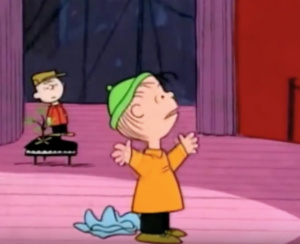
I am constantly 28973-linusdropsblanketsearching the internet for little gems of knowledge and wisdom that will enrich and encourage us ordinary folks whose frantic pace in this life causes us to rush by without even taking the time to “smell the coffee” so to speak. Well over fifty years ago we were introduced to the world of Charlie Brown. Charles Schultz created a community of loveable misfits each with their own recognizable frailties’ of mind, body and spirit, in which many of us saw a part of ourselves in the characters and took this lovable bunch into our hearts. Unlike some of the modern animated cartoons of this day the brilliance of Charles Shultz shows us our faults in a gentle and endearing way. Charlie Brown also helps us see the real value of community, the need we have for others and the power of a simple love that transcends the…

View original post 385 more words

Philippians 4: 8-9… Way Out Of The Chaos Of this World?

We could all use a little good news these days in a world changing rapidly moving from one set of normal to another and chronicled by the diversity of this digital world we live in. We live in a time of smoke and mirrors, things are never what they seem but are often a picture painted by a world of spin doctors, painted to fit their agenda. If that isn’t enough what is considered truth is only good till the next telling of the story.
In the verses that make up chapter 4 in Philippians there has been a dispute that has apparently disrupted the fellowship within the church. Christians are to remain strong in the faith by fellowship with each other and solving our problems or differences by working together. Paul is encouraging them to do just that. Prayer, supplication and giving thanks in all things, helps us to deal with the anxiety through the peace of God through Christ. It is a fact of life that if we think about something frequently and long enough we soon will not be able to stop thinking about it. Our actions and our demeanor will reflect our concerns and we will be overwhelmed by the concerns of this world. The truth is the mind will always set itself on something. Let’s take a close look at these two verses from Philippians Chapter 4.

We know that there are many things in this world that can let us down, promising things which can’t be delivered and offering false hope to gain peace of mind. Verses 8 – 9, Chapter 4, Paul offers us a list of things that we as Christians should dwell on, things that lift us up and give us peace. He starts off with the word Truth. The Greek is hard to translate and some versions of our bibles use honest and honorable as a means being worth the time to consider. There are things that are questionable both morally, or are not dignified in content in such a way that warrant serious consideration. There are people in this life that don’t take life seriously and it is not our place to judge them. Paul is simply saying there are things of worth that we as Christians should set our minds on.

Paul then uses the word Just, the Greek word being dikaios. The short way to this is that Paul is pointing out that a Christian’s thoughts should be on their duty to other people and God. He then moves on to things which are Pure. The Greek meaning, morally uncontaminated. Barclay points out that when used ceremonially it means that which is so cleansed it is fit to be brought into the presence of God and used in his service. This world is filled with things that are morally questionable. This filth and smut taints may things we encounter every day. The Christian mind should be set on those things that can stand the scrutiny of God. The next word is Lovely. Think of those things that bring forth love for each other and those things God finds pleasing in his eyes. I find William Barclay’s writing in DBS to say it best.
“There are those whose minds are so set on vengeance and punishment that they cause bitterness and fear in others. There are those whose minds are so set on criticism and rebuke that they bring out resentment in others. Christians set their minds on the lovely things – kindness, sympathy, patience – so they are winsome people, whose presence inspires feelings of love. “
There is so much hate and ill-will in the world today that does nothing to lift people up. Christians should concentrate on words and actions that are pleasing to God’s ears and eyes, only those things that are fit to be in his presence. There is so much in these two verses that it is good that we linger here among those things that Paul reminds us are worthy of our thoughts.

The language of today that has become all to common in our communications with each other and often on our minds are ugly, false and impure thoughts and words, that are not words that are fit for God to hear. We should realize that there are many good things in this world that deserve praise and have value. Paul closes with a simple request. While Christians do not seek praise, they should always live a life that would be worthy of such. All things are to be done to the Glory of God. So take the time to dwell on “…those things which are true, whatever things have the dignity of holiness on them, whatever things are just, whatever things are pure, whatever things are winsome, whatever things are fair-spoken, if there are any things which men count excellence, and if there are any things which bring men praise, think of the value of these things. Practice these things which you have learned and received, and heard and seen in me, and the God of peace will be with you.”

As we prepare for the birth of Jesus let us make every effort to think good things, and prepare ourselves that we might be worthy of such a gift.
Life is Good
jk
Note: Reference material for this blog is taken from The Daily Bible Study, written by William Barclay.

The Other Side of That Tree….. That Star

As I have grown older every year at this time that tree with the lights and promise of holiday cheer somehow gets smaller and the lights aren’t so bright. As we get older it is said that eyesight weakens but I have discovered that actually I see much better than in my younger years. ’Tis the season so they say and the lights, music and joy and at some times the goodwill of men overwhelms us all. It’s what is on the other side of that tree that seems to be more and more real in my life. I can’t help but see beyond main street, the bright lights, smiles and the rush of the season, my eyes wander to the side streets where there are people who wonder where they will be sleeping tonight or where their next meal is coming from, the need for a warmer coat and why the world seems to pass them by, for whatever reason. To these people a good coat and some socks without holes in them is more than they can expect. I watch the family in Wal-Mart, mom and dad, trying to figure out how they fill all of those wishes the kids have passed on to Santa. I see the mom in the grocery aisle counting money against what she needs to make ends meet. I know there are families struggling with the illness of a loved one, knowing that it won’t turn out well. No, I am not a purveyor of doom and gloom, I believe age enhances our ability to see reality and view others differently. Every year I tell myself that I will write about the other side of that tree and I never do, because like many of us I too am blinded by the bright lights and the anticipation and excitement Christmas morning brings. You know that saying, “Can’t see the forest for the trees.” I think maybe we sometimes can’t see That Star, for That Tree.

Jesus couldn’t have come at a better time, for thousands of years the Jewish people had been subject to foreign rule, with only a few brief periods of independence. Where Jesus was born and lived, the area known as Palestine, modern-day Israel, had there systems of government. There was the Jewish self-government which reported to the local Roman government, ruled by King Herod, which reported to Rome, Emperor Caesar. It is not a point of common knowledge in the pew but the system allowed for some unusual things. There was religious freedom, political freedom and freedom of thought! There was one caveat, just a small one. All of these freedoms had to be compatible with the Roman system. There was a great difference between rich and poor. You had an upper, middle and lower class, this in its self is not that big a surprise. The big difference was the classes were set in a pattern of political and religious beliefs and loyalties. There was heavy taxation by the Roman government and the tax collectors were considered to be outcasts and traitors. There is so much more about the world that our savior was to be born into. It was a world that no number of Christmas trees, lights or gifts could ever change. It was a world in which they were waiting for the leader that God had promised, whom they believed would bring spiritual renewal and free them from foreign oppression and at this time in their history it was the Roman Empire.

Jesus spent most of his life in and around the farming village area of Nazareth. Similar to many farming villages throughout the world, life was patterned after traditions, roles and rituals passed down from many generations beforehand. (jesuscentral.com)

I have listed some of the things on the other side of That Tree and my belief that it sometimes keeps us from seeing, That Star. So what about that star and what is the relationship it has to the things on the other side of that tree? There are many references to that star in Scripture but in Old Testament Scripture there are not that many. I kept searching because I believe it is so important to the account of Jesus’ birth and what it meant to the world then and the world to come. This one stuck with me.

I shall see Him, but not now: I shall behold Him, but not nigh: there shall come a Star out of Jacob, and a Sceptre shall rise out of Israel, and shall smite the corners of Moab, and destroy all the children of Sheth, and Edom shall be a possession. Seir also shall be a possession for his enemies; and Israel shall do valiantly. Out of Jacob shall come He that shall have dominion, and shall destroy him that remaineth of the city (Numbers 24:17_19).

“Thus Balaam’s reluctant, but divinely inspired, prophecy, revealed that a unique Star associated with Israel would accompany a future Sceptre (that is, King) who would eventually rule the world.” (Henry M Morris PH. D. icr.org )

Why I am drawn to the star? So many things distract us from the real meaning of the birth of Christ. Notice I didn’t say the real meaning of Christmas. I do not wish to get into theological arguments about Christmas, my view is rather simplistic. To the Christian world for many centuries Christmas has been a time to celebrate the birth of Christ. That it does well with almost all people in the secular world as well. My interest is in what the birth of Christ meant to the world and the star does that better than the tree.

Matthew 2:2
They asked, “Where is the newborn king of the Jews? We’ve seen his star in the East, and we’ve come to honor him.”

The star that God put there to point the way to his son, the new-born king of the Jews, he who was sent to forgive the sins of the world and heal a broken and hurting world. We can and do become distracted by the bright lights and gifts under the tree but who hasn’t been drawn to and wondered at a bright and shining star in a dark sky? That star guided them to the Christ child and many are the stories that tell about it. Take your eyes off the tree and look at what lies beneath the star, for it is here we find the real meaning behind the tree.

Luke 1: 78-79
Because of our God’s deep compassion, the dawn from heaven will break upon us, to give light to those who are sitting in darkness
and in the shadow of death, to guide us on the path of peace.”

The time couldn’t have been better. The world was a harsh and unforgiving place for all people. He came as the hope for all people, for a better world and with him came the promise of life for all who believed. With all that is going on around us these days, the world is still a better place because he came. Those people I wrote about at the start of this blog, they are a reminder that there is work still to be done, they are why he came. While That Tree and the lights and joy of the season are real and part of this day…. Follow That Star to the day God blessed his people with a savior. You can’t put the star, or its promise in a box of pretty paper, bright ribbon and place it under a tree. It was and is to be seen by all, for in it is the light of the world, the promise of salvation, for all of God’s people and creation.

Life is Good

jk

RUTH ……..Are you Serious?


Took last week off to enjoy the holiday and getting back into routine is not easy for me to do. I am a simple guy trying to write a simple blog weekly and sometimes subject matter can be a problem. This week was no problem and that was a pleasant surprise. For the past few months of this year, sexual harassment has been the elephant in the room and about two weeks ago the whole herd arrived. The other term we could use is a parade of elephants filled the room. I have my subject, now to research and develop. I was going to “socialize” this, you know bring it into today’s world and write about the biblical aspect related to it. Surprise…this elephant has been around a long time.

Was Ruth a possible victim of “sexual harassment?”  Michael Carasik, has a recent post that I found to be just the way I wish I could write. To many of us here in the pew the post would be informative and go outside the box we normally stay in when reading Scripture. I had to read it twice which still resulted in my asking, “are you serious?” I don’t know how many times I have read the story of Ruth and never made the connection. So there is the first elephant in the blog room. Remember to check out Michael Carasik’s article here:

https://www.bibleodyssey.org:443/people/related-articles/sexual-harassment-in-the-book-of-ruth

Next, some thoughts on this issue of sexual harassment biblically speaking from Dr. Craig Keener. In Genesis we have stories from the Middle Eastern culture which point out the fact that women lacked many of the rights that we take for granted these days. It is also interesting that Dr. Keener notes that in the world of the Israelites, attacks on women’s sexuality also entailed attacks on the men to whom the women were attached. (Keener) Dr. Keener lists these scriptural references to establish the fact that harassment was always a danger for women.

Genesis 12: 10 – 15
10 When a famine struck the land, Abram went down toward Egypt to live as an immigrant since the famine was so severe in the land. 11 Just before he arrived in Egypt, he said to his wife Sarai, “I know you are a good-looking woman. 12 When the Egyptians see you, they will say, ‘This is his wife,’ and they will kill me but let you live. 13 So tell them you are my sister so that they will treat me well for your sake, and I will survive because of you.”
14 When Abram entered Egypt, the Egyptians saw how beautiful his wife was. 15 When Pharaoh’s princes saw her, they praised her to Pharaoh; and the woman was taken into Pharaoh’s household. 16 Things went well for Abram because of her….

Isaac in Canaan, where Rebekah also faces potential threats to her sexual security. Genesis 26: 7 – 9

7 When the men who lived there asked about his wife, he said, “She’s my sister,” because he was afraid to say, “my wife,” thinking, The men who live there will kill me for Rebekah because she’s very beautiful. 8 After Isaac had lived there for some time, the Philistines’ King Abimelech looked out his window and saw Isaac laughing together with his wife Rebekah.
9 So Abimelech summoned Isaac and said, “She’s your wife, isn’t she? How could you say, ‘She’s my sister’?”Isaac responded, “Because I thought that I might be killed because of her.”

The threat was always present even among your own and it doesn’t end there. “The Bible also reports terrible incidents of sexual violence (Gen 34; 2 Sam 13) and God’s punishment on David for his affair with, and abuse of power regarding, Bathsheba. Such actions always appear negatively in Scripture.” (Dr. Craig Keener)

Another Elephant in the blog room.

What is the Bible viewpoint?

I am always thankful for those scholars, teachers and religious writers whose knowledge is so valuable to us folks in the pew. The subject of sexual harassment is one that has been with us from the very beginning. We could make a list of many reasons it is not right, there is no excuse for it. The correct answer or solution is not what the world condones, or the parameters set by society at any time. I read an article by Gary Hunt that puts what I believe to be the best insight biblically on this subject.

“As far as the word’s (generally speaking) definition of sexual harassment, the Bible would agree that it is wrong. When someone in a position of power, speaks or acts in ways that “offend” (sin” against someone and imply or insist on sexual gratification, they are wrong!” (Gary Hunt)

http://biblesearch.com/what-does-the-bible-say-about-sexual-harrassment/

In the secular world it is a well-known fact that has become the stories told in the locker room, the good “ole” boys well-kept secret that everyone talks about, the elephant no one sees that destroys those who are unable to protect themselves from it. It is alive and well in the darkness of the halls of power, position, and influence. These last few weeks the elephant in the room has become a herd. The only real worthy approach to this is found in God’s word.

John 3: 20
20 All who do wicked things hate the light and don’t come to the light for fear that their actions will be exposed to the light.

It is time we brought this elephant out of the dark into the light and insist that it has no place among God’s people. It is time also as I shared with you a few weeks ago that Christians insist that they be given a place at the table. WE must re-establish Christian values in the world we live in. WE must tell the story and share the Good News.

Life is Good

jk


Pondering… The First Thanksgiving

The Pew was always meant to be a view of the gospel from a layman’s perspective. Taking God’s word from the pages of our bible to the pages of our lives, a difficult process in today’s world. Sometimes, we need to step outside the Pew and experience others views, customs and beliefs. This blog is another of those “Paul Harvey” moments….”The Rest Of The Story”

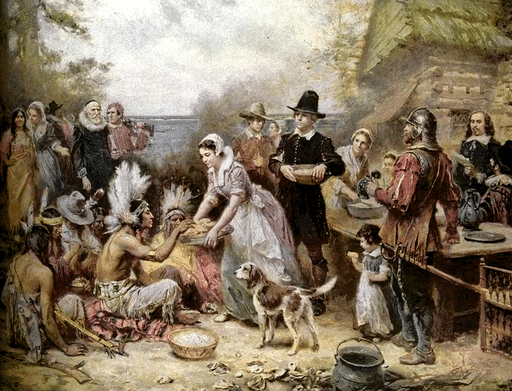
Almost everyone knows the history of our Thanksgiving and the customs that have developed over the years around it. Most of us see Thanksgiving as an American holiday. It would be safe to say that over the years it has evolved from not being a religious holiday to one of some religious inclusions. Advent and the soon to be birth of Christ are in the heart of every Christian during this special time of the year. Friends, family, food and gifts sometimes overwhelms the “Greatest Gift” but somewhere amidst all this secular bravo there is the birth of our Savior, Jesus Christ and the Angels on high raise their voices in celebration, somehow managing to rise above the spirited verses of “We wish you a Merry Christmas”. We will write more about that in another blog. Right now, back to Thanksgiving.

Let me introduce you to “The Rest Of The Story”. May I present Sukkot. While wandering around outside the pew I came across a wonderful article by Tori Avey that is not only interesting but sorta makes the point we are not as different as we would like to believe. Sukkot is also known as the Feast of Tabernacles, a Jewish holiday. It finds its origin in a Biblical Mandate, which we can find in Leviticus 23:29 – 23:43.

39 “‘So beginning with the fifteenth day of the seventh month, after you have gathered the crops of the land, celebrate the festival to the Lord for seven days; the first day is a day of sabbath rest, and the eighth day also is a day of sabbath rest. 40 On the first day you are to take branches from luxuriant trees—from palms, willows and other leafy trees—and rejoice before the Lord your God for seven days. 41 Celebrate this as a festival to the Lord for seven days each year. This is to be a lasting ordinance for the generations to come; celebrate it in the seventh month. 42 Live in temporary shelters for seven days: All native-born Israelites are to live in such shelters 43 so your descendants will know that I had the Israelites live in temporary shelters when I brought them out of Egypt. I am the Lord your God.’”

Here are two paragraphs from the article:
“Sukkot is a harvest holiday, which means that the foods served are seasonal in nature. The Sukkot menu generally features vegetables and fruits that are harvested at the turn of the season—apples, squash, eggplants, grapes, etc. As a food lover, this holiday is one of my favorites because we are encouraged to create dishes from fresh and delicious seasonal ingredients. The arrival of Sukkot ushers in the autumn season; Sukkot foods are inspired by the bounty of the harvest.

Does this all sound a little familiar? You might have noticed that the Sukkot holiday resembles the American tradition of Thanksgiving. Believe it or not, the similarities between Sukkot and Thanksgiving actually have a historical frame of reference. Before coming to the New World, the Pilgrims lived for a short time among Sephardic Jews in Holland. In fact, our American Thanksgiving tradition may have been indirectly inspired by the Jewish holiday of Sukkot.”

(See the full post:https://toriavey.com/toris-kitchen/sukkot-the-harvest-holiday/#CRG7axB3YqercT05.99)

There is a lot more to this story and I encourage you to go to the above link. The Jews and the Pilgrims both were victims of religious persecution. You won’t be disappointed, click on the link above.

It is also interesting to note that….“In 1868, in response to a proclamation to celebrate Thanksgiving issued by Pennsylvania Governor John W. Geary that was viewed as “apparently intended to exclude Israelites” from the celebration, Philadelphia’s rabbis condemned the encroachment on the freedom of religion and expressed the sentiment that national holidays should be devoid of religious content.” (American Jewish Historical Society; Chabad; Wikipedia)

It seems we have been at this PC thing for quite some time after all. Let’s keep this simple. The God we serve created all we have, everything and to him belongs the glory. We can call it Thanksgiving, Sukkot or whatever you are comfortable with. The fact is it is a time of giving thanks to God for the bountiful harvest of his creation. That may not have been the original intent but it is right and just that we do just that.

We will be visiting family in the coming week, we will not publish next week.

Give Thanks in all things……Life is Good

jk


Stepping Back ……Another Look

A few weeks back The Pew looked at the trend of culture overwhelming the place of the church in society today. We recognized that there is also a church culture, the way we do things. I did not look back to dig up an old bone but rather acknowledge, might still be some meat on that bone. We have started a Wednesday nite study at church that looks to be challenging. The title tells a lot, “A Charitable Discourse, Uncomfortable Conversations” edited by Dan Boone. The book hits right at my attention button within the first three chapters. We are doing, or plan to do, a chapter a week.

A few things off the top of the page.

-we have become to comfortable within the confines of our faith

-Confrontation with those who disagree with your thoughts will take most of your time and not allow you to tell your story.

-is there a place for us between the unchurched world and religious fundamentalism

-we are the odd ball, the world has changed and accepted the possibility that sin can be managed and defined by society

-we have found a way to escape accountability

-we have grown comfortable with a predictable faith

-the uncertainty of these days has created frustration and anger among the people of the way

This is a good read. You might want to look it up. Moving on, I have a strong feeling that the culture of the day has always driven the direction of the church for some time now. I don’t look at it as an us against them thing but rather a natural reaction to being comfortable and not wanting to rock the boat. The boat being your denominational affiliation, your church and in some instances your faith. What brought me back to this blog of a few weeks ago? Beth Moore…..well another one of her books I have read. I enjoy her writing and have used her books in bible studies over the years. Her book “The Beloved Disciple” had a few points to consider within this “culture” discussion.

Luke 16: 16
16 “The law and the prophets were until John. Since that time the kingdom of God has been preached, and everyone is pressing into it.

Right off we get a hint at the discourse that is building within the Jewish society and church. “The Law” or the new way, the “Good News” which would it be? From the book Beth Moore writes that the year was 28 AD and it had been four centuries since they had heard a word from God. Life was pretty good for the Jews at this time and the absence of a word from God had left the people comfortable and not really receptive to something new and to the religious leaders of the day, this new thing was totally without merit.The people had withdrawn into a world they could control and shut the door to maintain its reliance on “The Law”. they didn’t have much of a relationship with God. Then along came John, John the Baptist.

2nd Peter 3: 3,4
3 knowing this first: that scoffers will come in the last days, walking according to their own lusts, 4 and saying, “Where is the promise of His coming? For since the fathers fell asleep, all things continue as they were from the beginning of creation.”

They had not heard a word from God for some time and were lulled into this closed-door thing comfortable in the old way. I love the way Beth Moore puts words together to paint a picture that comes to life even in today’s world. After 400 years of silence, out of the wilderness comes the Word of God! John’s voice was loud and had the authority of God in it. From the wilderness all the way to Jerusalem it is heard, people were drawn to this strange man and the door was cracked just enough to bring the Sadducees and Pharisees from behind the door to hear this “new thing”. Beth Moore has a great way of painting the picture….Jerusalem had pulled a security blank over its head, keeping only what they accepted to be true, determined to preserve the old and rejecting change,” pulling the blankets over their heads the Sadducees and Pharisees kept their heads from getting doused in change.” (Beth Moore)

So here we are today a church mired in confusion and endless debate about how to proceed. Is the loss of membership real are just a figure that reflects the changing church landscape, denomination by denomination. Even the question of how do we reach people is prefaced by the conversations around who are we trying to reach and then of course how? If this is not enough to contend with, we are having debates as to the true meaning of certain scriptures in today’s society and changing moral standards as defined by society in general. We do not have a man in rough clothing and a strange diet yelling in the desert and if that were to be, most people would be to busy to listen.

I see a difficult path ahead as we continue to adjust to the ever-changing demands of societal culture, while we ourselves question what we believe and struggle to adjust church culture to fit our comfort zone. I don’t have an answer but this weeks blog never set out to find one. Are we looking for church growth or lost souls? Who decides what people we seek out to share the message with? I can say with confidence that much of what we believe to be necessary to reach those folks in the desert does not always include the following. Exciting services, great music, congregational services, family life centers and other things that are designed to get people to come to your church. Now this may seem to be a harsh assessment of current practices, some of these do bring people in and some of these cause disputes and create debt. One last question. What does the calling of a Holy Spirit infused church look like? I don’t see us going anywhere until we answer that question.

Thanks for visiting The Pew this week, please come back!

Life is Good

jk

Covenants….The Ties That Bind

They say numbers don’t lie but I always like to be sure. I will share these with you because they are important to the blog today. “There are 929 chapters in the Hebrew books of the Bible (“Old Testament”) and 260 in the New Testament.  (bibletruths.com) 

Contained somewhere in all these chapters are little gems that seldom make their way to the pew. As usual here is Merriam’s view on that.

Definition of gem:
1 a :jewel
b :a precious or sometimes semi precious stone cut and polished for ornament

Using “b” and changing it just a little, you might say shamelessly to make my point, I read it as such. A precious nugget of knowledge when found and understood becomes an ornament on the tree of knowledge. Rather hokey but I’ll go with it. Today’s blog will look at some covenants that shaped the faith. For us in the pew there is a lot here we pass over when we just read the words. Let’s start with the word covenant.

covenant definition.  “Literally, a contract. In the Bible, an agreement between God and his people, in which God makes promises to his people and, usually, requires certain conduct from them. In the Old Testament, God made agreements with Noah, Abraham, and Moses. Of the covenants found in the Pentateuch or Torah or the first five books of Genesis, Exodus, Leviticus, Numbers and Deuteronomy:”(Wikipedia)


The Noahic Covenant is unique in applying to all humanity.


While the other covenants are principally agreements made between God and the biblical Israelites.


One other from the Old Testament we will consider because it illustrates a conditional covenant.The Mosaic covenant (named after Moses), also known as the Sinaitic Covenant (named after the biblical Mount Sinai), refers to a biblical covenant between God and the biblical Israelites, including their proselytes.

Exodus 19:5–8
5 Now therefore, if you will indeed obey my voice and keep my covenant, you shall be my treasured possession among all peoples, for all the earth is mine; 6 and you shall be to me a kingdom of priests and a holy nation.’ These are the words that you shall speak to the people of Israel.”7 So Moses came and called the elders of the people and set before them all these words that the Lord had commanded him. 8 All the people answered together and said, “All that the Lord has spoken we will do.” And Moses reported the words of the people to the Lord.

In Exodus chapter twenty we find the Ten Commandments. Many believe they are the very foundation for the law God gave to Israel (see vs. 3-17). Of the ten laws, four apply directly to God and six to man’s responsibility to man, vs. 3-8, 12-17, respectively). Nine of these laws are found in the New Testament with attendant spiritual amplification (Rom. 13; Jas. 2).

Covenants are important in our biblical readings and studies because they are a record of certain promises God has made to his people.Some of His promises are to all people, and some are limited to Israel.

“The conditional covenant mentioned in Scripture is the Mosaic Covenant; the blessings it extends are contingent upon Israel’s adherence to the Law. The unconditional covenants mentioned in the Bible are the Abrahamic, Palestinian, and Davidic Covenants; God promises to fulfill these regardless of other factors. The general covenants mentioned are the Adamic, Noahic, and New Covenants, which are global in scope.”
(compellingtruth.org)

Again, why are these covenants so important? They are God’s direct communication with man and all of God’s promises are based on who He is and His plan for the world. Next we turn to the covenant that we today live under. We are God’s people and the God we serve desires to be reconciled to all his people.

‘We find in the Old Testament that covenants made with God were traditionally ratified with the blood of an animal sacrifice. (Genesis 15:8-18; Exodus 24:1-8) We also find in the New Testament that the New Covenant was also ratified with sacrificial blood. Hebrews 10:29 calls the blood of Jesus the “blood of the [new] covenant,” which sanctified us and so has made us holy. Jesus mentioned the New Covenant during his last meal with his disciples. The cup of wine represented “the new covenant in my blood.” (Luke 22:20). The blood of Jesus, which is the blood of the New Covenant, was poured out for us at His crucifixion and ratified the New Covenant.” (compellingtruth.org)

We can see past the pain of the resurrection and understand all the more “how precious was the blood” when we understand this New Covenant…..The Christian view of the New Covenant is a new relationship between God and humans mediated by Jesus which necessarily includes all people, both Jews and Gentiles, upon sincere declaration that one believes in Jesus Christ as Lord and Savior…..and the people said AMEN!

Next week in the pew…God Bless

Life is Good……..jk

Reference Material –compellingtruth.org-  bibletruths.com-  Wikipedia


The Command as Given …. “You will always have the poor among you”….(John 12-8)

This week our church visited the homeless shelter in our area for the purpose of providing an evening meal; something we do on a regular basis. I always come away from these visits with more questions than answers, some having been with me a long time. I have never in my life had to wonder where my next meal was coming from or if I would have a safe, dry or warm place to go to if the weather got bad. People don’t move to avoid standing or sitting next to me. I have always had sufficient clothing for my needs. What I am trying to say is, it is so hard for me to understand how these people got to this place in their lives and what keeps them there. Here I believe is where you have to ask yourself, why? The why is not the usual “why” but a realization of “why does it matter?” Sometimes we let the “why” get in the way of that which we are called to do. Is John 12: 8 the answer for us? I don’t think so….and sometimes when we pull just part of a verse or verses to make a point that supports our reasoning, we miss the depth of the scriptures as written. Jesus many times referred back to OT scripture in his ministry. Here are two that are used in some of his teachable moments. Both are from Deuteronomy.

Deuteronomy 24: 19-22
19 “When you are harvesting your crops and forget to bring in a bundle of grain from your field, don’t go back to get it. Leave it for the foreigners, orphans, and widows. Then the Lord your God will bless you in all you do. 20 When you beat the olives from your olive trees, don’t go over the boughs twice. Leave the remaining olives for the foreigners, orphans, and widows. 21 When you gather the grapes in your vineyard, don’t glean the vines after they are picked. Leave the remaining grapes for the foreigners, orphans, and widows. 22 Remember that you were slaves in the land of Egypt. That is why I am giving you this command.

Deuteronomy 15: 10-1
10 Give generously to the poor, not grudgingly, for the Lord your God will bless you in everything you do. 11 There will always be some in the land who are poor. That is why I am commanding you to share freely with the poor and with other Israelites in need.

It is suggested that John 12: 7-8 is one of the most often pulled scriptures and Jesus did not need to elaborate on it here at this time, because of past teaching to the disciples they knew the rest “of the story so to speak.” You see because the poor will always be among us does not make it an acceptable condition. It is here we often miss the “Command” found in our two scriptures today. Caring for the poor among us is a call that has been and will be ongoing and forever. Nowhere do we find the need to ponder “why” or ask ourselves if “they” deserve such, for God places no conditions on caring for his people. While it might not be a popular line of thought our first thought should be . How might I help you, what do you need? In Luke 10: 27-37 the lawyer tried to get Jesus with the question “who is my neighbor?” Jesus uses a Samaritan to teach him his duty and answers him….. “Go, and do like him.” Note, It is the duty of every one of us, to give aid according to our ability.

Most of us here in the pew do not have the resources to meet all the needs of those less fortunate than us but when we come together as a community of faith, all things are possible. With our gifts, tithes, prayers and presence we can do much good.

Thank you for stopping by the Pew…..Do good whenever and wherever you can…..

Life is Good
jk


The Church and The Culture Trap

Culture…a :the integrated pattern of human knowledge, belief, and behavior that depends upon the capacity for learning and transmitting knowledge to succeeding generations. (Merriam Webster)

I do wonder at times due to the events of our recent days if maybe we as Christians are failing to meet the definition as written.   Continuing from Merriam….. The customary beliefs, social forms, and material traits of a racial, religious, or social group; also :the characteristic features of everyday existence (such as diversions or a way of life) shared by people in a place or time. It continues on with the following. The set of shared attitudes, values, goals, and practices that characterizes an institution or organization a corporate culture focused on the bottom line the set of values, conventions, or social practices associated with a particular field, activity, or societal characteristic. To make this simple we could say it’s about “who we are and what we believe.”

There can be no doubt that over the years the way we do church has more and more been defined by the culture of the society we are living in at the moment. Church today has little if any influence in our society as it scrambles to establish relevancy in today’s world. Christian faith has always had a of set of shared attitudes, values, goals, and practices that characterizes and sets it apart. Yes, you could say there is a “church culture” and it is changing. We see every day how the influence of societal changes are responsible for the changing church culture, those things we hold to be emblematic of christian faith and behavior. Would it be proper to state that we as Christians have a responsibility to influence “church” culture, not the excessive swings of societal pressure that drive the culture outside the church?

Let’s go back a few years, really? Is this going to be another story about how I walked two miles to school in all kinds of weather and had cardboard in my shoes to cover the holes in the soles? No, but it is about a time when Biblical values, established by the “word” were common place in our society. Our culture (church) was a major factor in the formation of society’s culture. Some of you will remember, there were no stores open on Sunday, that included gas stations. There was no need for a movie rating system that had more than three labels. Nudity was consigned to under the counter or, if on display in the magazine rack, had a brown cover over it. I could list a lot more things but the point is that culture changes and it is usually people driven. The big difference was these were not the norm of the day and usually stayed in the dark recesses of the day.

It is here that I began to struggle and have a hard time trying to express my line of thought. As a layman if you are not careful, you can be caught up in a web of doctrinal beliefs that can be confusing to most of us in the pew. Here is my dilemma. Doctrine, what exactly does that mean? Better still, what is this doctrine?

a: particular principle, position, or policy taught or advocated, as of a religion or government: Catholic doctrines; the Monroe Doctrine. 2. something that is taught; teachings collectively: religious doctrine.
(www.dictionary.com/browse/doctrine)

What is church doctrine?

1. church doctrine – the written body of teachings of a religious group that are generally accepted by that group. religious doctrine, creed, gospel. … doctrine, ism, philosophical system, philosophy, school of thought – a belief (or system of beliefs) accepted as authoritative by some group or school.
(www.thefreedictionary.com/church+doctrine)

What are the 22 doctrines of the Bible? Whoa, where did that come from?

The church lists 22 doctrines of their beliefs: the Holy Bible, the Godhead, Virgin birth of Christ, total depravity, Repentance, Restitution, Justification, Water baptism, Lord’s supper, Sanctification, Holy Ghost baptism, Redemption, Personal evangelism, Marriage, Rapture, Resurrection of the Dead, Great Tribulation, …
Deeper Christian Life Ministry – Wikipedia
https://en.wikipedia.org/wiki/Deeper_Christian_Life_Ministry

I believe that doctrine has been modified in some areas due to the ever-changing pressures of societal cultural changes. What do you think? I believe we as the church have allowed the pressures of cultural correctness to impede our defense of the faith.

The Bible is a collection of sacred texts or scriptures that Jews and Christians consider to be a product of divine inspiration and a record of the relationship between God and humans. Many different authors contributed to the Bible. (Wikipedia)

The church has become a victim of the “The Culture Trap.” If you have decided that I am “old school”, you would be correct. Yes I understand that there is a whole field of academics, theologians and others who have spent a life time studying the meaning and intent of the scripture as written. Here in the pew things are a lot simpler. We are limited to what we read and hear, trusting those sources to be correct and it is only when we return to the written word, seeking guidance by praying and letting the Holy Spirit lead us that we are at peace with an issue. I could stumble from point to point all day long, however it is time to wrap this up. We people of the church have allowed this “culture thing” inside and outside to become a distraction that weakens the faith and marginalize the true calling of God’s people. We must stop looking to the current direction of societal culture or changing “church” culture to be relevant with the direction of the society we live in. SO WHAT DO WE DO?…….

Micah 6:8

He has shown you, O mortal, what is good.
    And what does the Lord require of you?
To act justly and to love mercy
    and to walk humbly with your God.

How do I do that…….Each must answer that on their own, me I will do the following. Pray, seek the Holy Spirit, read and study God’s word, always searching for the “Good Way.”

Be back in the Pew next week….Stop by

Life is Good

jk