• About

From The Pew

~ A Layman's Look At The Gospel

From The Pew

Author Archives: John Kurt Carpenter

Deuteronomy Chapter 2…

03 Saturday Oct 2020

Posted by John Kurt Carpenter in Uncategorized

≈ Leave a comment

We will also break this chapter down into three segments. In verses 1-7 the Edomites are to be spared and as we move into verses 8-23 two more the Moabites and the Ammonites are to be spared. To close out this chapter verses 24-37 specifically instruct that the Amorites are to be destroyed. We will start by having a closer look at …..

Verses 1-7.

We found that only a short account of Israel in the wilderness is given. God deals with them by pointing out their murmuring and unbelief but works to prepare them for Canaan. He does so by humbling them for their sin, embarrassing them for their lack of enthusiastically following God’s directives and seeking comfort in him. Although Israel has been long in waiting for deliverance and growth, it is coming at last. But God had another lesson for them to learn and understand. They must forgive their enemies in Edom. They must not use the covenant as an excuse to seize all they could lay their hands on. Religion must never be used as a cloak to hide injustice, they must not take from the Edomites because the people of Israel have a God they can depend on. We should never use questionable means to obtain what God has provided and to do so with great joy, for it is by divine providence that God gives us what we need.

Verses 8-23

We read in these first verses the origin of the Moabites, Edomites, and Ammonites. Moses also speaks to something older than these. He tells of the Caphtorims and how they drove the Avims out of their country proving what uncertain things worldly possessions are. The world and its people change, there will be decrease and there will be increase, there is no earthly guarantee of continuance of things as they are. Then an unusual turn. They are cautioned not to meddle with the Moabites or the Ammonites. This is a good example for us to ponder over. God gives and preserves outward blessings to wicked men; these are not the best things, he has better in store for his own children. (Matthew Henry)  Sometimes we are concerned with other people, are resentful of their life when we should be celebrating the fact that God has much better things for his people. Leave judgement and justice to God.

Verses 24-37

God forbids the people to mess with the rich countries of Moab and Ammon. He gives them the possession of the country of the Amorites. It is plain that by not doing what God forbids, we will retain our obedience. One basic truth we sometimes overlook is that the earth is the Lord’s and the fulness thereof. He can do what he pleases, with it and give whatever part of it to whom he pleases. God has assured the Israelites that the land should be theirs but they must contend with the enemy therein. What God gives we must endeavor to get. There is a whole new world waiting for Israel, a land that will bring much joy. To better understand this we must consider that we, today, are wandering in a wilderness of sin and carrying our transgressions as we travel on this earth. Just like the Israelites we too will leave this wilderness to a better place, we also have a covenant, the cross and our Savior’s resurrection. We must be earnest in keeping the Spirit within our hearts for we will be spared the wrath to come. This inheritance cannot and will not be affected by revolutions of this world or our world of earthly possessions.

Thank you for joining us this week. I want to express my thanks  to the folks in Germany and other countries for joining us in The Pew each week.  Stay strong in the faith and stay safe.

Life is Good

Jk

Study Materials: Matthew Henry’s Concise Commentary on the Bible

Share this:

  • Tweet
  • Email a link to a friend (Opens in new window) Email
  • Share on Path (Opens in new window) Path
Like Loading...

Deuteronomy…A Book of Many Names

26 Saturday Sep 2020

Posted by John Kurt Carpenter in Uncategorized

≈ 1 Comment

Thank you for joining us this week. Deuteronomy is a unique book where we read of the man and the event that establishes the religion and faith of Israel and tells us of the divine calling and destiny of Israel. The existence of Israel even today is bound up in its faith. There is the assurance of God, the reality of his existence and his chosen people.As we began our read we must take note of the lack of responsiveness of the people. They wandered for 38 years, a whole generation had passed because a majority of Israelites had not the courage and faith to follow their calling. They were a faithless generation. This fact should cause us to take a hard look at our direction in life and our response to the calling of Christ. Do we wander in a faith of convenience or do we labour in the call of our Lord and Savior? If we learn anything from this book it should be that the call to faith is essential for every generation.

This series on Deuteronomy will be a challenge for all of us. It is the fifth book of the Hebrew Bible, credited to Moses and it is the ending book or scroll of the Pentateuch, also referred  to as the first five books of the Bible. This first five are also referred to as the Septuagint, the Greek version of the Hebrew Bible. In chapter 17: 18-20 it is indicated that this could also be a second law.

Deut: 17- 20

18 When he has taken the throne of his kingdom, he shall have a copy of this law written for him in the presence of the levitical priests. 19 It shall remain with him and he shall read in it all the days of his life, so that he may learn to fear the Lord his God, diligently observing all the words of this law and these statutes, 20 neither exalting himself above other members of the community nor turning aside from the commandment, either to the right or to the left, so that he and his descendants may reign long over his kingdom in Israel.

When you get into scripture study, especially as a layman, you are confronted with a number of rabbit trails that lead to a number of rabbit holes. Rabbit trails are the many directions that the information can take you, then leaving you stranded in a hole of contributing thoughts. I hope to avoid this and spare you this confusion. Sometimes referred to as the Book of Laws, the theological community finds that description to be inadequate. The book describes itself by content as being composed of law but also containing instruction, directives, guidance, and adds also that it is made up of decrees, statues and ordinances, Deut: 4: 44-45

44 This is the law that Moses set before the Israelites. 45 These are the decrees and the statutes and ordinances that Moses spoke to the Israelites when they had come out of Egypt, 

There was one reference that caught my attention…and without going into detail that might take us down one of the many trails here I offer an insightful thought from the NIB page 272 which says that this book could be considered as a comprehensive guidebook for Israel to live as the people of the Lord God. If we want a comprehensive term to describe what we will find in the book it most likely would be polity. I found Webster’s to have the best definition… the form of government of a religious denomination. So far we have discovered that the book of many names is a possibility when discussing Deuteronomy as we have referenced it as the last book or scroll in the Pentateuch, the Hebrew Bible, Septuagint or Greek Bible, and the one that was most familiar to me, a book of laws. These first five books make up the first part of the Hebrew Bible and lay the foundation for what we have come to know as the Jewish Nation. They provide the catalyst for the heirs of Abraham who are considered to be bound by a covenant to the Lord God through Moses on Mt Sinai as to how to live their lives as people of God. At this point I think it best to move on into this book. We start with Chapter 1 vv. 1-5.

Moses spoke in the wilderness before crossing the River Jordan into the promised land. The expanse and totality of this land that they are to live in is stated as simply “beyond the Jordan”. Moses prepares to introduce a divine law, for it stands above the “law of the land” or the “law of the King”. This is a law intended for the entire nation of Israel. We read in Deut: 6:20, that even the children are to be taught the law and are expected to respond to it in a proper manner. We read also v. 4 that Israel can win victories when obedient to the law. We began in the first chapter which I will break down into three segments.

Let’s look at vv. 1-8.

Moses recounted to the people all that God had given him. Here they were at Horeb, only eleven days from Kadesh-bernea. How could this be? They had wandered for forty years due to their disobedience and bad conduct. Had they now come to understand the value of and need for obedience? If so, they might be ready to go forward. How many times have we as church or as a believer been disobedient to God’s will in order to do our will? But God in his wisdom and mercy having brought us into hard times knows when we have been tried enough. When God commands us to go forward his word and law sustains and encourages us.

vv. 9-18

Moses reminds the people they now have in place a body of fundamental principles and law by which they are to be governed. He then says that my and your presence here is the fulfillment of God’s promise to Abraham. We have good laws that have been given to us and good men to carry them out, in these things are the proof of God’s goodness to the people of Israel and the care of Moses.

Vv.19-46

To paraphrase Moses he says to the people….You have gone through so many trials, come through that terrible wilderness and now you are so close to that happy settlement in the land of Canaan. It must have been hard on those hypocrites to find their work for naught, to be so near to the kingdom of God. The core of all this was an unbelieving heart. Had any of them ever looked into the Holy Land and understood that for it to be a good land they must go into it? The problem is that disbelief springs forth from a disobedience to God’s laws. Can they not give thanks for God’s  mercies received, confess and seek forgiveness of their sins, renew their covenant to God and seek the courage to renew their service to God? Do you reading this today perhaps believe that as a nation we also should do the same?

On our own plans don’t always work out but here we read that with courage in the exercise of our faith as we go about our duty to our calling and to follow the Lord fully, when we look past the opposition we will triumph and firmly hold onto our promised blessings. 

Life is Good

jk

Resources: New Interpreters Bible Volume 2

Matthew Henry’s Concise Commentary/ Deuteronomy


Share this:

  • Tweet
  • Email a link to a friend (Opens in new window) Email
  • Share on Path (Opens in new window) Path
Like Loading...

The Vision, 1st Thessalonians

19 Saturday Sep 2020

Posted by John Kurt Carpenter in Uncategorized

≈ Leave a comment

Luke writes of Paul’s coming to Macedonia in five short verses in Acts 16: 6-10.

6 They went through the region of Phrygia and Galatia, having been forbidden by the Holy Spirit to speak the word in Asia. 7 When they had come opposite Mysia, they attempted to go into Bithynia, but the Spirit of Jesus did not allow them; 8 so, passing by Mysia, they went down to Troas. 9 During the night Paul had a vision: there stood a man of Macedonia pleading with him and saying, “Come over to Macedonia and help us.” 10 When he had seen the vision, we immediately tried to cross over to Macedonia, being convinced that God had called us to proclaim the good news to them.

The significance of Paul’s arrival did not express itself in the few words written by Luke in Acts. This would be the first time the Gospel came to Europe. Alexander had believed that he had been sent by God to unite the whole world. This whole area was still very much enamored with and still had memories of Alexander. I am sure this fact was not missed  by Paul; it is not unreasonable to think that Paul also saw it as much more than a country or continent but as a new world ready for Christ. There is a lot more to this journey of Paul to Thessalonica but for this week we will go to 1st Thessalonians 5: 1-28, or simply the 5th Chapter. Just a short bit of history here to set us on the right path. The New Testament book known as 1 Thessalonians is one of the earliest of Paul’s letters. A bit of history before we continue. The city of Thessalonia is in northern Greece. Its location was excellent being situated along a highway linking east and west. We know that Paul had sent Timothy back to Thessalonia to continue the word  and report back later as to the state of the believers there. Timothy reported back and Paul was pleased at the generally good report. It was at that time that Paul wrote this letter we know as 1st Thessaloians. You may of course want to read the whole chapter for context but for now I will be sharing vv. 12-28 with you.

One thing about this letter is that expresses Paul pleasure with the people there and the progress of the church. Chapter five gives details about Christ’s return and some of that famous Pauline advice.

We ask you, brothers, to give due recognition to those who labour among you and to those who preside over you in the Lord and admonish you, and to hold them very highly in love because of the work that they are doing.

Paul starts in v. 12 got to lay out some good advice, he does so in a very ordered way and each one could apply to the church today. First Paul encourages the people to respect their leaders. It is not the title, the office held or position within the Christian community that Paul is alluding too, it is simply the task, the service being given that is the badge of honor and requires their respect. We know in this day that the Spirit cannot be present in a community of hate. You must live at peace with one another. It would be far better to leave a congregation if you are unhappy there, for their peace and your own.(added jk) Paul is very thorough in being sure to mention those who need special care. This next bit of advice is not all that clear until we understand the meaning of lazy in this context. It was originally applied to a soldier who had left the ranks. In this context it means we are to warn the quitters. In every Christian community there are those that are fearful, not secure in their faith and there are those whose faith is strong and they should step up and assist those who are falling away. We must hold on to the weak and provide them a place of refuge as they grow in the faith. We as the Church should work to strengthen the bonds of fellowship and that will require patience. We must seek the better good for all people. There is also the New Testament thought that there should, be no “eye for and eye’ because in the end we will be victorious by seeking to forgive and do good to that person.

In vv. 16-18 Paul writes to what makes the church real and genuine. There is a joy, the church is a happy place to be. The people are excited, true Christianity is not depressing. Prayer is an important part of the church. Prayer is a powerful thing when we come together in Jesus’ name and it is made even more so when we pray as individuals. There is always something to be thankful for. A thankful church is a strong witness for the blessings of our Lord. There is a warning in vv. 19-20 concerning spiritual gifts. We can compare the Prophets of Paul’s day to the modern preachers of today, they bring the message of God to the people. Paul here is saying, if the people have something to say, then let them say it.

In these last few verses Paul puts down the first and most important duty of Christians. The teachings of Christ must be the standard they adhere to and by which they judge the actions of themselves and others. They must hold themselves above evil and strive to keep themselves apart from it. They must keep on doing the right thing, they must follow the way. The Church must be a light among the darkness, having the God given power to win others to Christ.

1 Thessalonians 5:23–28

May the God of peace himself consecrate you through and through; and may your spirit and soul and body be kept complete so that you will be blameless at the coming of our Lord Jesus Christ. You can rely on him who calls you – and he will do this very thing. Brothers, pray for us.
Greet all the brothers with a holy kiss. I adjure you by the Lord that this letter should be read to all the brothers.
The grace of our Lord Jesus Christ be with you.

“Brothers, pray for us”… Paul believed in the power of prayer and that no man was so great that he did not need the prayers of others.

Life is Good

jk


Share this:

  • Tweet
  • Email a link to a friend (Opens in new window) Email
  • Share on Path (Opens in new window) Path
Like Loading...

Luke The Beautiful Book

12 Saturday Sep 2020

Posted by John Kurt Carpenter in Uncategorized

≈ Leave a comment

Each Gospel presents Jesus in a different way and we lose this uniqueness when we try to blend, mix, or create a general consensus. Their beauty lies in their difference. As a whole the four gospels present a total picture of Jesus but each inspires and challenges the reader in different ways. Matthew brings to us a Jesus who fulfills the Scripture through the authority of his words. Following the Jesus of Matthew means keeping his teachings and making other disciples. The Jesus of Mark, we find him to be misunderstood and abandoned. To follow Mark’s Jesus we must take up the cross and follow him. John’s Jesus is the word incarnate. He is the revealer, sent to make known God to us. It is a symphony of living water, the bread of life and taking our place within the community of “the children of God.” Luke presents us with a compassionate Jesus, one of deep concern for the outcasts.  It seems that Luke’s Jesus tends to tell the story of God’s redemptive power while relating to the history of Israel, the scriptures and the contemporary world of his day. Jesus is sent to save the lost and for Israel there would be tragic consequences. The religious leaders reject Jesus and hand him over to be crucified but the people in general seem to survive the harsh judgement of history. Luke brings his Gospel to end with the disciples going forth with the good news and “the rest of the story” following in Acts.

I in the past have written other blogs with scripture verses from the  book of Luke as the basis. I think one of the interesting things about this book is the author. First off, Luke is a Gentile. Luke is the only Gentile writer with a book included in the New Testament Bible. As to authorship there can be little doubt that Luke is the author. It was a custom of early writers to attach the name of a well known author or church person to increase the chance of it being accepted but Luke was never one of the famous persons of the early church. Luke wrote this Gospel and there is little chance that anyone one would have attached their name to it. We read in Colossians 4:14 he was medical doctor and it is often cited as the reason for his sympathy for all people, it gave him a gentle and caring spirit. As a doctor Luke truly saw people as they really were. Over time emblems have been assigned to the Gospel writers, interesting to note that the symbol of Luke is the calf. The calf was viewed as an animal of sacrifice and in Luke’s eye that was how he viewed Jesus….God’s instrument of sacrifice who broke down the barriers between Jew and Gentile, a Savior for all people, all the world. Luke wrote his Gospel mainly for the Gentiles. Luke is writing in one sense to most likely answer a request or question from Theophilus, he himself a gentile. Luke was a trusted companion of Paul and most likely knew or knew of all the great figures of the church. His was a life of walking through history and he was meticulous in his recording of it. He was careful in all he wrote and it is evident his careful research included the opportunities he had to ask questions of these figures. Luke very seldom quotes the Old Testament. Luke quite literally was writing not for the Jews but for people just like us.

Luke’s Gospel paints a picture of Jesus that gives us a side of Jesus that while noted in the other Gospels, comes to the forefront in Luke’s writings. Luke’s Gospel puts forth the picture of a praying Jesus…at the moments of great stress or challenges we see Christ at prayer. Luke believed that to open the door to prayer was a powerful thing. Luke was a native of Macedonia where women were respected more than anyplace else. It comes across in his writings about Mary, Martha and of Mary Magdalene. With Luke it was a praise thing and here in Luke’s book the phrase praising God occurs more often than all the rest of the New Testament put together. There is Mary’s song of praise Luke 1: 46-55, The Benedictus 1:68-79 and the Nunc Dimittis 2:29-32. But there is yet the wonder of the Gospel, the Universal Gospel; the Gospel of no barriers, the Gospel for all people.

These are just a few of the wonders of this beautiful book. In the DBS, Barclay takes note of this written by F.W. Faber….

There’s a wideness in God’s mercy,

Like the wideness of the sea;

There’s a kindness in his justice,

Which is more than liberty.

For the love of God is broader
Than the measures of man’s mind;

And the heart of the Eternal

Is most wonderfully kind.

A good summation of Luke, The Book Beautiful.

God Bless,

Life is Good

jk

Share this:

  • Tweet
  • Email a link to a friend (Opens in new window) Email
  • Share on Path (Opens in new window) Path
Like Loading...

Christian Inclusiveness…The Latter Additions Matthew 13: 47-48

05 Saturday Sep 2020

Posted by John Kurt Carpenter in Uncategorized

≈ Leave a comment

This parable we are studying today is often referred to as the Parable of  the Drag-Net or other wise known by its proper name the seine net. We note that most scholars consider vv. 47 and 48 to be where this one stops and vv. 49-50 were added later.

Matthew 13: 47-50

47 “Again, the kingdom of heaven is like a net that was thrown into the sea and caught fish of every kind; 48 when it was full, they drew it ashore, sat down, and put the good into baskets but threw out the bad. 49 So it will be at the end of the age. The angels will come out and separate the evil from the righteous 50 and throw them into the furnace of fire, where there will be weeping and gnashing of teeth.

I am getting ahead of myself but it is at v. 48 that the sorting out starts. In those added verses 49-50 we have the when and how those sorted out are dealt with. So now back to the net. The drag-net had corks at the top and the weights were at the bottom. When the net was dragged it formed a cone into which all creatures of the sea in its path were caught. In Galilee the net was drawn to the shore and the fishermen started the sorting out process. There were vessels there on shore that most likely contained water into which the fish were put. This was done to ensure that the fish remained as fresh as possible for the market. Those things that were useless or unusable were cast away. Our first point to be made is that the seine net gathers every kind of creature. We have seen how Jesus through these parables would paint a picture that all who had ears could hear, see and understand. We might picture the church much like that net. When we cast our net it should also bring in all people. Ours must be the invitation of Christ…all are welcome, the gospel is for all. It is an all embracing call to salvation and there can be no selective preaching of the gospel. The gospel was for everyone. We as the church have over the years accepted this with no hesitation because it is the right way and the will of our Savior. Not so in the ancient world, there were barriers and blatant contempt between the people everywhere.

In the Greek world those who could not speak that language were look on with contempt. There was the difference between slave and free man. Aristotle believed there were those that were meant to serve, so as to leave the cultured class free of any of the ordinary tasks of the day. There were those who spent their lives seeking wisdom and then those simple folk of simple minds. These people were the uneducated and ignorant and they were held in contempt. The Roman world was much simpler. There was the Roman citizen and then the rest of the world, commonly referred to as the lesser breeds. Rome in its day was truly a thing of wonder. In the latter years it became a place that used the lesser folks for the ease and comfort of the Roman citizen. The Jewish world had the most barriers. The first was short and to the point…They believed themselves to be the chosen people, the only people in the world God loved. They looked down with contempt on any other race. The next barrier was between man and woman. Pretty much a case of women being despised. There is no better proof of this than their morning prayer…The Jew thanked God, that, “Thou hast not created me a Gentile, a slave or a woman.” The attitude of most Jews was that women didn’t matter. Sadly we are not done yet. Two other groups, those who keep the law and those that did not. Those that didn’t, they were called,  The People of the Land. Most Jews would not do business with them, or allow marriage between a Jew and them. In addition to that they did not keep company with them or travel anywhere with them. The Jew had utter contempt for those who did not keep the law.  To the Jew goodness and badness was related to your keeping the ceremonial law, but they went past that. They believed there was a great joy in heaven when a sinner went down. Barclay uses the story of the woman who was caught in an act of adultery (John 8: 1-11) to make this point. She was to be stoned to death as per Jewish law. Stoning though a harsh and horrible death administered by the people was not shied away from by the people and they did not see the harshness of it. They were most eager to get on with it. The picture presented here is they seemed to find a grim and sadistic pleasure in it. This attitude prevailed among the Jews. The Jews were disappointed by the fact that Jesus was a friend to the sinners and outcasts. Let’s go to vv. 3-5 in Psalm 24.

3 

Who shall ascend the hill of the Lord?

    And who shall stand in his holy place?

4 

Those who have clean hands and pure hearts,

    who do not lift up their souls to what is false,

    and do not swear deceitfully.

Without the presence of God or the grace of Christ this shuts most of us out. This was the Jewish thought and was the example of utter contempt for the sinner.

There are still the barriers of this day. The Parable tells us of an all inclusive, wide open invitation to Christ. Unfortunately the sins of exclusiveness and contempt still are part of the church today. We can find the attitude that a person can sink so low they are no longer redeemable. There is the story of the great scholar Muretus. He traveled to many cites teaching and learning, then found himself sick in an Italian city, no-one really knew who he was. The doctors treating him thought him to be a vagrant with no friends or resources. They felt no one would miss him and he was of little use. They were speaking in Latin, the scholar’s language.  At the close of their conversation he looked up and said to them“call no man worthless for whom Christ died.” We are of course in this day and in this country dealing with a race problem, the issue of color prejudice. Our attitude toward persons of color is one of condescension. That is not the Christian way of treating all people as brothers and sisters, all are equally a part of the family of God. We still as members of the church have an attitude problem. We tend toward the habit of labeling people good or bad, closing our hearts, minds and doors to the sinner because they make us uncomfortable. We must ask ourselves if we turn them away where can they go? There is and always will be a mixture in the church. If the church were for only the perfect people it would be hard pressed to seat a choir. The mixture of good and bad within the church is a testament to its purpose.

Remember the net and the fact that it gathered all in its path, then when brought ashore the sorting out of the good and bad started? The bad were cast away. We would do well to understand that when we are confronted with Christ it is at that moment. our actions judge ourselves and are judged by God. We are making the decision in which direction our lives will go. Will you be cast away?

Life is Good

jk


Share this:

  • Tweet
  • Email a link to a friend (Opens in new window) Email
  • Share on Path (Opens in new window) Path
Like Loading...

The Misinterpretation…?

29 Saturday Aug 2020

Posted by John Kurt Carpenter in Uncategorized

≈ Leave a comment

Last week’s parable dealt with the Orthodox Jews belief that good deeds would enhance ones standing as a righteous person. The more good deeds the more righteous a person was in God’s eyes. That righteousness was the result of good works. We learned that good works were not to be motivated by our desire to establish credit with God but rather the result of doing our duty as expected by God. This week we look at a different view and a different assessment. It is important for you to read James 2: 14-26 at this point.

Let’s start with these verses from James 1: 22-25:

22 But be doers of the word, and not merely hearers who deceive themselves. 23 For if any are hearers of the word and not doers, they are like those who look at themselves[h] in a mirror; 24 for they look at themselves and, on going away, immediately forget what they were like. 25 But those who look into the perfect law, the law of liberty, and persevere, being not hearers who forget but doers who act—they will be blessed in their doing.

Yes, our study today is in Chapter 2 but even before we get there James lays down his assessment of faith, deeds and works. It is important to remember that the word of God can never be just one or two verses from a chosen reading, in the study of scripture context is important. James early in his book insists that his readers be not only be hearers of the word but doers. James specifically writes that one true mark of the faith would be those who care for the needs of others and it is not far into the second chapter before he is writing this:

14 What good is it, my brothers and sisters,[e] if you say you have faith but do not have works? Can faith save you? 15 If a brother or sister is naked and lacks daily food, 16 and one of you says to them, “Go in peace; keep warm and eat your fill,” and yet you do not supply their bodily needs, what is the good of that? 17 So faith by itself, if it has no works, is dead. (2James vv.14-17 NRSV)

Repetitive as this is, his words continue to bring home his dedication to his belief that faith without works is dead. He made the point in the very first chapter and got no farther in the second chapter than verse 14 before writing it again. His passionate insistence that faith must be translated into works is the overwhelming theme of this section of writing. Just knowing the right truth or the holding the right position does not make us righteous. Again and again verse 14 hits us in the face…To the Jew almsgiving was a big thing. So much so that it became one and the same. Righteousness and almsgiving were looked on by some as a way to atone for their sins. I found this in my research and include it here as a telling picture of the church’s view of the importance of works and faith.

“When the leaders of the Jerusalem church agreed that Paul should go to the Gentiles, the one specific instruction given to him was not to forget the poor (Galatians 2:10). This stress on practical help was one of the great and lovely marks of Jewish piety.” (DBS page 87)

All of us at times experience the need to help someone, I believe that there is a little good in all of us. Sympathy for others needs is a fine emotion and yes we all do have that emotion from time to time. James adds the blunt assessment that if we do not act on that it is highly likely that we will ever respond to any needs. When our emotions allow us to see a need and feel sympathy, we must be willing to make the sacrifice to meet that need. The study of the parable last week led me to linger a bit beyond the words. Luther regarded Paul as the true apostle and he was at odds with James and his position that faith without deeds was dead. Luther had an enormous amount of influence on the development of the NT scholarship, he more or less demoted James, a better term I guess would be he marginalized its standing in the Gospel. There has been much written about this matter but what I found interesting is the majority opinion is that this was a matter of interpretation and lays aside the idea that Paul and James were at odds as to faith and deeds. There are few if any Christian communities in this day that would be in disagreement with James as to faith and works. We learn with James it is not a situation of “either or” but one of both and more.

James makes it plain that we should greet and welcome those less fortunate than us into our assembly, give aid to those on the street that are perennially part of an impoverished population and remember the widows and orphans. Do we set aside that lesser person, removing them from our sight and mind, replacing them with those we relate to and placing them in a position of prominence? Have we sought to cover our neglect of the hungry and ill-clad with good wishes and pious language? Have we clung to our safe orthodoxy and comfortable rituals, not stepping out and answering God’s call to feed, cloth and care for the less fortunate among us? If we can say yes to any of these questions, then we cannot meet James’s standards, nor those of Christ. It is through our faith in Christ that we are enabled to do our duty. It is the strength of our faith that brings forth the deeds that serve and preserves the faith and wellbeing of others.

God Bless, Life is Good

jk

Share this:

  • Tweet
  • Email a link to a friend (Opens in new window) Email
  • Share on Path (Opens in new window) Path
Like Loading...

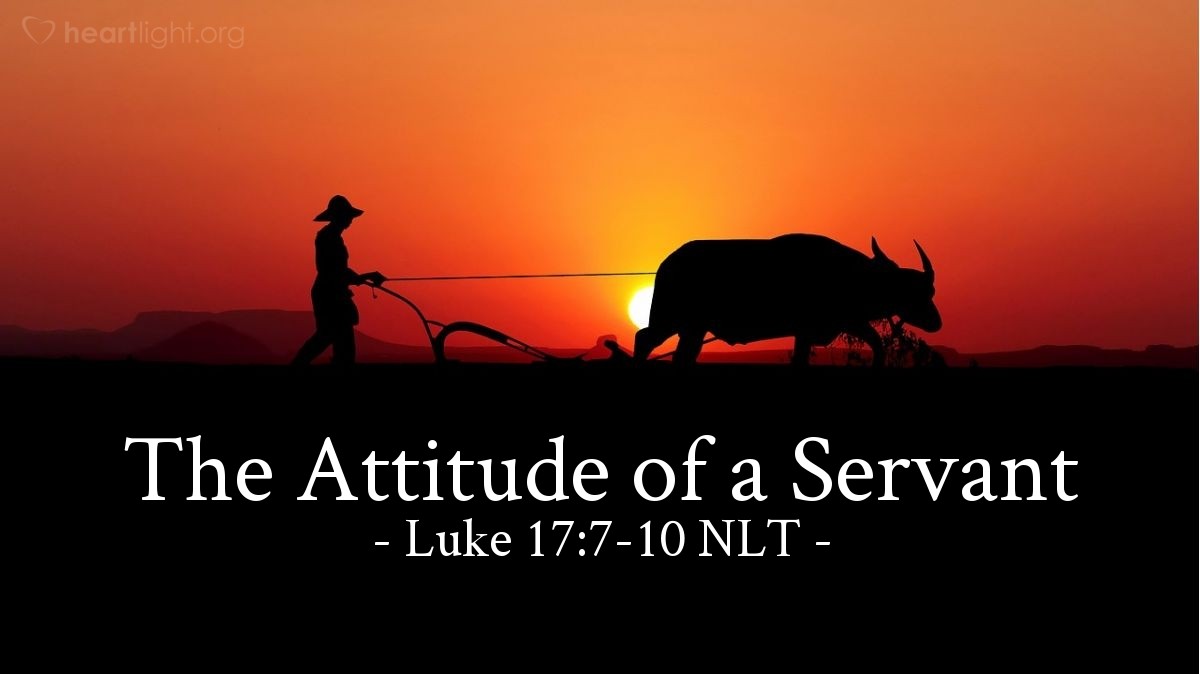
Tally Me Good, Tally Me Bad…Luke 17: 7-10

22 Saturday Aug 2020

Posted by John Kurt Carpenter in Uncategorized

≈ Leave a comment

7 “Who among you would say to your slave who has just come in from plowing or tending sheep in the field, ‘Come here at once and take your place at the table’? 8 Would you not rather say to him, ‘Prepare supper for me, put on your apron and serve me while I eat and drink; later you may eat and drink’? 9 Do you thank the slave for doing what was commanded? 10 So you also, when you have done all that you were ordered to do, say, ‘We are worthless slaves; we have done only what we ought to have done!’”

There is no score card or tally sheet in heaven and we are not the master of the ship. In some ways this would be one of the more difficult parables but it is simple in its depiction of the people Jesus was speaking to at the time. We often tend to forget that in Jesus’ early ministry he was speaking to mostly Jews. These were his people and prior to the start of his active ministry he lived and worked among them. In this Parable we learn that we cannot put God in our debt. Jesus is making that very point here in this parable. The Jews had this doctrine of works, plainly put, the more good you did the more points you got, a score sheet for mortals if you will. A Godly credit account.

( I will note here that next week we will look at an interesting conflict that exists with todays subject and can be found in The Book of James Chapter 2: 14-26)

One of the lessons here is when we have done our duty there is nothing extraordinary about that, for we have only done what was expected of us. Bear Bryant, Alabama football coach said it best. A player after scoring a touchdown in a critical game engaged in some rather over the top end zone celebrations. Coach Bryant called him over as he returned to the sidelines and reminded him that was not necessary. He is reported to have said…”son that is not necessary, act like you’ve been there before.”  When we do as God would have us do we have only done what is expected of us. We are after all always and forever servants. The Jews believed that those who had done a sufficient number of good works were justified and they were the righteous. There were two other levels but to be noted here was the belief that those in the lower levels could pass into the ranks of the righteous by doing some extra good works. The Jews believed that any good deed could improve their Godly account. In short they did believe that man could put God in his debt. Barclay points out that God’s relationship with us is one of love. He points out that in reality the love a parent has for their child…so strong, so consuming,is a love that there is no way we could ever pay them back. No matter how generous that deed or gift might be, it would never be enough for the life they gave us and the love that sustains it. If we approach this from love’s view, we know it has no bounds and is not constrained by time…it is never ending and expects nothing in return.

We need to develop a servants heart. I have my own definition of a  servant. A servant serves because it is expected of him, it is a duty born of necessity and cultural  expectations. The righteous servant who serves with a servants heart, does so out of an abundance of love and expects nothing in return. We also learn here that there are no set hours for living a Christian life. There is a truth here that is very present in today’s world. I call it the faith of convince, you can’t take time off from being a Christian because it is inconvenient in a particular time or place or the company of others. As I wrote earlier this Parable can be difficult but if we look closely there is much here. God has given us his very best. God does not ask us to serve at our convince, he demands our very best at all times…..Christianity is not a part time endeavor. We are to serve, we are his servants and don’t need to engage in end-zone celebrations for doing what is expected of us.

Join us next week as we move to the Book of James chapter 2 for a different look at deeds.

Life is Good

jk

Share this:

  • Tweet
  • Email a link to a friend (Opens in new window) Email
  • Share on Path (Opens in new window) Path
Like Loading...

The Best Laid Plans… Luke 12: 13-21

15 Saturday Aug 2020

Posted by John Kurt Carpenter in Uncategorized

≈ Leave a comment

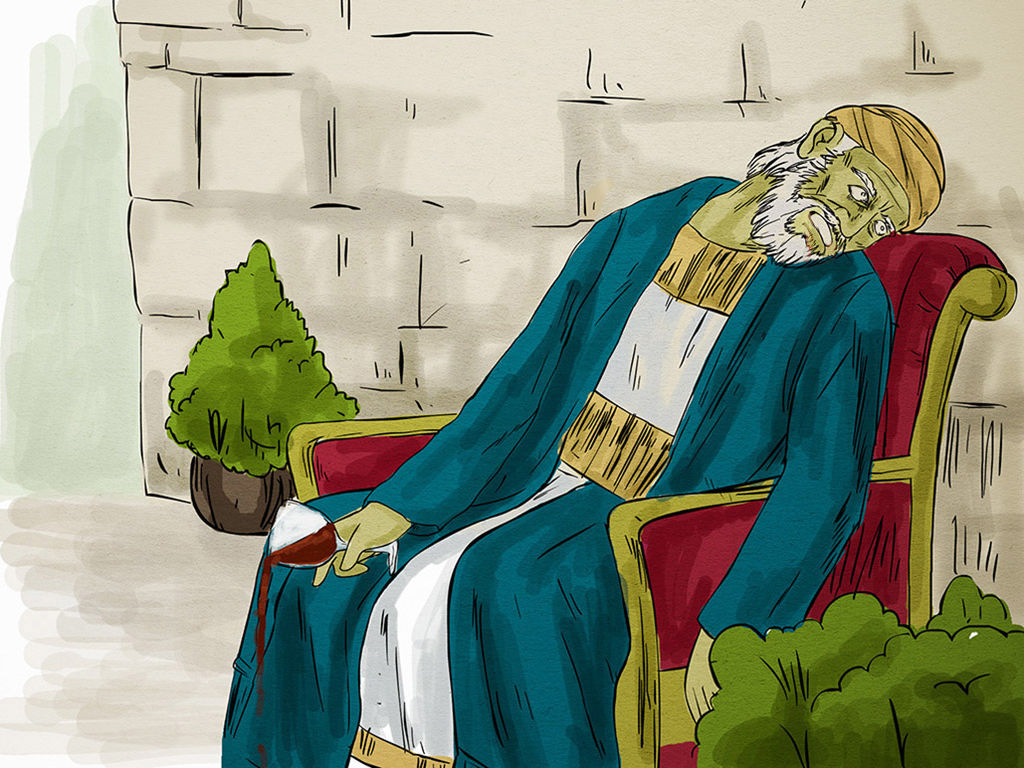
What is your life plan? I have always believed that life is what it is and there is no set plan or reactions as to the encounters in your life which will challenge you. The strength of your relationship with God will give you the ability to endure what ever life throws at you. Here in this Parable we are introduced to a man who has had a good life and a what he believes to be a good plan for his future. This is a story that Jesus told and  resonated with many people throughout the generations. It is most commonly known as The Parable of The Rich Fool and today we read from Luke 12: 13-21. This parable warns us to take heed of those things remembered and those things forgotten. Remember the phrase all is well with my soul, …is it?

Proverbs 27: 1 Do not boast about tomorrow,for you do not know what a day may bring.

This man in our parable is consumed with himself. Here are a few snip-its from the scripture itself.

-what will I do because I have no room to bestow my fruits?”

-this will I do; I will pull down my barns and build greater and there will I bestow all my fruits and my goods.”

He then continues on planing on what his life will be like in the days to come. It is as if he is the only one and the cares of the world and other people are of no concern to him. Barclay makes a wonderful observation…the first person singular never occurs in The Lords Prayer. We all have the habit of overlooking the things that are important, the condition of others around us, believing we have time to do those things that matter, he forgot God. The list continues…Who or what we are is not determined by what we have. Having so much he would have to build other barns to keep it all makes one wonder if perhaps he could have shared some of his wealth with his neighbors who were struggling. He felt it more important to take it easy, eat and drink his fill, after all he had earned it. Time, that which God has allotted is not known to us. This guy acted as if he had unlimited time. Some of us never feel comfortable and are aware of time, these two extreme differences are really governed by our faith and relationship with God. We can all say with confidence that our time on this earth is limited. We do not know how many tomorrows we have but many will say tomorrow is another day. As a believer I know who holds my tomorrows, do you? In James chapter 4: 13-17 we find this:

13 Come now, you who say, “Today or tomorrow we will go to such and such a town and spend a year doing business and making money.” 14 Yet you do not even know what tomorrow will bring. What is your life? For you are a mist that appears for a little while and then vanishes. 15 Instead you ought to say, “If the Lord wishes, we will live and do this or that.” 16 As it is, you boast in your arrogance; all such boasting is evil. 17 Anyone, then, who knows the right thing to do and fails to do it, commits sin.

Those who plan and leave God out have left behind the most important thing in their lives. So many of us are obsessed with what we have, our self worth tied to the amount of stuff we have acquired and take no notice of what we have become while acquiring it. It is not my place or really anyone’s to judge another but this I can say with confidence. You will stand before God with nothing you have acquired in this life…you will be judged by the content of your soul.

Life is Good

Jk

The response to this series of Parables has been strong. We will continue in the Parables next week.


Share this:

  • Tweet
  • Email a link to a friend (Opens in new window) Email
  • Share on Path (Opens in new window) Path
Like Loading...

Your Call…Luke 10:25-37

08 Saturday Aug 2020

Posted by John Kurt Carpenter in Uncategorized

≈ Leave a comment

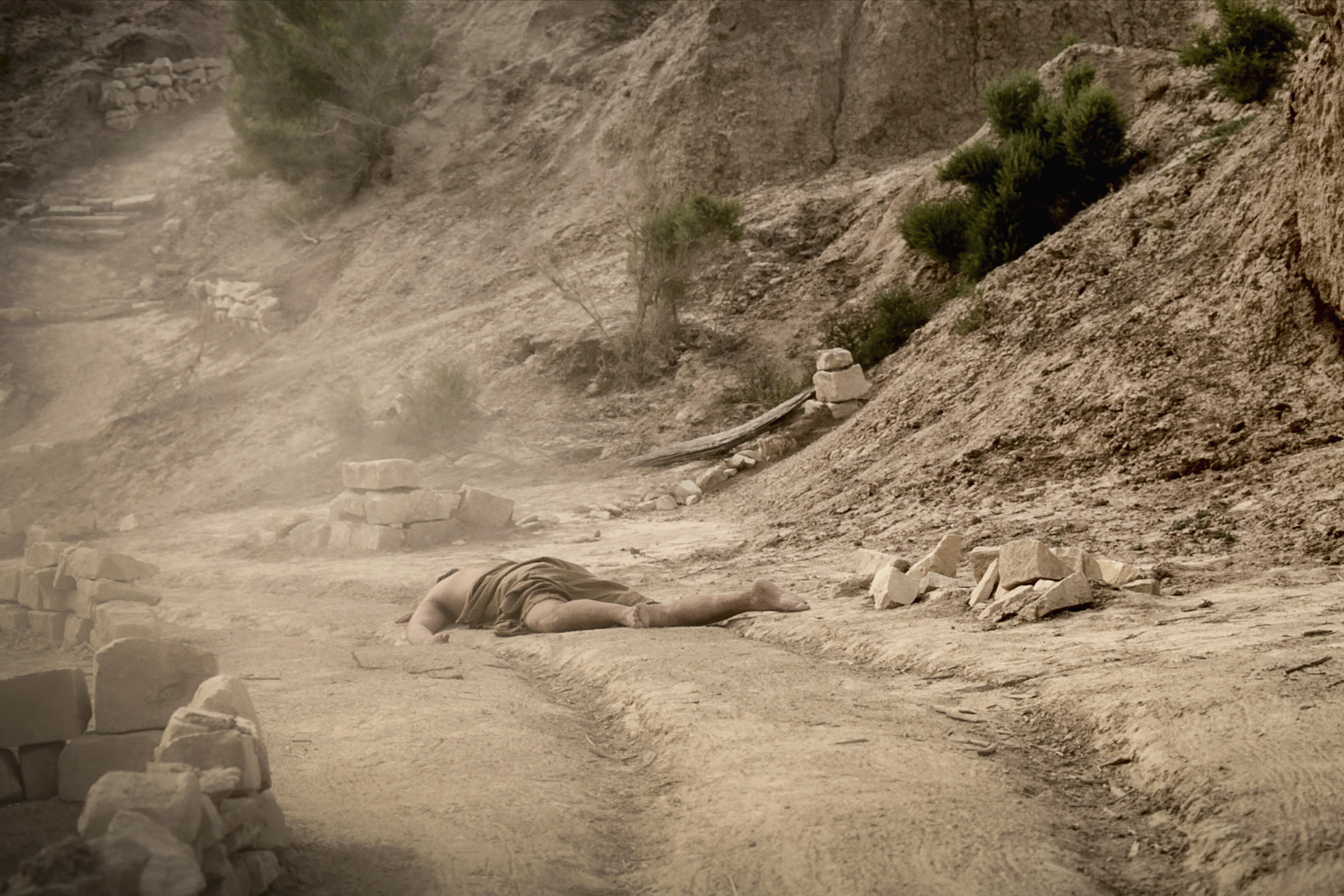
Here is a parable that should be falmilar to most of us. First let’s set the scene. The Red or Bloody Way…The Jerusalem to Jericho Road, got its name because it was well known to be dangerous for travelers. Jerusalem sat on a hill 2,300 feet above sea level. Now the Dead Sea near which Jericho was, is 1,300 feet below sea-level; and the road descended that 3,600 feet in little more than 20 miles. There were many sharp turns and narrow passages which provided excellent hiding places for bandits. Imagine some of those old western movies with those old roads descending into the canyon below, those twists and turns were often called switchbacks, they closely resembled what we are talking about here today. The plight of this traveller we read about in the scriptures is not unusual for those traveling this road. It is interesting to note that even as recent as the nineteenth century travelers were paying the local Sheiks money to ensure safe passage. So here we have the scene…A dangerous road, populated by bad people and extremely difficult to traverse.

Next the people involved… a traveller who either did not know the stories about this road, which is highly improbable or maybe he was just careless for it was common knowledge that few traveled that road alone. People would get together and form a convoy, knowing there was safety in numbers. Next we meet the priest. Priests were divided into courses each course served in the temple two separate weeks in the year. When priests were not on duty most of them stayed in Jericho. The Priests reaction of passing by and not even checking to see if the man were dead or alive was not the result of his not caring but one of misguided priorities. When not serving in the Temple the priests were free to go about their ordinary duties and routines. The time they were called to serve in the Temple was the highlight of their lives. To touch a dead body made them unclean and they would not be allowed to serve their time in the Temple. The Temple ritual was more important than the fate of this man. Thirdly, there was the Levite. Little different line of thought here. He went over and took a quick look at the man and then moved on to the other side of the road. At play here was the fact that the Levite knew sometimes these bandits would use a decoy to draw people close so they could jump them. He chose his personal safety because of the risk involved…When have we considered personal needs over the needs of others? This next one was the Samaritan and they were hated by the Jews. This is another blog in itself but it will do to just take note of the fact that this was a quarrel that had been going on for some 450 years. He may not have been racially a Samaritan, in those times the name Samaritan was used by orthodox Jews in reference to anyone who were lawbreakers or renegades from the orthodox Jewish religion. So it is possible that he was no more than a businessman who traveled the road on a regular basis, he was a commercial traveller. That would explain why the innkeeper was willing to take the injured man in. He knew the traveller would be back through and would take care of the bill. A traveller of this type would have been viewed with suspicion, hence, in the parable he becomes a familiar figure…the hated Samaritan.

There are some questions we need to answer. The first of course has been the subject of many a sermon…Who is my neighbor? The answer is “anyone who needs your help.” To the Jew this would have been a difficult lesson and answer. I have sought many ways to explain this but the simplest would be that anyone other than a Jew was not worthy of consideration. Jew or Gentile, that being the defining factor determining their actions toward others. As Christians we are called to serve all people, period! The other question is just what is expected of me? Various commentaries always list pity. Pity is an emotional response and perhaps James states it best as too what is a proper response. We of the faith do God’s will only when that faith is put into action.

This Parable puts it straight and to the point. We are responsible for all in need. When we become so entangled in routine and doctrine that the church, ourself and connivence comes before God’s children, the church is dead to that which it is called. Our faith and the strength of our very Christianity will not be judged on our social standing but rather on our willingness to help.

See You Next Week

Life is Good

jk

Resource Material: Barclay, William. The Parables of Jesus (The William Barclay Library) (p. 79). Presbyterian Publishing Corporation. Kindle Edition.

Share this:

  • Tweet
  • Email a link to a friend (Opens in new window) Email
  • Share on Path (Opens in new window) Path
Like Loading...

The Shut Door

01 Saturday Aug 2020

Posted by John Kurt Carpenter in Uncategorized

≈ Leave a comment

We return once again to the Parables, This one found in Matthew 25: 1-13. Often referred to as The Parable Of The Ten Bridesmaids we find a much needed lesson in why the maintenance of our faith is so important to the covenant granted to those who believe. It is important that you pause here and read the above verses before you continue on.

The covenant through the blood of Jesus Christ and the Cross extends to those who believe and call upon his name that hey shall be adopted into the family of God and are entitled to all the rights and benefits given through the covenant. The Jewish custom concerning marriage contained three stages. Each requiring a set number of customary actions deep in tradition.

A- The Engagement

B-Betrothal

C- Marriage

This is a parable about being prepared, looking and waiting for that moment. It applies to us this day for we have had centuries of hearing the word, studying it and opportunities to live it. We have more than any generation had full display of God’s truth and in many instances we have squandered that and at are at risk of the door being shut. It will be no ones fault but our own. We can go back in time and many of us can remember a test in school we didn’t prepare for and understand that the time of the test is not the time to start preparing for it. There is the belief that we learn best in our youth but the Grace of God and the truth of the word are always available to those who follow these wise words.”Seek and Ye shall Find”. We must prepare for the opportunity or the door will be shut. There is another thing that we best learn from this parable. Salvation is not a group activity. Each of us will be held accountable for our actions. There will be no door pass, each of us will stand alone and be judged. We must prepare and be on the watch. For those that did not the door will shut.

Are you on fire for the Lord?

Life is Good

Jk

Share this:

  • Tweet
  • Email a link to a friend (Opens in new window) Email
  • Share on Path (Opens in new window) Path
Like Loading...
← Older posts
Newer posts →

Recent Posts

  • The Light That Leads To The… Good Way
  • Back Porch
  • Before The Good Way… Leviticus
  • Back Porch
  • The Good Way…Proverbs 3 Wisdom, Love, Humility, and Fear.

Archives

  • January 2026
  • December 2025
  • November 2025
  • October 2025
  • September 2025
  • August 2025
  • July 2025
  • June 2025
  • May 2025
  • April 2025
  • March 2025
  • February 2025
  • January 2025
  • December 2024
  • November 2024
  • October 2024
  • September 2024
  • August 2024
  • July 2024
  • June 2024
  • May 2024
  • April 2024
  • March 2024
  • February 2024
  • January 2024
  • December 2023
  • November 2023
  • October 2023
  • September 2023
  • August 2023
  • July 2023
  • June 2023
  • May 2023
  • April 2023
  • March 2023
  • February 2023
  • January 2023
  • December 2022
  • November 2022
  • October 2022
  • September 2022
  • August 2022
  • July 2022
  • June 2022
  • May 2022
  • April 2022
  • March 2022
  • February 2022
  • January 2022
  • December 2021
  • November 2021
  • October 2021
  • September 2021
  • August 2021
  • July 2021
  • June 2021
  • May 2021
  • April 2021
  • March 2021
  • February 2021
  • January 2021
  • December 2020
  • November 2020
  • October 2020
  • September 2020
  • August 2020
  • July 2020
  • June 2020
  • May 2020
  • April 2020
  • March 2020
  • February 2020
  • January 2020
  • December 2019
  • November 2019
  • October 2019
  • September 2019
  • August 2019
  • July 2019
  • June 2019
  • May 2019
  • April 2019
  • March 2019
  • February 2019
  • January 2019
  • December 2018
  • November 2018
  • October 2018
  • September 2018
  • August 2018
  • July 2018
  • June 2018
  • May 2018
  • April 2018
  • March 2018
  • February 2018
  • January 2018
  • December 2017
  • November 2017
  • October 2017
  • September 2017
  • August 2017
  • July 2017
  • June 2017
  • May 2017
  • April 2017
  • March 2017
  • February 2017
  • January 2017
  • December 2016
  • November 2016
  • October 2016
  • September 2016
  • August 2016
  • July 2016
  • June 2016
  • May 2016
  • April 2016
  • December 2015
  • August 2015
  • June 2015
  • May 2015
  • April 2015
  • March 2015
  • February 2015
  • January 2015
  • December 2014
  • April 2014
  • January 2014
  • December 2013
  • November 2013
  • May 2013
  • March 2013
  • February 2013

Categories

  • Uncategorized

Meta

  • Create account
  • Log in
  • Entries feed
  • Comments feed
  • WordPress.com

Blog at WordPress.com.

  • Subscribe Subscribed
    • From The Pew
    • Already have a WordPress.com account? Log in now.
    • From The Pew
    • Subscribe Subscribed
    • Sign up
    • Log in
    • Report this content
    • View site in Reader
    • Manage subscriptions
    • Collapse this bar
 

Loading Comments...
 

    %d