Covenants….The Ties That Bind

They say numbers don’t lie but I always like to be sure. I will share these with you because they are important to the blog today. “There are 929 chapters in the Hebrew books of the Bible (“Old Testament”) and 260 in the New Testament.  (bibletruths.com) 

Contained somewhere in all these chapters are little gems that seldom make their way to the pew. As usual here is Merriam’s view on that.

Definition of gem:
1 a :jewel
b :a precious or sometimes semi precious stone cut and polished for ornament

Using “b” and changing it just a little, you might say shamelessly to make my point, I read it as such. A precious nugget of knowledge when found and understood becomes an ornament on the tree of knowledge. Rather hokey but I’ll go with it. Today’s blog will look at some covenants that shaped the faith. For us in the pew there is a lot here we pass over when we just read the words. Let’s start with the word covenant.

covenant definition.  “Literally, a contract. In the Bible, an agreement between God and his people, in which God makes promises to his people and, usually, requires certain conduct from them. In the Old Testament, God made agreements with Noah, Abraham, and Moses. Of the covenants found in the Pentateuch or Torah or the first five books of Genesis, Exodus, Leviticus, Numbers and Deuteronomy:”(Wikipedia)


The Noahic Covenant is unique in applying to all humanity.


While the other covenants are principally agreements made between God and the biblical Israelites.


One other from the Old Testament we will consider because it illustrates a conditional covenant.The Mosaic covenant (named after Moses), also known as the Sinaitic Covenant (named after the biblical Mount Sinai), refers to a biblical covenant between God and the biblical Israelites, including their proselytes.

Exodus 19:5–8
5 Now therefore, if you will indeed obey my voice and keep my covenant, you shall be my treasured possession among all peoples, for all the earth is mine; 6 and you shall be to me a kingdom of priests and a holy nation.’ These are the words that you shall speak to the people of Israel.”7 So Moses came and called the elders of the people and set before them all these words that the Lord had commanded him. 8 All the people answered together and said, “All that the Lord has spoken we will do.” And Moses reported the words of the people to the Lord.

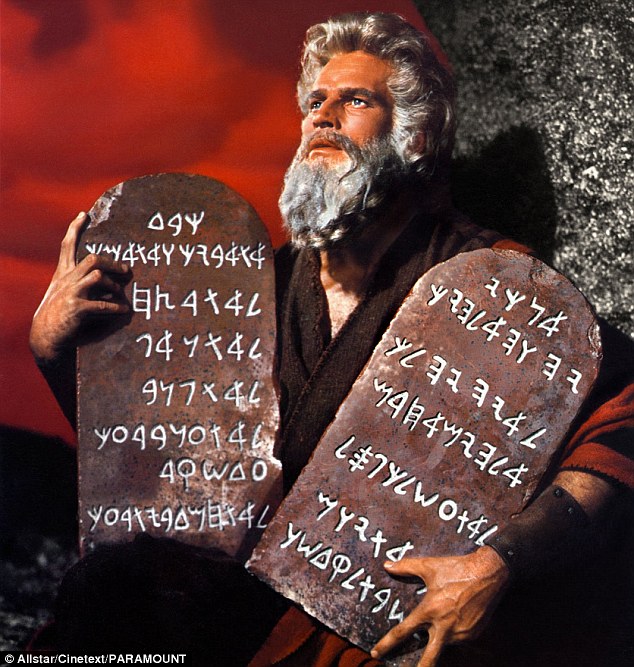
In Exodus chapter twenty we find the Ten Commandments. Many believe they are the very foundation for the law God gave to Israel (see vs. 3-17). Of the ten laws, four apply directly to God and six to man’s responsibility to man, vs. 3-8, 12-17, respectively). Nine of these laws are found in the New Testament with attendant spiritual amplification (Rom. 13; Jas. 2).

Covenants are important in our biblical readings and studies because they are a record of certain promises God has made to his people.Some of His promises are to all people, and some are limited to Israel.

“The conditional covenant mentioned in Scripture is the Mosaic Covenant; the blessings it extends are contingent upon Israel’s adherence to the Law. The unconditional covenants mentioned in the Bible are the Abrahamic, Palestinian, and Davidic Covenants; God promises to fulfill these regardless of other factors. The general covenants mentioned are the Adamic, Noahic, and New Covenants, which are global in scope.”
(compellingtruth.org)

Again, why are these covenants so important? They are God’s direct communication with man and all of God’s promises are based on who He is and His plan for the world. Next we turn to the covenant that we today live under. We are God’s people and the God we serve desires to be reconciled to all his people.

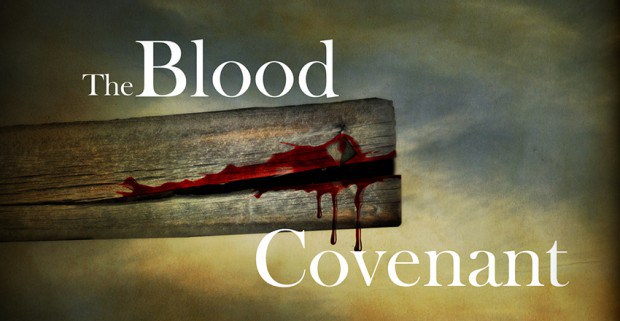
‘We find in the Old Testament that covenants made with God were traditionally ratified with the blood of an animal sacrifice. (Genesis 15:8-18; Exodus 24:1-8) We also find in the New Testament that the New Covenant was also ratified with sacrificial blood. Hebrews 10:29 calls the blood of Jesus the “blood of the [new] covenant,” which sanctified us and so has made us holy. Jesus mentioned the New Covenant during his last meal with his disciples. The cup of wine represented “the new covenant in my blood.” (Luke 22:20). The blood of Jesus, which is the blood of the New Covenant, was poured out for us at His crucifixion and ratified the New Covenant.” (compellingtruth.org)

We can see past the pain of the resurrection and understand all the more “how precious was the blood” when we understand this New Covenant…..The Christian view of the New Covenant is a new relationship between God and humans mediated by Jesus which necessarily includes all people, both Jews and Gentiles, upon sincere declaration that one believes in Jesus Christ as Lord and Savior…..and the people said AMEN!

Next week in the pew…God Bless

Life is Good……..jk

Reference Material –compellingtruth.org-  bibletruths.com-  Wikipedia


The Command as Given …. “You will always have the poor among you”….(John 12-8)

This week our church visited the homeless shelter in our area for the purpose of providing an evening meal; something we do on a regular basis. I always come away from these visits with more questions than answers, some having been with me a long time. I have never in my life had to wonder where my next meal was coming from or if I would have a safe, dry or warm place to go to if the weather got bad. People don’t move to avoid standing or sitting next to me. I have always had sufficient clothing for my needs. What I am trying to say is, it is so hard for me to understand how these people got to this place in their lives and what keeps them there. Here I believe is where you have to ask yourself, why? The why is not the usual “why” but a realization of “why does it matter?” Sometimes we let the “why” get in the way of that which we are called to do. Is John 12: 8 the answer for us? I don’t think so….and sometimes when we pull just part of a verse or verses to make a point that supports our reasoning, we miss the depth of the scriptures as written. Jesus many times referred back to OT scripture in his ministry. Here are two that are used in some of his teachable moments. Both are from Deuteronomy.

Deuteronomy 24: 19-22
19 “When you are harvesting your crops and forget to bring in a bundle of grain from your field, don’t go back to get it. Leave it for the foreigners, orphans, and widows. Then the Lord your God will bless you in all you do. 20 When you beat the olives from your olive trees, don’t go over the boughs twice. Leave the remaining olives for the foreigners, orphans, and widows. 21 When you gather the grapes in your vineyard, don’t glean the vines after they are picked. Leave the remaining grapes for the foreigners, orphans, and widows. 22 Remember that you were slaves in the land of Egypt. That is why I am giving you this command.

Deuteronomy 15: 10-1
10 Give generously to the poor, not grudgingly, for the Lord your God will bless you in everything you do. 11 There will always be some in the land who are poor. That is why I am commanding you to share freely with the poor and with other Israelites in need.

It is suggested that John 12: 7-8 is one of the most often pulled scriptures and Jesus did not need to elaborate on it here at this time, because of past teaching to the disciples they knew the rest “of the story so to speak.” You see because the poor will always be among us does not make it an acceptable condition. It is here we often miss the “Command” found in our two scriptures today. Caring for the poor among us is a call that has been and will be ongoing and forever. Nowhere do we find the need to ponder “why” or ask ourselves if “they” deserve such, for God places no conditions on caring for his people. While it might not be a popular line of thought our first thought should be . How might I help you, what do you need? In Luke 10: 27-37 the lawyer tried to get Jesus with the question “who is my neighbor?” Jesus uses a Samaritan to teach him his duty and answers him….. “Go, and do like him.” Note, It is the duty of every one of us, to give aid according to our ability.

Most of us here in the pew do not have the resources to meet all the needs of those less fortunate than us but when we come together as a community of faith, all things are possible. With our gifts, tithes, prayers and presence we can do much good.

Thank you for stopping by the Pew…..Do good whenever and wherever you can…..

Life is Good
jk


The Church and The Culture Trap

Culture…a :the integrated pattern of human knowledge, belief, and behavior that depends upon the capacity for learning and transmitting knowledge to succeeding generations. (Merriam Webster)

I do wonder at times due to the events of our recent days if maybe we as Christians are failing to meet the definition as written.   Continuing from Merriam….. The customary beliefs, social forms, and material traits of a racial, religious, or social group; also :the characteristic features of everyday existence (such as diversions or a way of life) shared by people in a place or time. It continues on with the following. The set of shared attitudes, values, goals, and practices that characterizes an institution or organization a corporate culture focused on the bottom line the set of values, conventions, or social practices associated with a particular field, activity, or societal characteristic. To make this simple we could say it’s about “who we are and what we believe.”

There can be no doubt that over the years the way we do church has more and more been defined by the culture of the society we are living in at the moment. Church today has little if any influence in our society as it scrambles to establish relevancy in today’s world. Christian faith has always had a of set of shared attitudes, values, goals, and practices that characterizes and sets it apart. Yes, you could say there is a “church culture” and it is changing. We see every day how the influence of societal changes are responsible for the changing church culture, those things we hold to be emblematic of christian faith and behavior. Would it be proper to state that we as Christians have a responsibility to influence “church” culture, not the excessive swings of societal pressure that drive the culture outside the church?

Let’s go back a few years, really? Is this going to be another story about how I walked two miles to school in all kinds of weather and had cardboard in my shoes to cover the holes in the soles? No, but it is about a time when Biblical values, established by the “word” were common place in our society. Our culture (church) was a major factor in the formation of society’s culture. Some of you will remember, there were no stores open on Sunday, that included gas stations. There was no need for a movie rating system that had more than three labels. Nudity was consigned to under the counter or, if on display in the magazine rack, had a brown cover over it. I could list a lot more things but the point is that culture changes and it is usually people driven. The big difference was these were not the norm of the day and usually stayed in the dark recesses of the day.

It is here that I began to struggle and have a hard time trying to express my line of thought. As a layman if you are not careful, you can be caught up in a web of doctrinal beliefs that can be confusing to most of us in the pew. Here is my dilemma. Doctrine, what exactly does that mean? Better still, what is this doctrine?

a: particular principle, position, or policy taught or advocated, as of a religion or government: Catholic doctrines; the Monroe Doctrine. 2. something that is taught; teachings collectively: religious doctrine.
(www.dictionary.com/browse/doctrine)

What is church doctrine?

1. church doctrine – the written body of teachings of a religious group that are generally accepted by that group. religious doctrine, creed, gospel. … doctrine, ism, philosophical system, philosophy, school of thought – a belief (or system of beliefs) accepted as authoritative by some group or school.
(www.thefreedictionary.com/church+doctrine)

What are the 22 doctrines of the Bible? Whoa, where did that come from?

The church lists 22 doctrines of their beliefs: the Holy Bible, the Godhead, Virgin birth of Christ, total depravity, Repentance, Restitution, Justification, Water baptism, Lord’s supper, Sanctification, Holy Ghost baptism, Redemption, Personal evangelism, Marriage, Rapture, Resurrection of the Dead, Great Tribulation, …
Deeper Christian Life Ministry – Wikipedia
https://en.wikipedia.org/wiki/Deeper_Christian_Life_Ministry

I believe that doctrine has been modified in some areas due to the ever-changing pressures of societal cultural changes. What do you think? I believe we as the church have allowed the pressures of cultural correctness to impede our defense of the faith.

The Bible is a collection of sacred texts or scriptures that Jews and Christians consider to be a product of divine inspiration and a record of the relationship between God and humans. Many different authors contributed to the Bible. (Wikipedia)

The church has become a victim of the “The Culture Trap.” If you have decided that I am “old school”, you would be correct. Yes I understand that there is a whole field of academics, theologians and others who have spent a life time studying the meaning and intent of the scripture as written. Here in the pew things are a lot simpler. We are limited to what we read and hear, trusting those sources to be correct and it is only when we return to the written word, seeking guidance by praying and letting the Holy Spirit lead us that we are at peace with an issue. I could stumble from point to point all day long, however it is time to wrap this up. We people of the church have allowed this “culture thing” inside and outside to become a distraction that weakens the faith and marginalize the true calling of God’s people. We must stop looking to the current direction of societal culture or changing “church” culture to be relevant with the direction of the society we live in. SO WHAT DO WE DO?…….

Micah 6:8

He has shown you, O mortal, what is good.
    And what does the Lord require of you?
To act justly and to love mercy
    and to walk humbly with your God.

How do I do that…….Each must answer that on their own, me I will do the following. Pray, seek the Holy Spirit, read and study God’s word, always searching for the “Good Way.”

Be back in the Pew next week….Stop by

Life is Good

jk


Faith…The Christian Blind Spot


We will start with the dictionary (Merriam-Webster)

Definition of faith

a :allegiance to duty or a person
b (1) :fidelity to one’s promises (2) :sincerity of intentions acted in good faith :belief and trust in and loyalty to God (2) :belief in the traditional doctrines of a religion :something that is believed especially with strong conviction; especially :a system of religious beliefs the Protestant faith

What is this “faith” we as Christians speak of so often? Does the traditional definition apply here? Would it be fair to say it is a blind faith, needing no justification? I don’t think so. I think blind faith resides only in politics and sports. My contention is Christian faith is provable in God’s word, through the scriptures.

Hebrews 11
1  Now faith is confidence in what we hope for and assurance about what we do not see. 2 This is what the ancients were commended for.

We have a list of people who relied on their faith in God and were blessed for it.

John 20: 29 Then Jesus told him, “Because you have seen me, you have believed; blessed are those who have not seen and yet have believed.”

I do believe that the bible is the inspired word of God. I also believe that it is a record of God’s people as they lived their lives and sought to serve their God. Faith is an important component of Christian life. There is no better way to understand Christian faith than as written in Hebrews Chapter 11. There is evidence that because of their faith Israel’s elders were blessed by God for their faithfulness. We have in a sense a catalogue of faith expressed in these Patriarchs and written about in Hebrews Chapter 11. We know because God created all from nothing he can do whatever he chose to do. Abel, Enoch, Noah, Abraham and Sarah shows us that God’s blessings comes to those whose faith is strong, even if they are weak. Theirs was a simple faith that embraced a lifestyle that affirmed their faith through Holy living, trusting God to do what he said he would. It does not stop here, we can add to that catalogue the names of the Patriarchs such as Abraham, Isaac and Jacob. Then of course there was Moses, because of the uncompromising choices he made, which had a great effect on the children of Israel, he was able to lead them out of Egypt, even in the face of great obstacles. There were many others whose unflinching commitment made a difference and this is a good place to point out the difference between faith and Christian Faith. The Christian Faith is an unflinching commitment to the faith, the ability to stay faithful in the face of the cruelest opposition and persecution. Their faith was unbeatable! They did not have the gospel promise that we have today. We have received something better……a clear promise through the gospel of Jesus Christ, strengthen by the Holy Spirit in our everyday lives.

Where is our “blind Spot”? What part of our faith commitment do we not see. Sometime the stress of every day life requires us to make a choice. Will we be unflinching as the patriarchs of so long ago, or will we allow the pressures of this world today to compromise our faith?

God Bless, Life is Good

Jk


Not Everything Stays In Vegas…..Stand-Up, Stand-Up For Jesus


During bible study last Tuesday, one of our group asked if we knew the true story about the hymn “Stand-Up, Stand-up For Jesus.” He told us the story and It gave me some thoughts about recent events. Last week we were left speechless by the horrific event in Las Vegas. There are really few words that can adequately express the evil of this act or why it happened. We can only speculate why the shooter did this and the sad thing is the only real facts we have at this point really is that we are left with 58 dead, the possibility of more and 500 injured. The shooter is dead, having taken his own life. I will ask that you go to the following URL either now or after you have read the blog.

http://www.hopeinthehealing.com/2015/10/25/stand-up-for-jesus-the-story-behind-the-hymn/

There will be many well-intentioned people and some also that have only the advancement of their agenda or special interest, that will come forward in the weeks to come with what they believe to be the solution to this type of violence. I will go out on the limb here, seems like I have been doing that a lot lately but this time I will take a saw with me. They all will be wrong! Guns, trucks, vans, knives, hatchets, explosives, just to name a few, are just objects that can do nothing without the irresponsible intervention of human action.

Oh, it’s a “hearts and mind thing.” No, It’s a God Thing! There will be laws passed and a lot of “pats on the back” for those involved, no matter how it turns out and many of us will feel a great deal of self-satisfaction having addressed this issue. The real issues will remain because we refuse to deal with the real enemy. Pogo a cartoon strip of not that log ago had a panel I have always remembered. Pogo in a moment of reflection simply says: “we have met the enemy and he is us.” Sure the guns, trucks, vans, knives, hatchets, and explosives are part of the problem of insane violence that is becoming a recurring event of life here in America. It is time we faced the fact, do a “Pogo” so to speak that none of the forgoing items listed can do anything without human intervention or assistance perhaps a better way of putting it; straight up in your face reasoning….we are part of the problem. We have created a society whose changing values have led us away from God and into a world that no longer values human life.

We have as a nation allowed ourselves to become desensitized to the violence, cruelty and the sufferings of others. The things we read, the movies we watch, the endless violence that is displayed each day within our homes and society, the opportunity to see and read such is just a button away in this digital world of today. Make no mistake about it, even the best of us are in some way influenced by such. I realize that we can’t detach ourselves from our daily routines in the world but the time to face reality is now. If we enter this debate about guns, focusing on worldly solutions, we will again have missed the “Pogo” and will continue to ignore our responsibilities as Christians. People of faith must step up, or better yet….Stand-Up For Jesus. We must re-establish the Christian values that have guided so many for so long as they built this nation we call home. Hey! We have failed in the past not just in today’s world. Two examples would be slavery and civil rights. Oddly enough both are still a problem to some degree in society today. Why?…..Because both were subject to a political and a social agenda. They were not a matter of the heart or an honest assessment of that popular phrase “what would Jesus do?” For us in the church the question is how do we do this? How do we as people of faith present a totally different approach to this violence prone society we live in? How do we present a different path that embraces all people and welcomes them not with a list of “do not” and replace that with a list of possibilities. How do we as Christians become more aggressive presenting and protecting our beliefs to a society whose values are constantly changing, driven by social demands and the changing of personal values to meet societal changes? Why do we as a church expect immediate change in a person, should we not allow our prayers and God and the Holy Spirit to do the work in an individual’s life? Let’s take a moment to ask a simple question that we may have overlooked. How can we expect others to understand something they can’t see? Remember this from John 20: 25

25 The other disciples told him, “We’ve seen the Lord!”
But he replied, “Unless I see the nail marks in his hands, put my finger in the wounds left by the nails, and put my hand into his side, I won’t believe.”

And of course the Lord’s Answer to Thomas, John 20:29

29 Jesus replied, “Do you believe because you see me? Happy are those who don’t see and yet believe.”

Please give this some consideration . Thomas was with Jesus, he had seen the miracles and had a relationship with the Jesus, so what happened?Thomas allowed the death of Christ on the cross to also become the death of his relationship with Christ. Thomas found it hard to accept the resurrection, he never doubted Jesus, it was that resurrection thing. This is taking the long way around to say….we need to tell the story. We must divest ourselves of becoming involved in every social issue that comes along and instead invest in telling the “story”, living a Holy Life, so that  “Thomas” out there can see and believe. We, the Church, must become part of this debate by the way we live our lives. We must be vocal in our beliefs, not condemning but lifting up, reaching out……so that they might see. We need to again sit at the table, re-establish our place in society. After all, how will they know the Lord, if someone doesn’t tell them.

There is always room in the pew, thanks for stopping by……..jk


Between Heaven and Earth…….Antithesis of Christian Worship


Right off I wish to start with a brief note to the reader. I have relied heavily on a book I am reading to prepare this Blog. “From The Pew, a Layman’s View of The Gospel” is just that. Every now and then I step outside the pew and acknowledge other opinions and writings, this today is an example of that. Today’s Blog used material from the book:

“Homiletical Theology
Preaching as Doing Theology
The Promise of Homiletical Theology
Volume 1 EDITED BY DAVID SCHNASA JACOBSEN FOREWORD BY DAVID BUTTRICK

This may be more than I can handle but it is interesting and will require stepping out of the pew for a few. Antithesis, interesting word that’s not exactly in my everyday conversation or writing. I am what I call a rotational reader. The rotational thing comes about because I go back and forth between books, odd but interesting. I usually have two books going at once and read whichever one I happen to pick up when there is time. This week I picked up Homiletical Theology, edited by David Schnasa Jacobsen, and dug in at page 68. This particular segment is written by John S McClure. Mr McClure led off with the word Paradoxism, of which according to Merriam is not dictionary word worthy. He then followed up with the word Antithesis and that folks is how this blog came into being. Please stay with me as I set this up. I will start with a direct quote from the book, from Mr. McClure’s writings.

“In my assessment, the Liturgy of the Word in the Western church tradition bears within it four paradoxisms that seem relevant to transforming human communication to make it adequate to this larger task. Paradoxism is a term used by literary and cultural critic Roland Barthes to describe an “alliance of words” or an “unusual figure” designed to “transgress” or overcome a seemingly unsolvable conundrum or “Antithesis.”
Excerpt From: David Schnasa Jacobsen. “Homiletical Theology.”

Today we will look at part of these. First thing let’s take a look at a brief definition of a couple of these words from Merriam Webster.

“Antithesis.”

a :the direct opposite Her temperament is the very antithesis of mine.
b (1) :the rhetorical contrast of ideas by means of parallel arrangements of words, clauses, or sentences (as in “action, not words” or “they promised freedom and provided slavery”)

Definition of paradox
1
:a tenet contrary to received opinion
2
:a statement that is seemingly contradictory or opposed to common sense and yet is perhaps true

I will be quick to point out that this type of subject is not a prevalent concern and is not commonly communicated in the pew. Communication, now that is a concern in the pew and in a rather novel way today’s post speaks to that. “Between Heaven and Earth” do we have a distance for that? From a Christian point of reference how far is heaven….and does that “human-divine” communication make traveling the distance possible? The author writes that there are four paradoxisms that hinder “human-divine” communication. Now we can communicate in many different ways which each other, we will for now look at the spoken word, preaching so to speak. who’s in the conversation? Preacher, Pastor, Priest, worship leader are terms we use “to set apart in relation to divine power within a religious or ritual context.” (page 70 Homiletical Theology) The author refers to these people as “God-persons”. Some ordained some not. I interpret this to mean they make overcoming the distance between divine and human a little more plausible. Now I am out on a limb here but it does seem that at times the distance between God and humanity seems so far. Seeing one of our own in that position enables us to remove the “Antithesis” of a human-divine relation. We see a human-divine communication that represents an authentic and active relationship. We can see the possibility of breaking through that wall and having that relationship.

Next we look at Intercession another bridge to this human-divine relationship.

“I exhort therefore, that, first of all, supplications, prayers, intercessions, and giving of thanks, be made for all men; For kings, and for all that are in authority; that we may lead a quiet and peaceable life in all godliness and honesty. For this is good and acceptable in the sight of God our Savior; Who will have all men to be saved, and to come unto the knowledge of the truth. For there is one God, and one mediator between God and men, the man Christ Jesus; Who gave himself a ransom for all, to be testified in due time. 1 Timothy 2:1-6”

“The second paradoxism in the Liturgy of the Word is the figure of the worshiper as “mediator between heaven and earth” in prayer, especially intercessory prayer. Intercessory prayer is a unique and unusual figure in the liturgy and it seeks to transgress what might be called the Antithesis of human/divine mediation. Beyond establishing relation, mediation implies activity: a way of acting within the divine/human relationship.”

Excerpt From: David Schnasa Jacobsen. “Homiletical Theology.”

Have you ever considered yourself as a Mediator……we all know that Christ is our mediator before the Father, that he intercedes for us. When we come together to pray for the needs of others we too become mediators or go-between, taking the concerns of this world to God. It is an active part of the human-divine relationship which brings the things of God to this world. (page 72 Homiletical Theology) We willingly assume the role of intercessor, a go between if you will, between heaven and earth. Again we find ourselves working through that wall of “human-divine” relationship by taking an active part within the “human-divine” relationship in which we then become an active participant. As would be said in the secular vernacular, we now have a stake or ownership in this relationship.

Next we consider scripture, what language will we speak? This puts us face to face with the Antithesis of human/divine language. Is there a code, a specific language, rituals in words, what is the language that brings the scriptures to life? How is the word made flesh? As a layman I don’t find it hard to become confused about certain things, church wise. The Liturgy followed by the liturgical practices opens up a whole new set of words and practices in the world of “human-divine” language. We find a whole new way as the author says of “speaking with God.” Again I return to a direct quote from the book…

“These first three liturgical practices within the Liturgy of the Word in the Western church tradition, interpreted from the perspective of the task of human-divine communication, surround preaching with significant assistance in its task—helping us as preachers and worshipers to be (1) in an authentic relation with God, (2) competent (empathic, intercessory) communicators, and (3) christologically repositioned in relation to language. We might say that these three practices establish the unique kind of intersubjectivity needed in order to speak now to/with/for/on behalf of God—which is the paradoxism figured by what we commonly call “the sermon.”

(Excerpt From: David Schnasa Jacobsen. “Homiletical Theology.”)

If you made it this far, thank you! I encourage you to seek out this book. It is an interesting read and opens up a whole new perspective of what, why and how we believe.

We will be back in the pew next week.
Life Is Good

jk

The Church and The Social Arts………


I am going to create my own definitions to fit a situation that is becoming more and more prevalent in today’s “church”. I am going to name it, the practice of the “ Social Arts”. Yep, the “church” today is becoming more and more involved in the Social Arts. I have moved this around the pew for some time now hoping I would lose interest but that just didn’t happen. I am going to take some liberties with what follows, hoping to make a point in a nice way. I am going to change the definitions of words and things to fit my line of thought……..nervous yet? Ready, here we go.

What is “Social Art” ?
Social Art occurs when people use their creative skills to work with people or organizations in their community to affect change. Social Art uses peoples creative skills to express their take on the world. In order to do this they must create a Social practice. What pray tell is that? First let’s define Social Practice. Social Practice is a theory within psychology that seeks to determine the link between practice and context within social situations. Emphasized as a commitment to change, social practice occurs in two forms: activity and inquiry. It is a Social medium that focuses on engagement through human interaction and social discourse. … so………“Social Art” aims to create social and/or political change through collaboration with individuals, communities, and institutions. The definitions as written above were taken from Wikipedia, but were altered to fit my need. This is a great example of the point I want to make in this blog and I apologize to the folks at Wikipedia.

So what do I find so upsetting about this growing trend. which I have named “Social Art”. I have picked up on a recurring conversation in the pew that there are some who are growing tired of what is considered by many to be social issues or movements that are changing society as we know it showing up in church lesson books and other teaching materials. Now I am not suggesting that the church put its head in the sand and that biblical teachings can’t be applied to today problems, I am bothered by the fact that sometimes these issues use scripture to make their case. In many cases this use of scripture, or more strongly put, God’s word, is used out of context, or even bluntly perverted to fit that person, group or causes beliefs. There are far to many of these hot button issues to cover so I will pick one that is most prevalent in the church today. I will again modify the usual terms in favor of one that I consider less controversial. “Same Gender” issues in our society today………surprised!!!!

I will jump into this head first. There is no justification anywhere in the bible that supports the the theory that same sex activity of any kind in a sexual context is not a sin in God’s eye…..Period, I could write that again but once said should be enough. I do not believe that there exists a table that rates the seriousness of various sins. Sin is anything that separates us from God and living a Holy life. This is not a rant about same sex advocates but is a statement pointing out that many of their arguments are based on a false premise. Example: Sex change surgery

“No amount of surgery, hormone injections or anything else will change someone’s DNA from a man’s to a woman’s (or vice versa). As you know, for humans, sex is determined by the presence of a Y chromosome — humans with an X and a Y chromosome are male and those with two X chromosomes are female.”Jul 23, 2004
sex change – Understanding Genetics – The Tech Museum of Innovation
genetics. (Dr. Barry Starr, Stanford University)

Bottom line here is that which has been created by God, is not a mistake and man can’t change what God has created.

It is my belief that we in the church need more straight up down the center study of God’s word. As a point of conformation of this opinion I would point out that we tend to go where we should not. Example would be that it is plain in God’s word that we are not to judge others, that God’s mercy and forgiveness is for all who seek reconciliation through the cross, resurrection and true repentance. We in the Christian community of faith must put aside judgement of others. In 2 Corinthians 5:10
“10 For we must all appear before the judgment seat of Christ, so that each one may receive what is due for what he has done in the body, whether good or evil.”

I think that here in God’s word it is revealed who sits on the Judgement Seat. I don’t believe we will find any certain denominations or persons listed as having this power of judgement. I do have a question for those who insist on forcing their view on others and denying them the ability to pursue and practice their beliefs, especially when that is the very thing they are demanding. If you are reading carefully the intent of this statement reflects the action of some on either side of the issue. My Pastor said this last Sunday and I believe I have the gist of it. “WE should through Jesus Christ seek a constantly continuing understanding, instead of an understanding that is constantly seeking followers.” I am going to take that as a challenge to you and I and the church, to not only read God’s word but study scripture, pray and seek the guidance of the Holy Spirit, first and foremost in our Christian walk.

Just last week a school board in California agreed to make available books and materials that would teach about transgender people to young kids. To be exact, preschool kids, five year olds. I am still trying to figure out why this is necessary at this young and informative age…..whoops…think I may have stumbled on the reason. I guess this Social Art is not just confined to the church. What do we as Christian people do to stop this perversion of God’s word and the highjacking of scripture to enhance an already flawed argument. We must teach the word as intended, share the faith with all people, learn not to judge, but rather stand in the faith. Oh yes one other thing that is required.

Deuteronomy 10:12English Standard Version (ESV)
12 “And now, Israel, what does the Lord your God require of you, but to fear the Lord your God, to walk in all his ways, to love him, to serve the Lord your God with all your heart and with all your soul,

Thanks for dropping by the pew,
Life is Good…..jk


Born to Privilege… From Paulos to Saul to Paul ….. From Pharisee to Apostle……Humbled to Serve

 I have been reading a book by Calvin J Roetzel, “The Letters of Paul”and it occurred to me that many of us in the pew are familiar with the writings of the Apostle Paul, but what about the man? I always do what I call a thumb through with every book I set out to read and this was no exception. I purchased the digital version and now I wish I had got the book “book”. Those of us in the pew rarely have the time or access to such information. Having been retired for some years now has afforded me more time and oddly enough a desire to go just a bit father beyond the words. I thought I might share some of what I have been reading about the Apostle Paul with you here in the pew.

Thumbing through there was a phrase that caught my attention immediately. The author points to the “fiery rhetoric” of the Apostle Paul. I thought, wow….how true it is. If ever a better description of Paul’s writings is out there, I am stuck on this one. Every word out of Paul’s mouth or word to letter was a match to inflame the Jewish determination to deny, refute and abolish Paul and his message of the Messiah. Paul was a living contradiction to Jewish tradition. By his own words Paul was born a Jew and would die a Jew. Paul grew up in Tarsus an important city on the southeast coast of Asia Minor. Tarsus stood shoulder to shoulder with Alexandria, Corinth and Athens in importance. He would have learned to read and write and most likely pick up Greek literary and rhetorical terms in his early informative years. He would have been exposed to a very rich and multifaceted society that in years to come would influence his thinking while adding to his worldly experience. He would have had both Jewish and non-Jewish friends and playmates. He would have studied the Septuagint, the Hebrew Scriptures in Greek translation. So realistically speaking he would in years to come to some degree be influenced by that early time and that is something we should consider when reading his letters. There is also the consideration of this Hellenistic period in which Paul was exposed to in his early years.

“At this time, Greek cultural influence and power was at its peak in Europe, Africa and Asia, experiencing prosperity and progress in the arts, exploration, literature, theatre, architecture, music, mathematics, philosophy, and science. It is often considered a period of transition, sometimes even of decadence or degeneration, compared to the enlightenment of the Greek Classical era. The Hellenistic period saw the rise of New Comedy, Alexandrian poetry, the Septuagint and the philosophies of Stoicism and Epicureanism.” (Wikipedia)

We must not overlook the time that Paul claims to have spent with Gamaliel. I have included the following because it makes clear one of the interesting things about Paul the man.

“Gamaliel was himself a Pharisee in the tradition of the great Hillel. A generation before Christ there were two great rabbis, Hillel and Shammai.While this is a generalization, many of the rabbinic debates of the first century come down to the opinion of Hillel versus Shammai.  With respect to Hellenism, Hillel was more open to Hellenism than Shammai and was therefore more open to cooperation with the Romans. Evidence for this more accommodating opinion is found in the book of Acts.  Gamaliel is reported to have offered somewhat lenient advice concerning the early preaching of the apostles in Acts 5:34-39.  Basically, he said that if the movement is from God then it cannot be stopped, if it is not then it will not succeed.  Gamaliel is reflecting the Hillel tradition of non-violence and allowing God to deal with parties that against the Jews (Polhill, Paul and His Letters, 31).

This is certainly not the opinion of his young disciple Saul when we meet him in Acts 9 and according to Paul’s own self-description.  He was a ruthless persecutor who sought to stop what he saw as an aberration within Judaism.  The people who Paul persecuted were diaspora Jews who accepted Jesus as Messiah and claimed that he was raised from the dead.  How can we account for this violent reaction in a man trained by Gamaliel?” (readingacts.com)

There is much about Paul that would almost be opposites, contradictions to his actions given his birth and early years history. This quote from the book….

“Paul also gained his understanding of life, death, fate, freedom, sin, piety, and community through his native language.” (Roetzel, Calvin J.. The Letters of Paul, Sixth Edition: Conversations in Context (p. 8). Westminster John Knox Press. Kindle Edition.”

I had never taken the time to consider all that Paul as a young man within his Diaspora community was exposed to. Paul met the risen Christ on the road to Damascus and it changed his life and the lives of the Gentiles forever. What I am reading has impressed on me the massive change that Christ makes in those who accept and follow him. To me Paul’s greatness lies in what he left behind, trusting Christ to lead him forward from the blindness that was, to the glorious sight of what was to be the reward of those who followed Christ. We know of all the problems that Paul faced as he sought to take the word to the Gentiles. How then can we ever doubt the power of God through Christ and the Holy Spirit?

Good having you in the pew today, come back. Life is good……

jk


Community of Prayer…..


Last blog I wrote about “Community of Confession” as a means of freeing ourselves totally of the burden of our sins. I said then I was having a bit of a struggle with the community thing, which I still am, but I am working on it. It seems that those things that keep repeating themselves unintentionally get my attention the quickest; leading me to this weeks blog. While reading today’s “ Our Daily Bread” devotional it gave me a moment to rethink what I was working on this week. That plus the unexpected and sudden illness of one of our church family, led me to totally be drawn to another part of community within the church. The “Community of Prayer”. What in the world is community of prayer? We have prayer Chains, prayer Groups and prayer Services, to name just a few of the roles prayer fills in our Christian church community, but what is “Community Prayer”? So…as I always do I checked with a reliable source.

Definition of prayer
1
a (1) :  an address (such as a petition) to God or a god in word or thought (2) :  a set order of words used in praying b :  an earnest request or wish, 2:  the act or practice of praying to God or a god kneeling in prayer, 3:  a religious service consisting chiefly of prayers —often used in plural, 4: something prayed for
(Merriam-Webster)

Ok, familiar with those definitions and while I don’t see “community”, the word here, it is implied. I still don’t get that from the author of that “Our Daily Bread” devotional. Nope, the author was reaching beyond the familiar definition and broadening the scope and power of prayer and I believe that is what got my attention. When I read the definition above it is clear that is how we as mortals converse with our god. Here is another little pick-up. I did not capitalize god in the previous sentence and for a good reason. There are many gods that people converse with, remember Paul? Acts 17:22-24

Paul Before the Areopagus
22Then Paul stood up before the Areopagus and said, “Men of Athens, I see that in every way you are very religious. 23For as I walked around and examined your objects of worship, I even found an altar with the inscription: TO AN UNKNOWN GOD. Therefore what you worship as something unknown, I now proclaim to you. 24The God who made the world and everything in it is the Lord of heaven and earth and does not live in temples made by human hands. (Berean Study Bible)

Paul makes it very plain. Our God is different than the many other gods people worship, our God is real. Today in all the world there are other gods that people worship but there is only one true God. Just as we learned that there is strength in community, when people come together with common purpose, things happen. We know as sinners that we not only need the forgiveness of God and the strength of his mercy and grace to change, we need the support of those around us to encourage and validate our desire to change. that brings us to the community thing again. People need people so the song said but what we need more is that prayerful exchange with our God to be full and complete in the faith. I have always approached prayer as having a conversation with God and that is good and alright in my book. Through prayer we seek to find forgiveness, guidance in our everyday lives, encourage the fainthearted, help the weak, find healing for the sick and petition our God for our needs. Just as we are encouraged to come together and confess our sins, lifting each other up, it is right and good to come together in praise of our God, and through prayer with those in the community of faith who wait for his presence to come among us.(Matthew 18:20 For where two or three are gathered in my name, there am I among them.”)

Still there is something else missing just as there was in our discussion of whether it was necessary to confess in totality our sins to the brothers and sisters in the faith. What purpose would that serve. I quote from my last post the answer to that question.

“I can confess my sins in all totality to God but unless I share with others my struggles in all their damning excesses, how will that glorify my God or my Savior Jesus Christ? How can the magnitude of that glory and grace and what it has done for me ever be known?”

That is what is missing this week. When we pray we glorify God and all people will know we are a person of prayer, trusting our God’s will to be our salvation and meet our needs. When we come together as a “Christian Community” our prayers are multiplied many times over. We can draw on each others strength and faith and present to the world a God who not only dwells among his people but hears their cries and supplications.

Jude 1:20 – 21
20 But you, dear friends, must build each other up in your most holy faith, pray in the power of the Holy Spirit,[g] 21 and await the mercy of our Lord Jesus Christ, who will bring you eternal life. In this way, you will keep yourselves safe in God’s love.

One thing I have learned sitting in the pew is the importance of the presence of those around me. God did not intend faith to be a solitary thing, scripture attests to that fact. So I guess this “community” thing has more meaning than we sometimes give it credit for. It was, is and will always be God’s intention that we come together as a community of believers, praising, praying, serving and worshiping together as many but with one body. I pray that you will be in that “community” this Holy day and lift your prayers and supplications in many voices as one to the one and only True God.

Come back and join us in the pew next week. Life is Good…

jk


Community Of Confession

We all have those days when we are challenged to step out of our comfort zone and the reasons vary by person and circumstance. When it comes to our christian walk, our growing in the faith, there is one thing we tend to avoid. As a church our Wednesday evening can be a time of traditional worship, or our pastor might share a book or topic that relates to our growth in the faith, then we as a community discuss and share various insights. As it is with many things in life, every now and then we come to a rock in the road. A rock, not a choice of direction. You see this rock keeps us from continuing our journey to the point of making a choice of direction. It blocks the road and nobody wants to move it. The room suddenly joins in an unplanned exercise of avoidance, an unspoken desire to find a way around this. As I write this today I am reminded of a famous comic of ill repute, W. C. Fields, who once said when challenged as to why he was reading the bible,“looking for loop holes”. I am reminded as I have often said, there is little wiggle room in scripture.

Dietrich Bonhoeffer has written a book, “Life Together” and in the chapter on confession and communion he issues not a challenge but a reminder about a vital component of our personal spirituality. In an excellent article by Ryan Griffith are these thoughts I share with you. I acknowledge Mr. Bonhoeffer put this rock in my road and now Mr. Griffith is the voice in a very quite room. Let’s get right to the rock, everyone ready…..lift.

Confessing in Community

We by nature tend to cling to our privacy when it comes to things that might affect what people will think about us, that natural sense of pride that rejects anything that marginalizes our stature among the community takes over.We all have no problem with confessing our sins to God, or even to a group, wait, let me back up here. We have no problem in a group as long as we phrase it properly. “I am struggling with”…..a vague non-descriptive request that relives the burden of accountably to others in the community. I have never considered confession of sin to be a community thing. Back in the day the early Methodist Societies required those attending the meeting to present a written list of their sins for the week for all to pray over. Well that was then and things do change. Yes they do but I have always considered the intent of scripture to remain constant. James 5:16…. “confess your sins to one another and pray for one another that you may be healed.” Along comes James. Did you know that confession to God and to one another is required and godly people who pray in faith are a just or righteous people. Still I shy away from the idea that my many sins are, or should be public domain. Yes it does bother me as I have always been a private person. I have always been a “between me and God” type of person.

I suppose a good place to start would be to understand what is confession? Ryan Griffith points out that confession is not optional for the Christian. 1 John recognizes we are prone to sin…..1 John 1: 8 If we say we have no sin, we deceive ourselves, and the truth is not in us. In verse 9 is the result of our responsibility to confess our sins… 9  If we confess our sins, he is faithful and just to forgive us our sins and to cleanse us from all unrighteousness. I believe this to be true and find no discomfort in confession of my sins but my pride refuses to allow me to humble myself before my brothers and sisters. I have read James many times, it is one of my favorite books in the Bible. Where is it suggested that this thing of community confession is needed or that it is part of my healing and forgiveness in my faith walk? Let’s look at that James thing again.
James 5:16…. “confess your sins to one another and pray for one another that you may be healed.” I have read and researched many different scriptural references about this subject of “community confession” and in an attempt to keep it simple I have decided to just go back into the pew and offer my understanding from a Layman in the

So simple it will be. I can confess my sins in all totality to God but unless I share with others my struggles in all their damning excesses, how will that glorify my God or my Savior Jesus Christ? How can the magnitude of that glory and grace and what it has done for me ever be known? I will close this week being as honest as I know how. It is right and the thing to do….Confess your sins to God and too your fellow man, so that the Son who died on the cross for all our sins will be glorified in heaven and on earth. I still am having trouble with this “community” thing but through the word and God’s grace, conviction can’t be to far away.

Come back next week. Life is good.

jk